How do you know when an attic problem has crossed the line from a manageable weekend project to a situation that genuinely requires professional help? The answer matters more than most homeowners realize — because the consequences of getting it wrong range from thousands of dollars in additional damage to serious, sometimes irreversible health problems. There are specific attic scenarios where professional intervention isn't just recommended, it's the only responsible option. Homeowners in Charlotte, where humid summers accelerate mold growth and wildlife activity stays high year-round, encounter these situations frequently.
There are 54 attic cleaning companies in Charlotte with an average rating of 4.7 stars.Mold Beyond Surface Level
Small patches of mold on an attic surface — less than about 10 square feet total — can sometimes be addressed by a knowledgeable homeowner with proper protective equipment and an appropriate fungicide. But once mold covers a larger area, or once it has penetrated into the wood sheathing rather than sitting on the surface, professional remediation becomes non-negotiable.
Large-scale attic mold requires containment barriers, negative air pressure to prevent spores from spreading into living areas, and HEPA air filtration running throughout the entire process. Professional remediators use commercial-grade fungicides and may need to sand, media-blast, or replace affected structural members. They also have the expertise to identify and correct the moisture source driving the mold growth — without this step, any cleanup is temporary.
The health stakes are significant. Disturbing a large mold colony without proper containment releases millions of spores into the air. These spores travel through gaps around wiring penetrations, light fixtures, and HVAC registers directly into your living space. For anyone with asthma, allergies, or a compromised immune system, this exposure can trigger severe respiratory reactions. Our detailed guide on attic mold remediation covers the professional process and what homeowners should expect.
Animal Contamination and Biohazards
Any attic space that has been occupied by wild animals — raccoons, rats, mice, squirrels, bats, or birds — presents biological hazards that require professional decontamination. Animal waste in attics isn't just unpleasant; it carries diseases that can be life-threatening.
Raccoon feces can contain Baylisascaris roundworm, a parasite whose eggs remain infectious in the environment for years and can cause severe neurological damage if ingested. Bat guano harbors Histoplasma capsulatum, a fungus that causes histoplasmosis — a respiratory infection that can become chronic in immunocompromised individuals. Rodent droppings carry hantavirus, which becomes airborne when dried droppings are disturbed during cleanup and can progress to a pulmonary syndrome with a mortality rate above 35%.
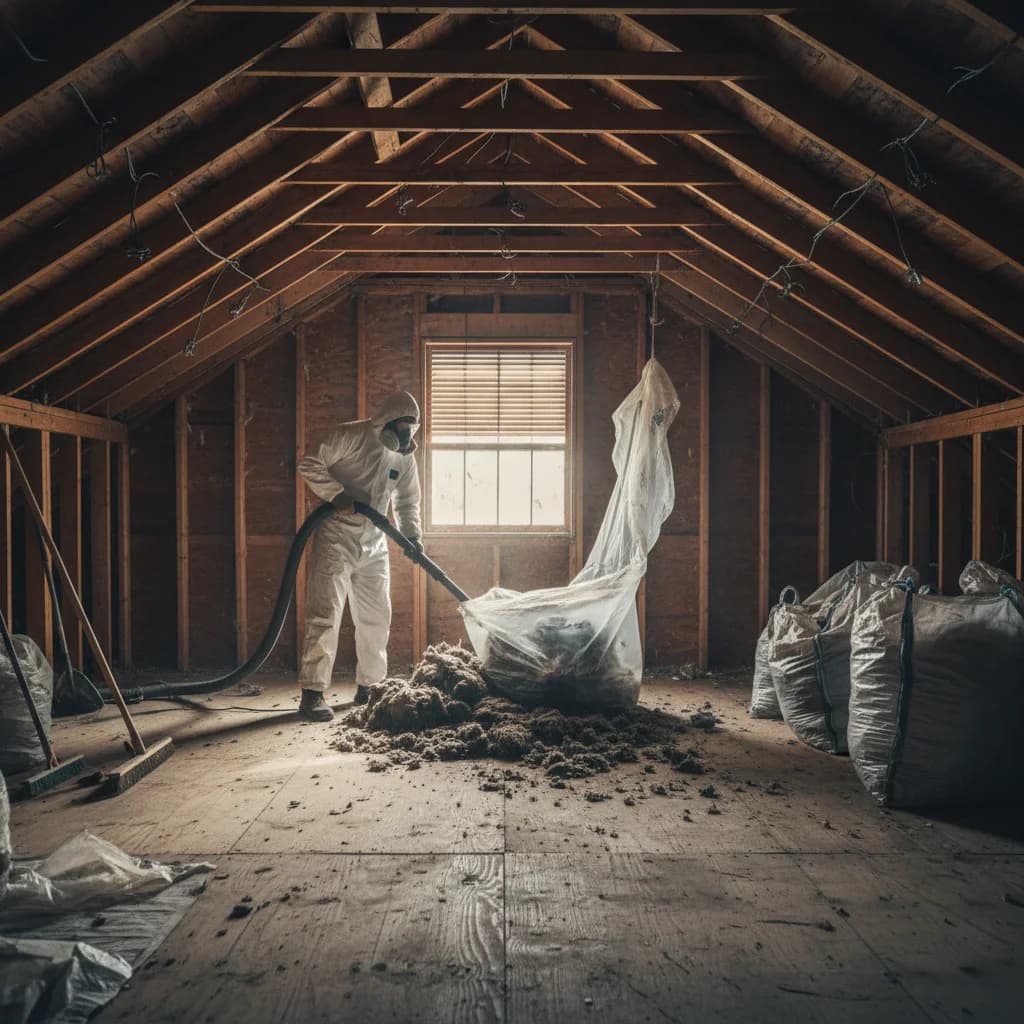
Professional wildlife cleanup crews use full PPE including powered air-purifying respirators, establish containment to isolate the work area, remove all contaminated insulation and debris with HEPA-filtered vacuum systems, and apply antimicrobial treatments formulated for the specific pathogens present. In Columbus, where raccoon and bat intrusions are common in the older housing stock throughout the city's established neighborhoods, these biohazard cleanups represent a significant portion of professional attic work. For a closer look at one of the most destructive animal scenarios, see our guide on raccoon damage and attic cleanup.
Suspected Asbestos
If your home was built before 1980, any insulation disturbance should be preceded by asbestos testing. Vermiculite insulation — the small, accordion-shaped granules that were popular through the 1970s — was frequently contaminated with asbestos from the Libby, Montana mine that supplied most of the nation's vermiculite. Other insulation types from that era may also contain asbestos fibers.
Asbestos identification requires laboratory analysis of a collected sample. If testing confirms the presence of asbestos, removal must be performed by a licensed asbestos abatement contractor following EPA and state regulations. This includes air monitoring before, during, and after removal, proper wetting procedures to minimize fiber release, sealed containment with negative air pressure, HEPA-filtered air handling, and disposal in labeled containers at licensed facilities. Fines for improper asbestos handling start at $10,000 per day per violation at the federal level and can be significantly higher under state regulations.
There is no safe DIY approach to asbestos-containing material. Even sample collection should ideally be performed by a trained professional to avoid unnecessary fiber release.
Electrical and Structural Hazards
Attic work that involves or is adjacent to electrical wiring demands caution that frequently exceeds DIY capability. Damaged wiring — whether chewed by rodents, degraded by heat, or improperly installed — presents electrocution and fire risks. If you observe melted wire insulation, scorched framing, improperly spliced connections, or aluminum wiring in a pre-1975 home, a licensed electrician needs to assess the situation before any attic work proceeds.
Structural concerns are another clear trigger for professional involvement. Sagging roof decking, cracked or split rafters, water-damaged framing members, and any signs of termite damage indicate problems that affect the integrity of your roof system. Homeowners aren't qualified to assess whether structural damage is cosmetic or critical — and the consequences of guessing wrong are severe.
In Nashville, where severe thunderstorms and occasional tornadoes cause roof damage that may not be visible from the ground, a professional attic inspection after major weather events can identify structural issues before they lead to more extensive and expensive failure.
Why Professional Equipment Changes Outcomes
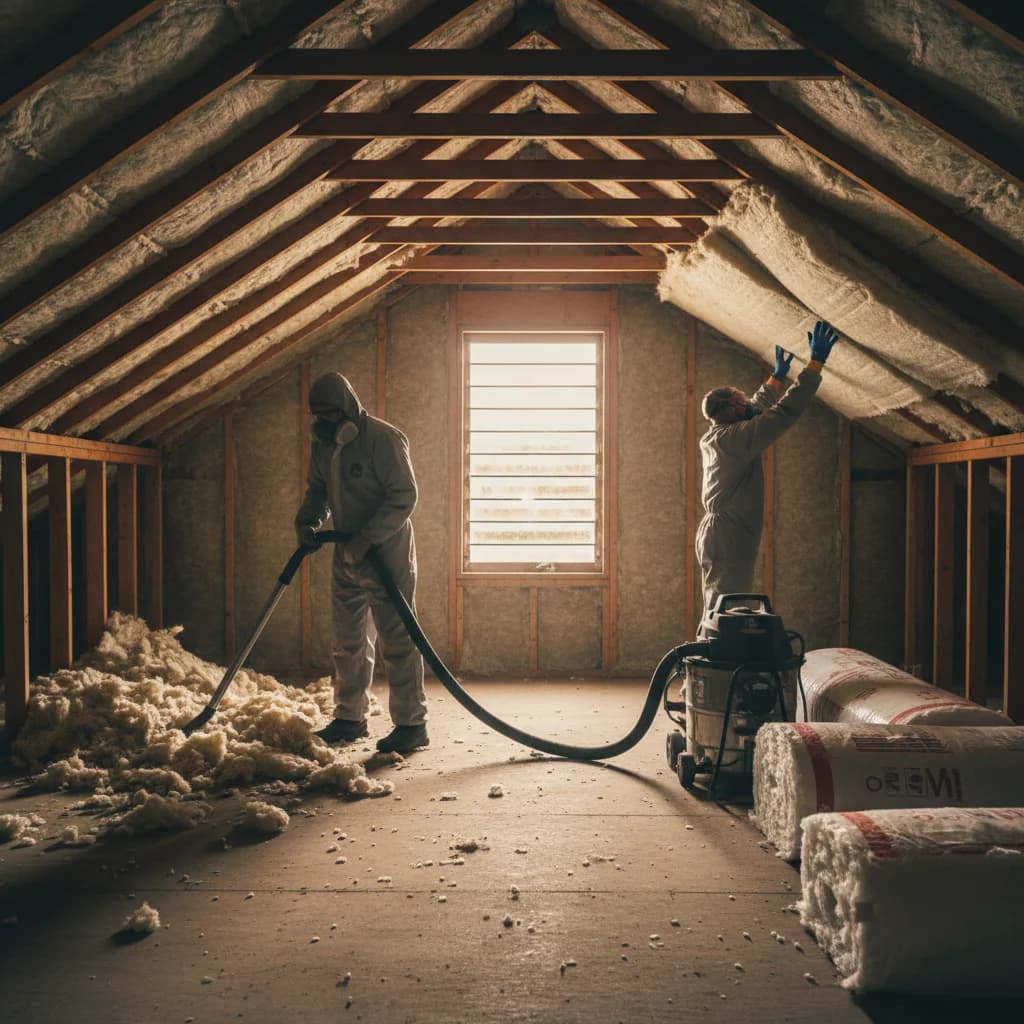
The equipment gap between DIY and professional attic work determines whether the job is done safely. Truck-mounted vacuum systems generate suction power far beyond anything a homeowner can rent. HEPA air scrubbers maintain air quality that protects both workers and your family. Thermal imaging cameras reveal moisture intrusion invisible to the naked eye. Commercial-grade antimicrobial sprayers deliver even coverage at the proper concentration.
Professional crews also bring experience that prevents cascading mistakes. They know where to step, how to identify hazards, and how to contain problems before they spread. A professional team can complete in four hours what might take a homeowner an entire weekend — with better results and none of the health risk.
The Real Cost Equation
Hiring a professional feels expensive until you compare it to the cost of getting it wrong. A standard professional attic cleaning runs $1,500 to $4,000. Mold remediation typically costs $2,000 to $6,000. Animal contamination cleanup ranges from $1,500 to $7,000.
The alternative is often worse. A DIY mold cleanup that spreads spores through your HVAC system can result in $5,000 to $15,000 in whole-house remediation. Improper asbestos disturbance can trigger abatement costing $10,000 or more. And health consequences from exposure to biological or chemical hazards carry costs that no amount of money can offset.
The scenarios outlined above aren't judgment calls — they're situations where the risks are well documented and the professional advantage is clear.