Raccoons are among the most destructive animals that invade residential attics. Unlike mice or rats that cause gradual damage, a raccoon can tear apart insulation, crush ductwork, and contaminate large areas of your attic in a matter of days. Their size, strength, and nesting habits make raccoon damage significantly more extensive — and more expensive to repair — than typical rodent infestations. Homeowners in Nashville, where the urban raccoon population is particularly dense, deal with this issue more frequently than most.
There are 70 attic cleaning companies in Nashville with an average rating of 4.7 stars.How Raccoons Get In
Raccoons are powerful and surprisingly agile. They commonly enter attics through:
- Roof vents — Ripping off plastic or aluminum vent covers with their hands
- Soffit panels — Prying loose or damaged soffit panels to access the attic space
- Roof-edge gaps — Tearing away rotted fascia board or weathered flashing
- Gable vents — Pushing through screen material on decorative vents
- Chimneys — Climbing down uncapped chimneys into the fireplace and making their way up to the attic
Female raccoons often seek attic spaces in spring to give birth and raise their young. A mother raccoon with kits is especially destructive because the family occupies the space for 8-12 weeks before the young are old enough to leave.
The Extent of Raccoon Damage
Raccoon damage is typically far more severe than what smaller pests inflict:
- Insulation destruction — Raccoons flatten and tear apart insulation to create nesting areas, often contaminating the entire surrounding area
- Ductwork damage — Their weight crushes flexible HVAC ducts, and they sometimes tear ducts apart for nesting material
- Structural damage — Raccoons can damage roof decking, fascia boards, soffit panels, and even framing members
- Electrical hazards — Chewed wiring creates fire risks similar to rodent damage but potentially more extensive
- Massive biological contamination — Raccoon feces are particularly dangerous because they can contain Baylisascaris procyonis (raccoon roundworm), whose eggs remain infectious in the environment for years
In Columbus, the combination of mature tree canopies and older housing stock creates ideal conditions for raccoon attic intrusions.
Health Hazards Specific to Raccoons
Raccoon waste presents unique health concerns beyond typical pest contamination:
Baylisascaris roundworm is the primary concern. The parasite's eggs are shed in raccoon feces and can survive in soil and on surfaces for years. If accidentally ingested — which can happen when contaminated dust becomes airborne — the larvae can migrate through the body and cause serious neurological damage. Children are at highest risk because of hand-to-mouth behavior.
Leptospirosis bacteria in raccoon urine can cause fever, kidney damage, and liver failure in humans and pets.
Raccoon-associated rabies is present in raccoon populations across the eastern United States, making direct contact with raccoons or their fresh waste a potential rabies exposure.
These health risks are why raccoon attic cleanup should always be handled by professionals with proper protective equipment and decontamination protocols.
The Cleanup and Restoration Process
Professional raccoon damage restoration follows a specific protocol:
- Wildlife removal — Licensed wildlife control operators humanely remove the raccoons and any young. This must happen before cleanup begins
- Damage assessment — Documenting all damage to insulation, ductwork, wiring, and structural components
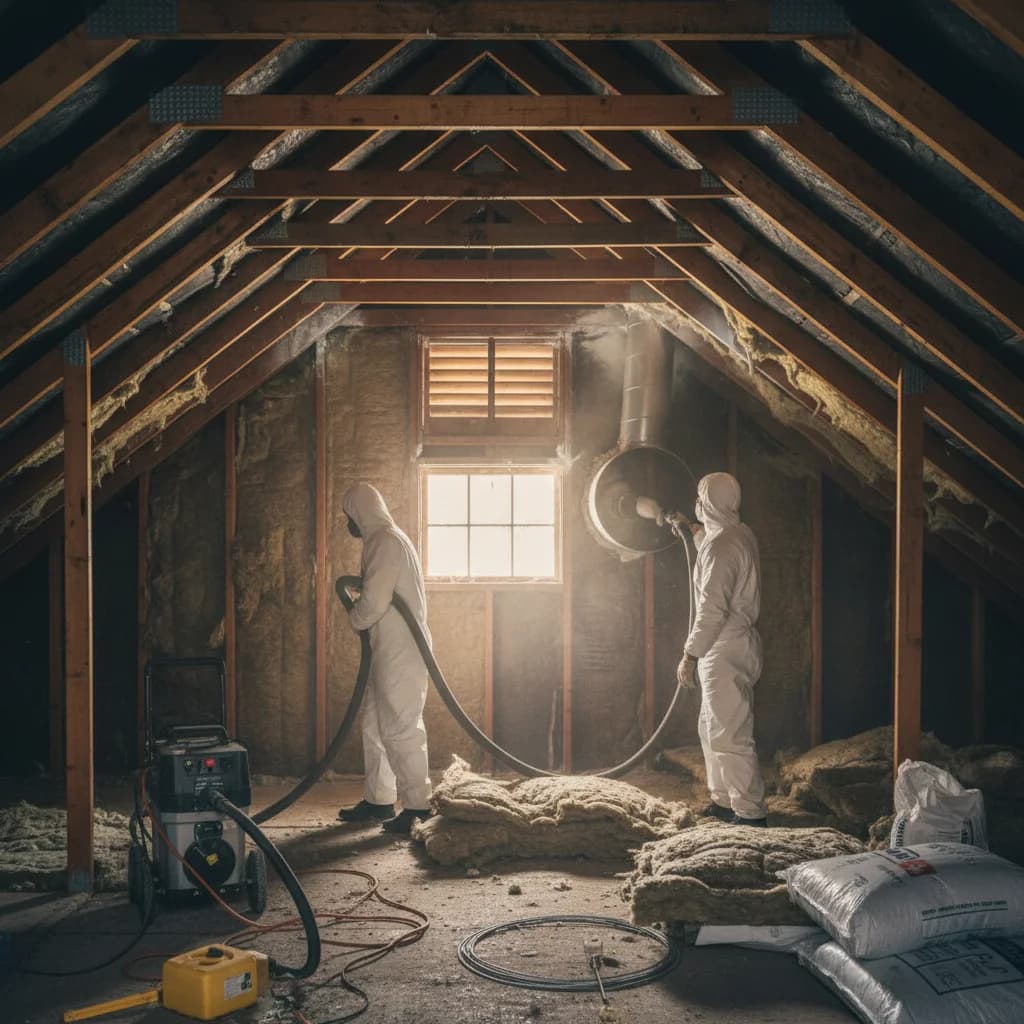
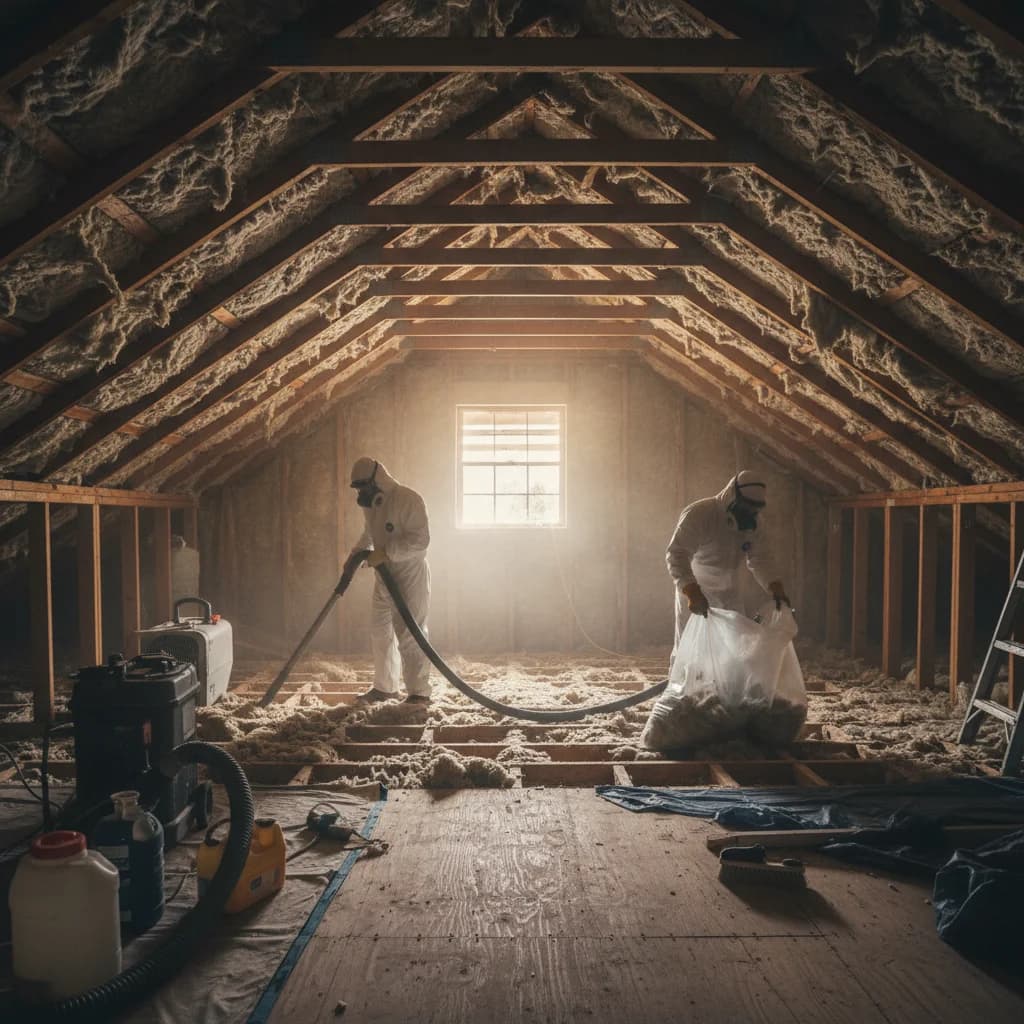
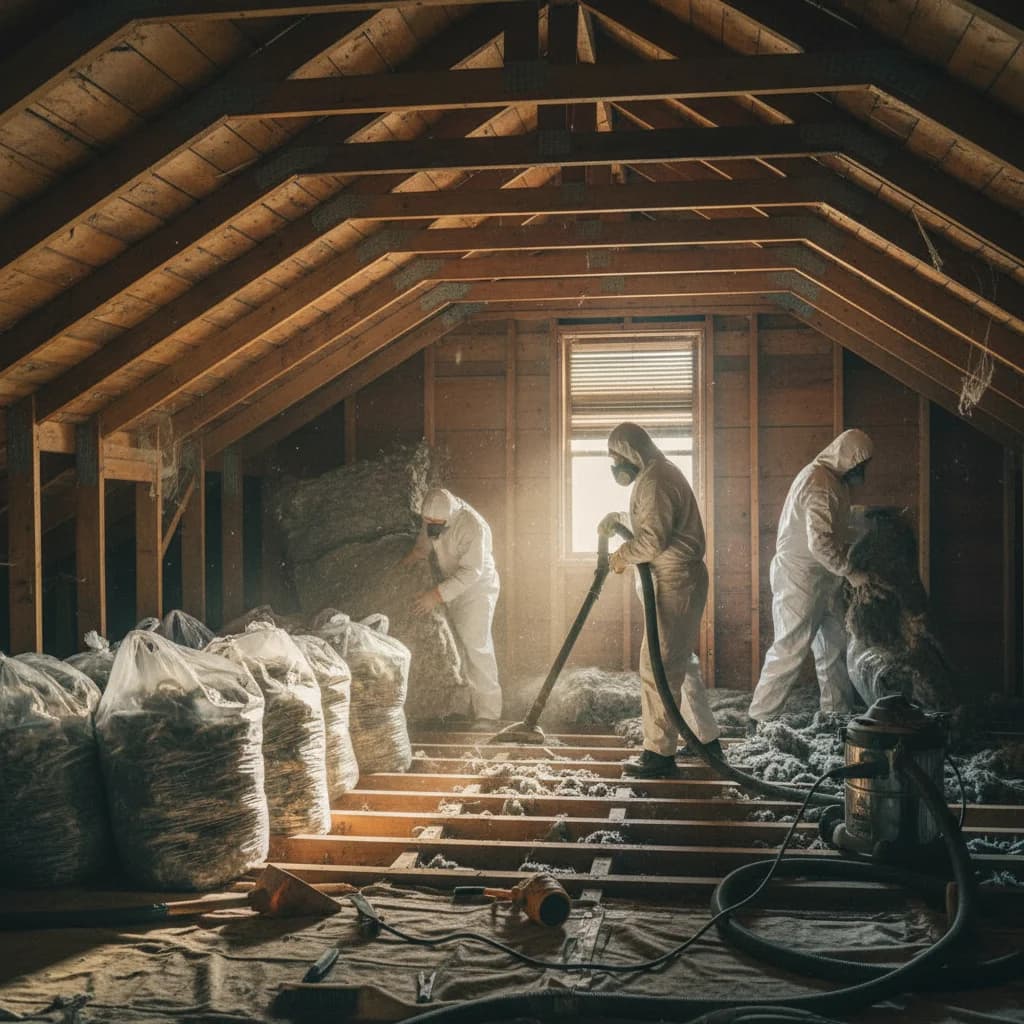
- Contaminated material removal — All affected insulation is removed using HEPA-filtered vacuum equipment and sealed in bags for disposal
- Feces removal and disposal — Raccoon droppings are carefully collected and disposed of as biohazardous waste
- Decontamination — Affected surfaces are treated with antimicrobial and anti-parasitic solutions. For Baylisascaris, heat treatment or specific chemical agents are used since standard disinfectants don't kill the roundworm eggs
- Structural repairs — Replacing damaged ductwork, repairing or replacing compromised framing, and addressing electrical issues
- Exclusion — Sealing all entry points with heavy-gauge galvanized steel mesh or metal flashing that raccoons can't tear apart
- Re-insulation — Installing fresh insulation once all repairs and decontamination are complete
Cost Expectations
Raccoon damage restoration is generally more expensive than standard rodent cleanup due to the extent of damage and specialized decontamination requirements. Homeowners should expect to spend $2,000 to $7,000 depending on the severity. Complex cases involving structural repairs, extensive ductwork replacement, or attic-wide insulation replacement can exceed $10,000.
Homeowner's insurance may cover a portion of the restoration costs if the damage is sudden and accidental. Review your policy and document all damage thoroughly with photos before cleanup begins.
Preventing Raccoon Re-Entry
Raccoon exclusion requires stronger materials and more thorough work than rodent-proofing:
- Use 16-gauge or heavier galvanized steel mesh over all vents and openings
- Install chimney caps rated for wildlife exclusion
- Repair all damaged soffit and fascia with solid materials, not just caulk
- Trim tree branches at least 8-10 feet from the roofline — raccoons are excellent climbers and jumpers
- Install motion-activated lights or sprinklers near known access areas as temporary deterrents during exclusion work
In Atlanta, where raccoon populations thrive in urban neighborhoods, annual roof inspections are an important preventive measure for homeowners.