Mold in your attic is a problem that won't resolve itself. Left unchecked, it spreads across wood surfaces, degrades structural integrity, and releases spores that can affect your family's health throughout the entire home. In humid climates like Seattle, where moisture-laden air and frequent rain create ideal conditions for mold growth, attic mold is one of the most common issues homeowners face.
There are 22 attic cleaning companies in Seattle with an average rating of 4.7 stars.What Causes Attic Mold
Mold needs three things to thrive: moisture, organic material, and moderate temperatures. Attics provide all three in abundance. The most common causes of attic mold include:
- Poor ventilation — When soffit vents are blocked or ridge vents are inadequate, warm moist air from the living space gets trapped in the attic and condenses on cold surfaces
- Bathroom exhaust fans vented into the attic — This is a code violation in most areas, but it's surprisingly common in older homes and pumps moisture directly into the attic space
- Roof leaks — Even minor leaks around flashing, vents, or damaged shingles introduce water that saturates wood sheathing
- Ice dams — In cold climates, ice dams force water under shingles and into the attic structure
- Dryer vents terminating in the attic — Another code violation that introduces both moisture and heat
In Miami and Tampa, the combination of high humidity and intense summer heat accelerates mold growth dramatically once moisture enters the attic space.
Recognizing Attic Mold
Attic mold isn't always obvious. Unlike bathroom mold that you see daily, attic mold can grow for months or years before anyone notices. Watch for these indicators:
- Dark staining on roof sheathing — Black or dark gray patches on the underside of plywood
- Musty odors — A persistent earthy or stale smell in upper-floor rooms or when the HVAC system runs
- Allergy symptoms — Increased sneezing, congestion, or respiratory irritation without a clear cause
- Visible fuzzy or powdery growth — White, green, or black growth on rafters, sheathing, or insulation
- Condensation on attic surfaces — Water droplets on nails, metal strapping, or ductwork
A professional mold inspection can confirm the presence and extent of mold, often using moisture meters and air sampling to assess the full scope.
The Professional Remediation Process
Professional attic mold remediation follows established industry protocols:
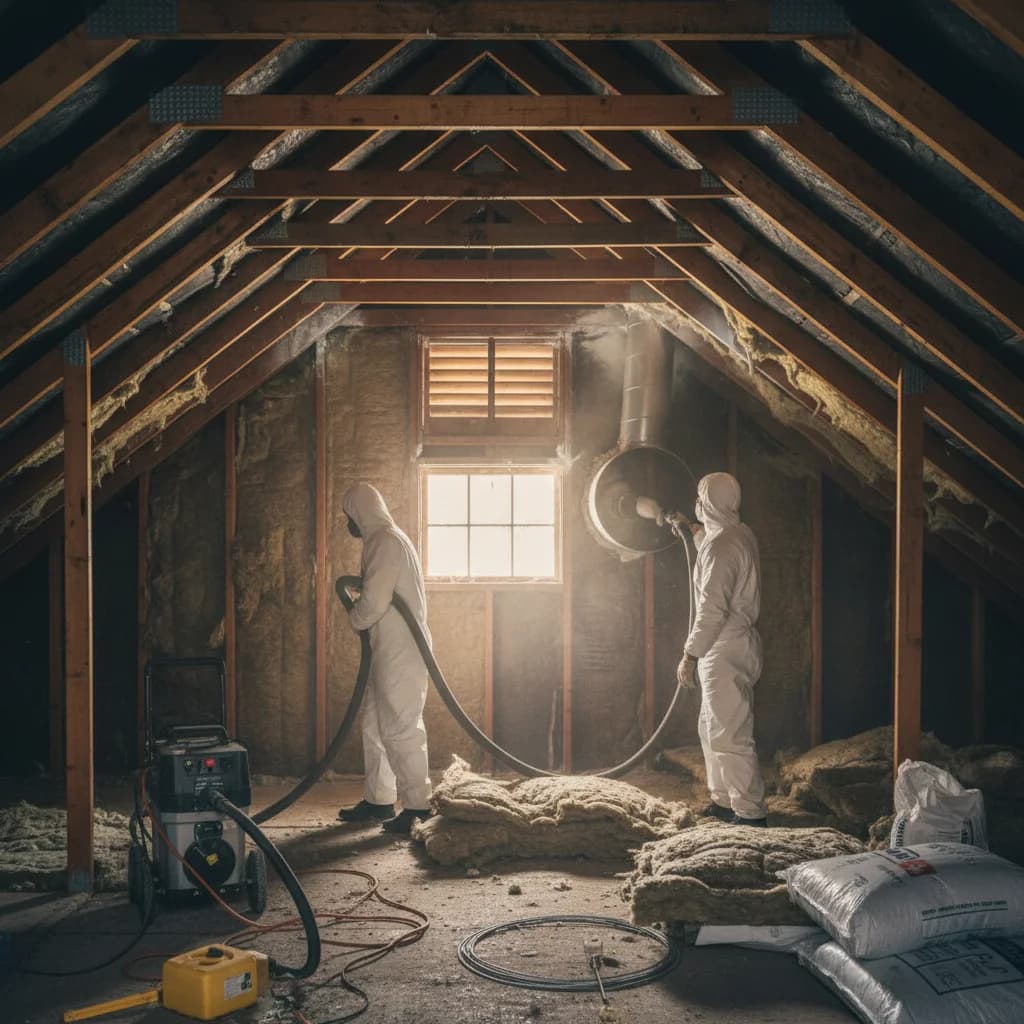
- Containment — The work area is sealed off with plastic sheeting and negative air pressure is established to prevent spores from spreading to living spaces
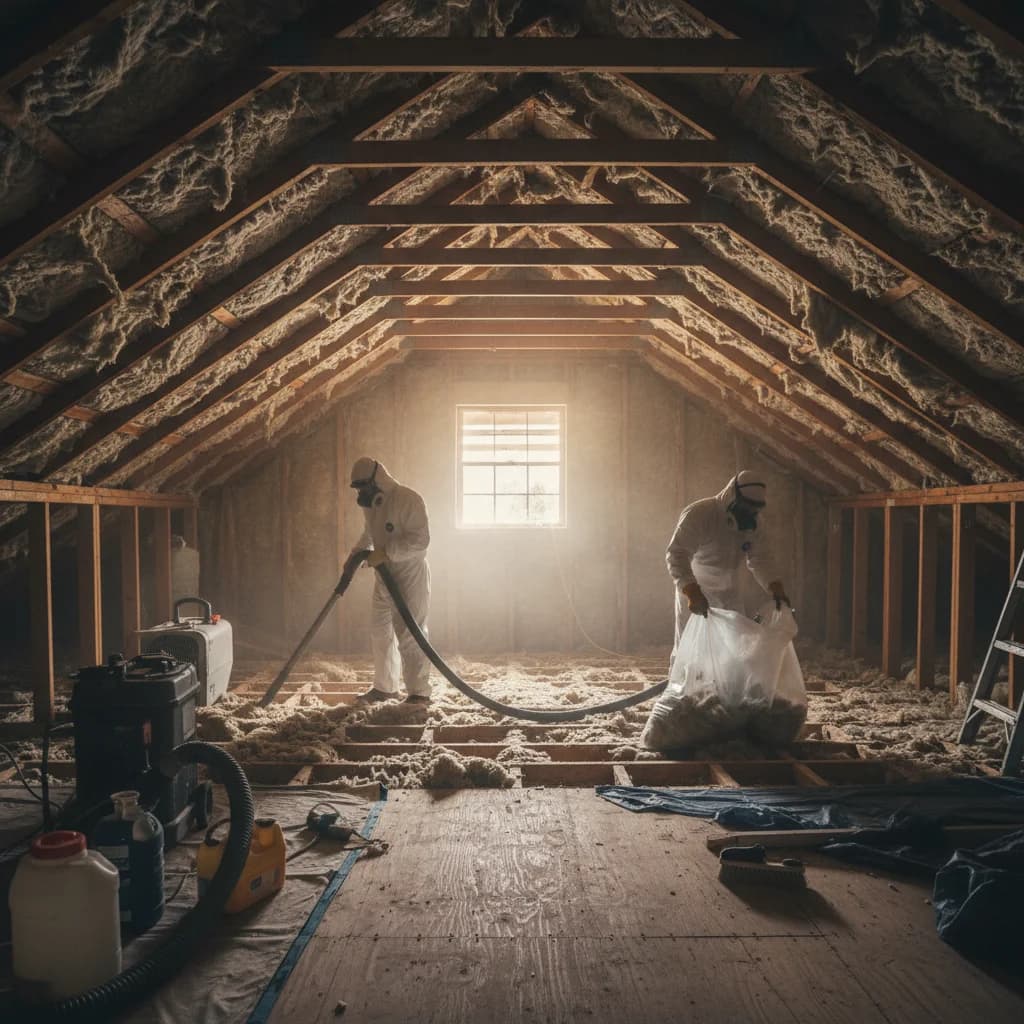
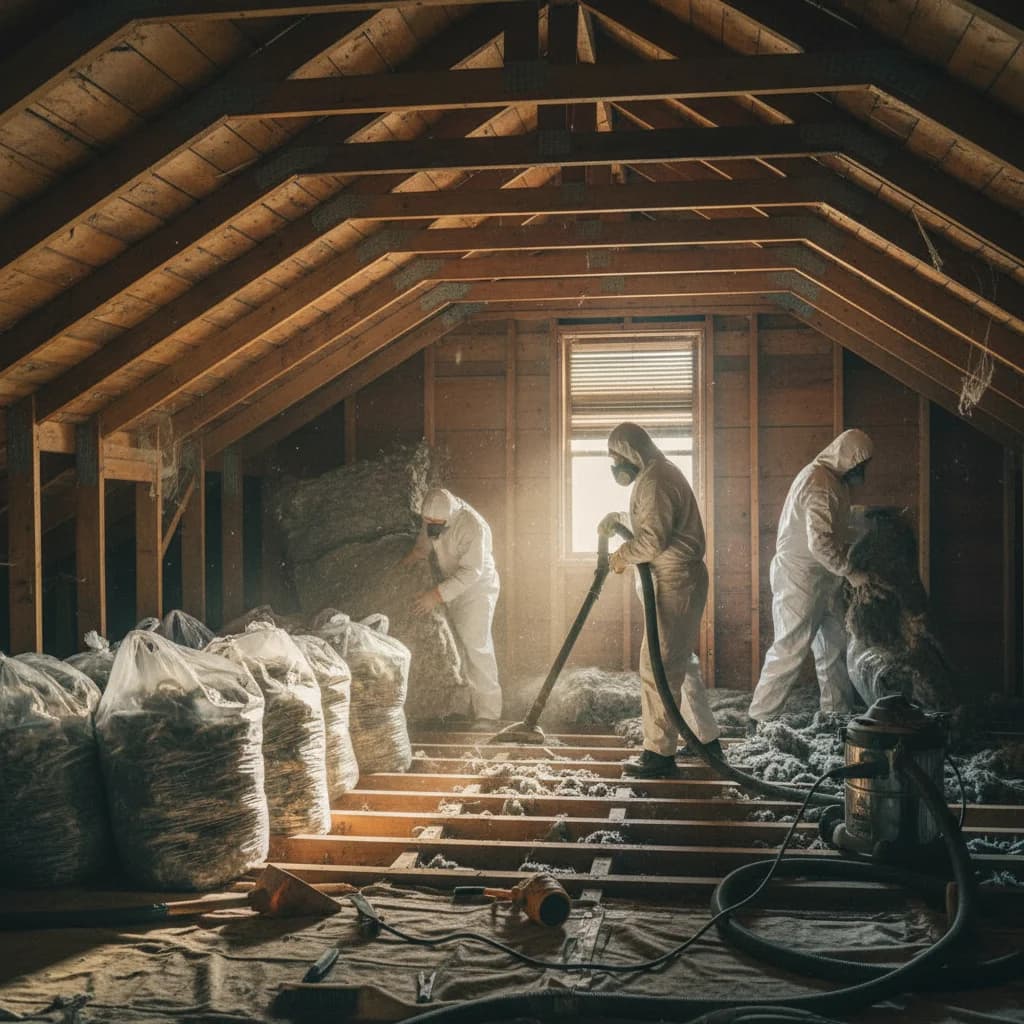
- Personal protection — Technicians wear full-face respirators, disposable suits, and gloves
- HEPA vacuuming — All surfaces are vacuumed with HEPA-filtered equipment to remove loose spore deposits
- Mold removal — Depending on severity, this involves sanding, wire brushing, or media blasting the affected wood surfaces. Heavily damaged materials may need replacement
- Antimicrobial treatment — Affected surfaces are treated with professional-grade fungicides that kill remaining mold and inhibit regrowth
- Encapsulation — In some cases, treated wood surfaces are sealed with a mold-resistant encapsulant for long-term protection
- Source correction — The moisture source is identified and addressed, whether that means improving ventilation, rerouting exhaust fans, or repairing roof leaks
Skipping the source correction step guarantees the mold will return, regardless of how thorough the cleanup is. For a detailed breakdown of what remediation costs at each severity level and how insurance may apply, see our guide on attic mold removal costs and insurance coverage.
Health Considerations
Mold exposure affects people differently. Some individuals experience no symptoms, while others — particularly those with asthma, allergies, or compromised immune systems — can develop serious respiratory problems. Common symptoms of mold exposure include persistent coughing, nasal congestion, eye irritation, and skin rashes.
Children and elderly family members are particularly vulnerable. If anyone in your household has unexplained respiratory symptoms that improve when they leave the home, an attic mold inspection should be a priority.
Prevention After Remediation
Once mold has been professionally removed, prevention focuses on controlling moisture. Ventilation is the single most important factor — for a detailed explanation of how attic ventilation systems work and how to evaluate yours, see our guide on why proper attic ventilation matters.
Key prevention steps include:
- Ensure soffit and ridge vents are clear and providing adequate airflow — the general rule is 1 square foot of net free area per 150 square feet of attic floor
- Verify all bathroom fans and dryer vents exhaust to the exterior, not the attic
- Check roof flashing and shingles annually for damage, especially after severe weather
- Monitor attic humidity levels — a wireless hygrometer costs under $20 and provides ongoing peace of mind. Aim to keep relative humidity below 60%
- Schedule periodic attic inspections, especially after heavy storms
- Address any new water stains or musty odors immediately — early intervention prevents small moisture issues from becoming full-scale mold problems
For homeowners in humid climates where mold risk is elevated year-round, our regional guide on attic maintenance in humid regions covers the specific moisture management strategies that prevent recurrence.