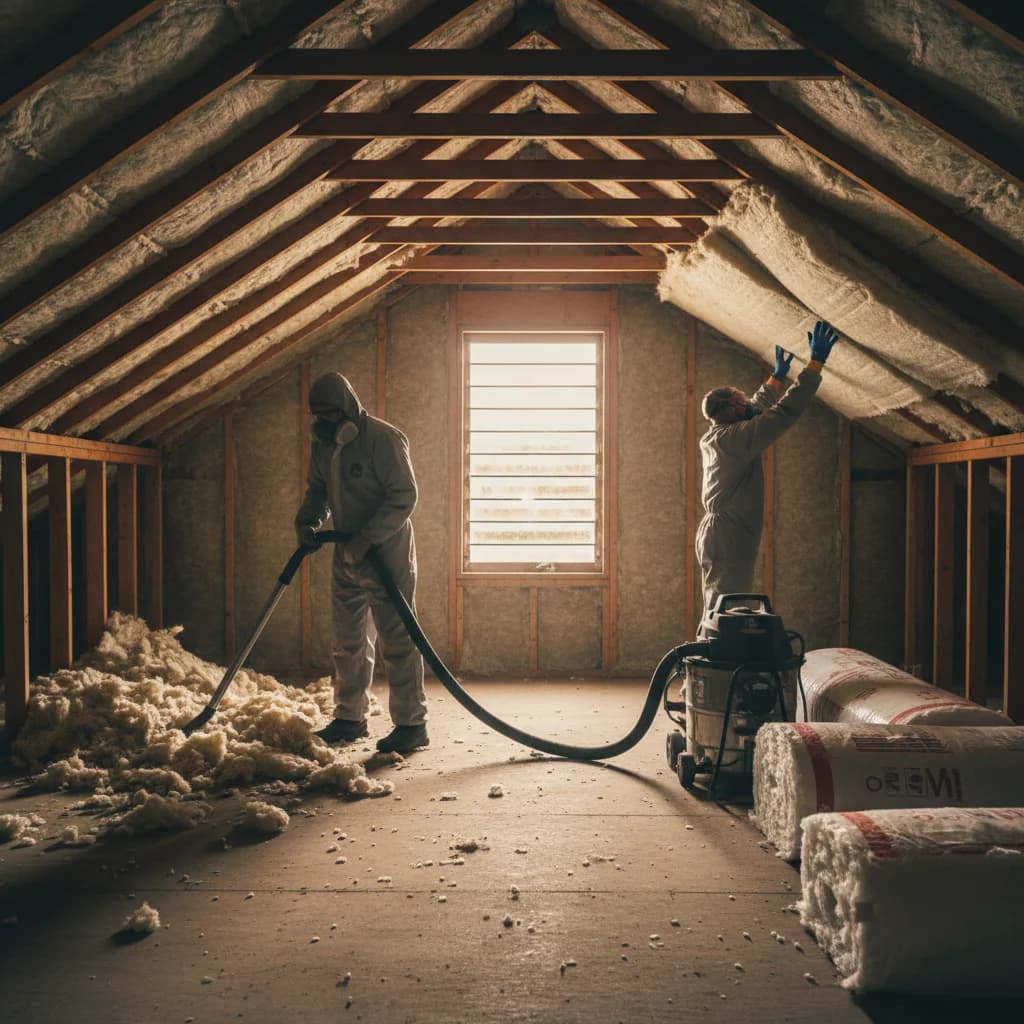
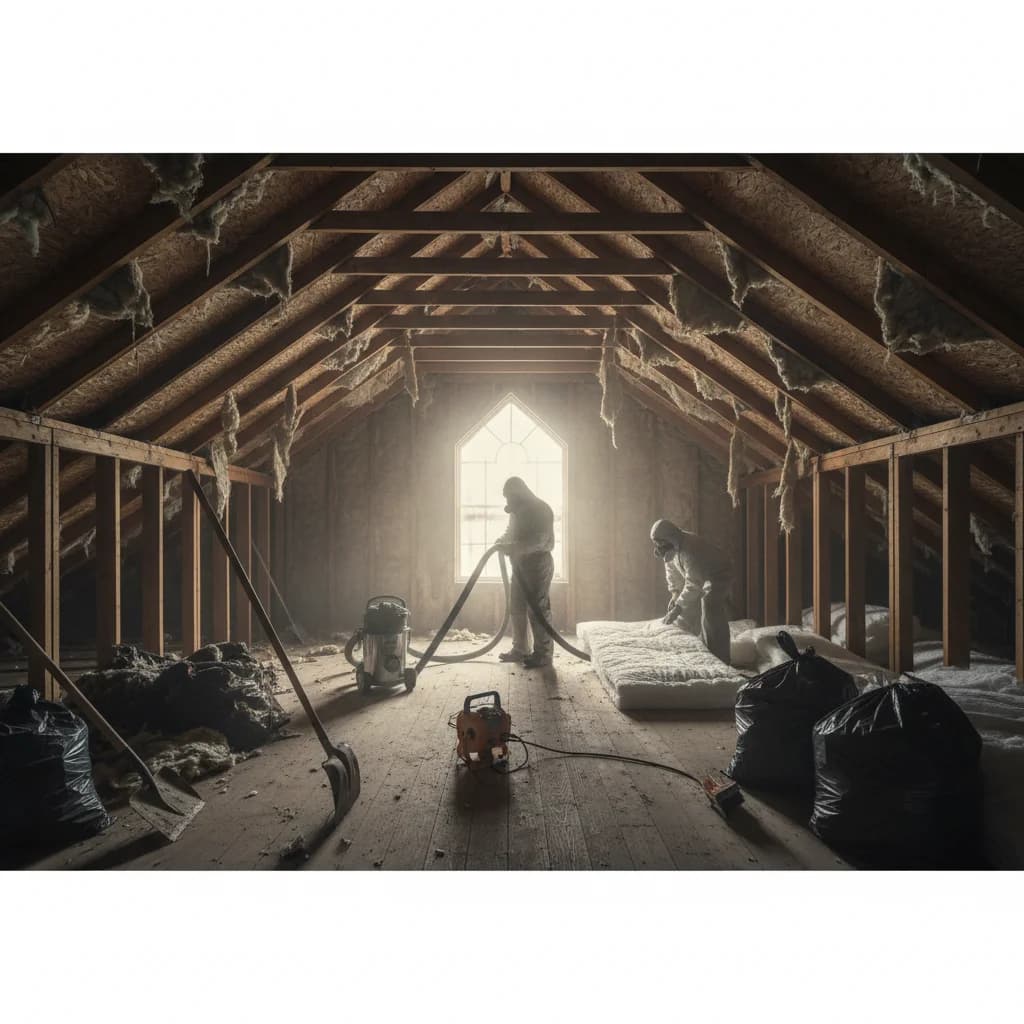
Removing attic insulation is one of the most hazardous DIY projects a homeowner can attempt. Unlike painting a room or replacing a faucet, insulation removal exposes you to airborne particles, biological contaminants, and potentially deadly materials like asbestos — all in a confined space with poor ventilation and extreme temperatures. Every year, homeowners end up in emergency rooms or create expensive contamination problems in their homes because they underestimated what insulation removal actually involves. In Denver, where older homes frequently contain multiple layers of insulation added over decades, the risks compound because each layer may hide different hazards.
There are 64 attic cleaning companies in Denver with an average rating of 4.7 stars.Health Hazards Hiding in Your Insulation
The most serious risk of DIY insulation removal is exposure to hazardous materials that aren't visible to the naked eye. Homes built before 1980 may contain asbestos in vermiculite insulation, pipe wrapping, or even in the insulation itself. Asbestos fibers, once airborne, cause mesothelioma and asbestosis — diseases that can take decades to manifest but have no cure. There is no safe level of asbestos exposure, and disturbing asbestos-containing material without proper abatement protocols is both dangerous and illegal in most jurisdictions.
Fiberglass insulation — the pink or yellow batts and loose-fill material found in most modern homes — presents its own hazards. Tiny glass fibers irritate skin, eyes, and respiratory passages on contact. Prolonged exposure without proper respiratory protection can cause chronic bronchitis and upper airway inflammation. A standard paper dust mask provides inadequate protection against fiberglass particles; proper safety requires a half-face or full-face respirator with P100 cartridges.
Rodent contamination adds biological hazards to the mix. Mice, rats, and squirrels leave behind droppings, urine, and nesting material that can harbor hantavirus, salmonella, and leptospirosis. Hantavirus is particularly dangerous — it becomes airborne when dried rodent droppings are disturbed, and infection can progress to hantavirus pulmonary syndrome, which has a mortality rate exceeding 35%. In Las Vegas, where roof rats and desert mice commonly nest in attic insulation, contamination is found in a significant percentage of insulation removal projects.
Common DIY Mistakes That Cost Thousands
Beyond health hazards, DIY insulation removal frequently results in property damage that exceeds the cost of hiring professionals. The most expensive mistake is stepping through the ceiling. Attic joists are typically spaced 16 or 24 inches apart, and once insulation covers them, it becomes nearly impossible to see where to step safely. One wrong foot placement sends you through the drywall — or worse, through the drywall and onto the floor below. Ceiling repair costs $200 to $500 per hole, and the fall itself can cause serious injury.
Inadequate containment is another costly error. When homeowners remove insulation without sealing off the attic access point and creating negative air pressure, contaminated dust and particles migrate into the living space through every gap, crack, and HVAC register. What started as an attic project becomes a whole-house air quality problem requiring professional duct cleaning and surface decontamination.
Using a standard shop vacuum instead of an industrial HEPA-filtered system is a particularly common mistake. Consumer vacuums lack the filtration to capture fine particles — they simply redistribute contaminants through the exhaust, creating a cloud of hazardous dust in the confined attic space. For a complete overview of what professional-grade removal equipment involves, our guide on attic insulation removal covers the process in detail.
Disposal Regulations You Need to Know
Even if you manage to remove the insulation safely, disposal presents its own challenges. Insulation — especially contaminated insulation — cannot simply be bagged up and placed in your regular trash. Most municipalities classify contaminated insulation as construction waste that requires disposal at designated facilities. Asbestos-containing material has even stricter requirements: it must be double-bagged in labeled containers and transported to licensed asbestos disposal sites. Violating these regulations can result in fines ranging from $500 to $25,000 depending on your jurisdiction.
In Indianapolis and across Indiana, contaminated insulation disposal requires documentation of the material type and contamination source. Many landfills refuse insulation altogether, and homeowners who dump it illegally face enforcement action from local environmental agencies. Professional insulation removal companies handle all disposal logistics as part of their service, including manifests for hazardous materials when applicable.
When DIY Insulation Removal Is Feasible
Honesty about DIY limitations doesn't mean every insulation project requires professional help. There are narrow circumstances where a capable homeowner can safely remove small amounts of insulation. If the insulation is clean fiberglass batt material — not loose-fill — in a home built after 1990, with no evidence of pest contamination, water damage, or mold, and you need to remove only a small section to access wiring or make a repair, careful DIY removal is reasonable.
The prerequisites are non-negotiable: a properly fitted P100 respirator (not a paper mask), sealed safety goggles, long sleeves and pants, gloves, and adequate lighting. You need to lay planks across joists for safe footing, and you should seal the attic access point with plastic sheeting to prevent particles from entering the living space. Even in this best-case scenario, the removed insulation needs to be bagged in heavy-duty contractor bags and disposed of properly.
If any of those conditions aren't met — if the insulation is loose-fill, if there's any sign of pests or moisture, if the home predates 1980, or if the removal area exceeds a few square feet — the project belongs in professional hands.
The Professional Alternative
Professional insulation removal costs between $1,000 and $2,500 for a standard residential attic. That price covers equipment, labor, containment, disposal, and cleanup — and it includes liability insurance that protects you if anything goes wrong. When you factor in the cost of renting equipment (if commercial-grade equipment is even available), buying proper PPE, paying disposal fees, and accounting for the risk of mistakes, the DIY cost savings evaporate quickly.
More importantly, professional crews complete insulation removal in hours, not days. They identify hazards you might miss, and they leave the attic clean and ready for the next step — whether that's air sealing, new insulation, or both. For guidance on what comes after removal, our guide on attic insulation replacement walks through the options for bringing your attic back to peak performance.