Every year, millions of American homes deal with rodent infestations — and the attic is ground zero. Rats, mice, and squirrels are drawn to the warmth, shelter, and quiet of attic spaces, where they leave behind droppings, urine, and nesting materials that contaminate insulation and compromise your home's air quality. What starts as scratching sounds overhead can quickly escalate into a serious health and safety concern. In Houston, where warm winters allow rodent populations to thrive year-round, professional cleanup is especially critical.
There are 112 attic cleaning companies in Houston with an average rating of 4.7 stars.How Rodents Damage Your Attic
Rodents cause far more destruction than most homeowners realize. They chew through electrical wiring, creating fire hazards. They tear apart insulation to build nests, reducing your home's energy efficiency. Their urine and droppings saturate insulation and wood surfaces, creating conditions for mold growth and bacterial contamination.
The damage compounds over time. A single pair of mice can produce dozens of offspring in just a few months, and the longer an infestation goes unaddressed, the more extensive — and expensive — the cleanup becomes.
The Professional Cleanup Process
A professional attic rodent cleanup typically follows a structured sequence:
- Thorough inspection — Technicians identify entry points, assess the extent of contamination, and document damage to insulation and structural elements
- Rodent removal and exclusion — All animals are removed and entry points are sealed with steel mesh, metal flashing, or concrete to prevent re-entry
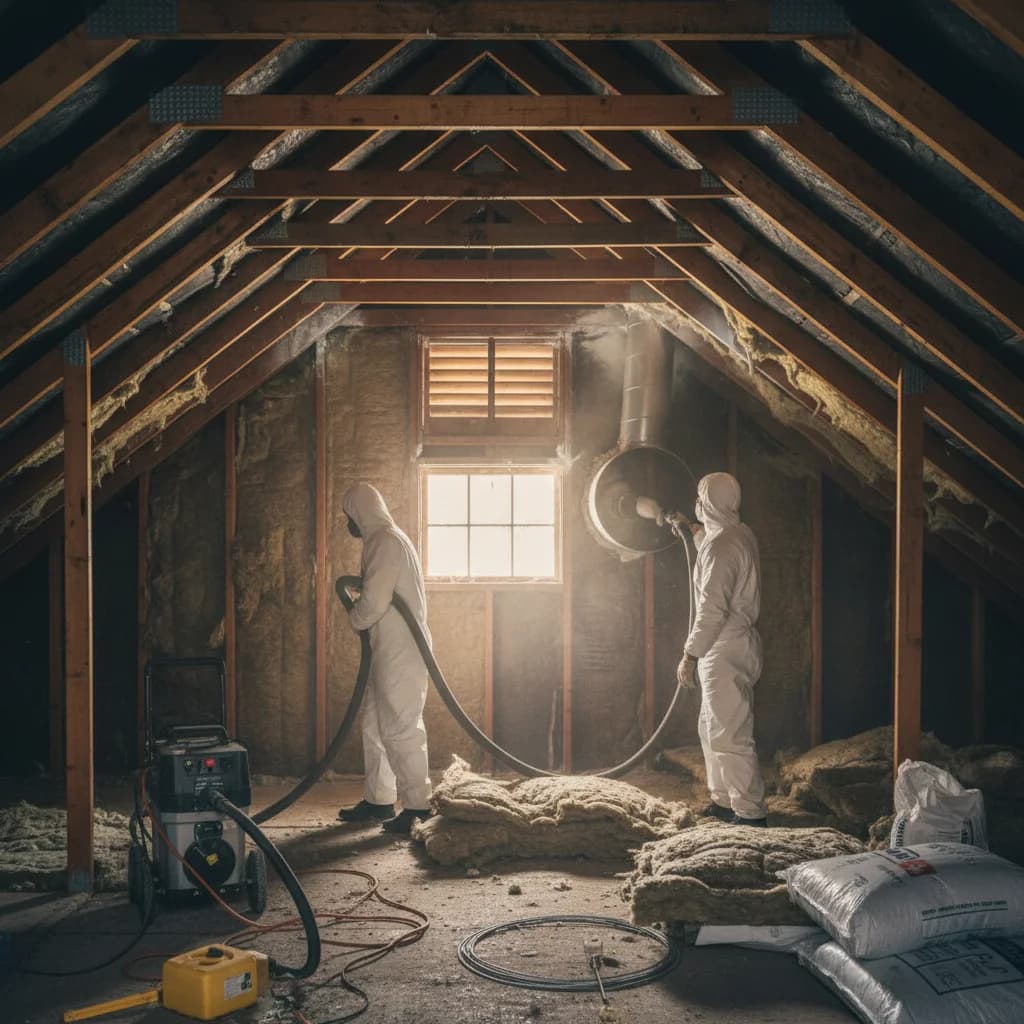
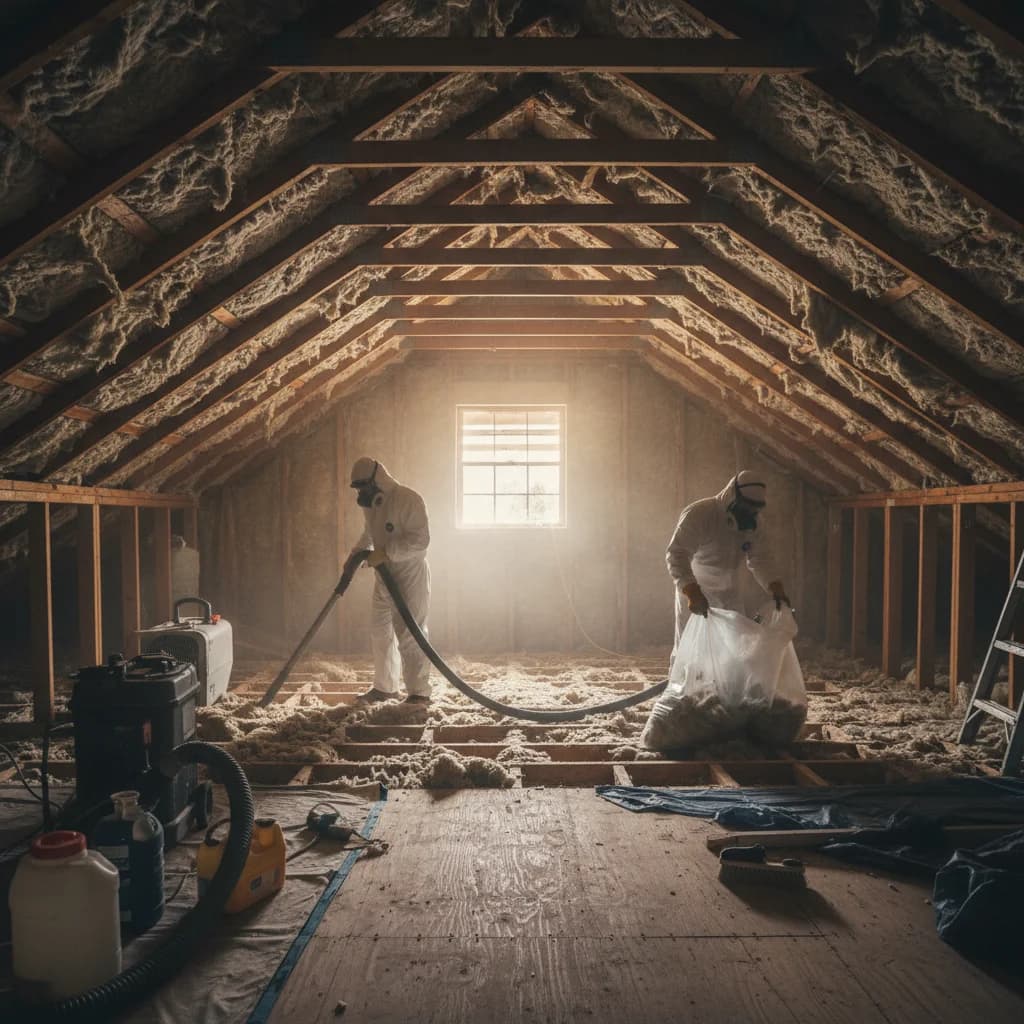
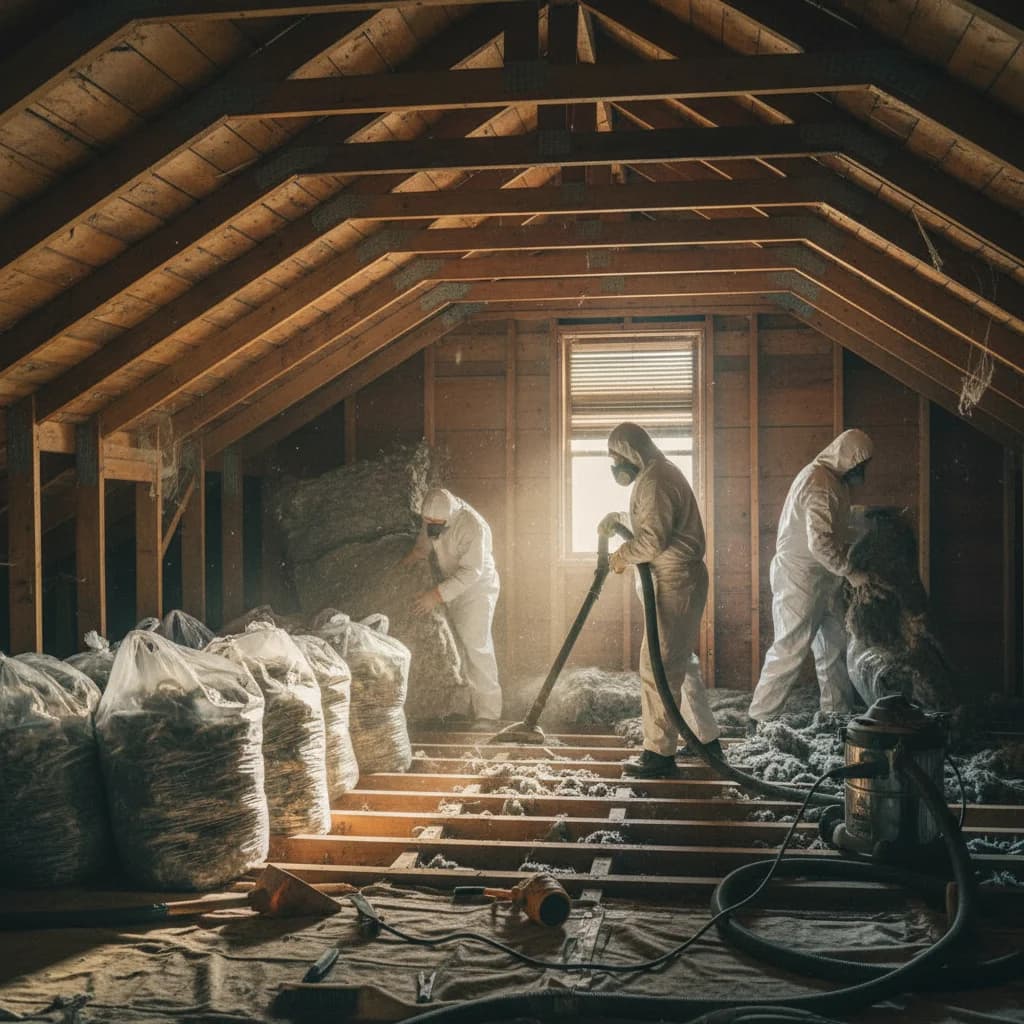
- Contaminated insulation removal — Insulation saturated with droppings and urine is vacuumed out using industrial HEPA-filtered equipment
- Sanitization and decontamination — Affected surfaces are treated with antimicrobial solutions that eliminate bacteria, viruses, and parasites
- Insulation replacement — Fresh insulation is installed to restore energy efficiency
Each step matters. Skipping sanitization, for example, leaves behind harmful pathogens even after the insulation is replaced.
Health Risks of Rodent-Contaminated Attics
Rodent droppings and urine carry serious health risks including hantavirus, salmonella, leptospirosis, and lymphocytic choriomeningitis. These pathogens become airborne when contaminated materials are disturbed, which is why professional-grade respiratory protection and containment procedures are essential during cleanup.
In cities like Atlanta and Nashville, where older homes with accessible attic spaces are common, rodent infestations are a frequent issue that homeowners should take seriously. Families with young children, elderly residents, or anyone with respiratory conditions face the highest risk from prolonged exposure to contaminated attic air.
Why DIY Cleanup Falls Short
Many homeowners attempt attic rodent cleanup themselves, but DIY efforts typically fail for several reasons:
- Inadequate protection — Standard dust masks don't filter the fine particles that carry hantavirus and other pathogens
- Incomplete removal — Shop vacuums lack the suction and filtration needed to fully remove contaminated insulation from rafter bays and tight spaces
- Missed entry points — Without experience identifying the full range of access points, rodents simply return within weeks
- No sanitization — Household cleaning products don't eliminate the bacteria and parasites embedded in wood and structural surfaces
Professional companies use HEPA-filtered negative air machines, full-body protective equipment, and hospital-grade antimicrobial treatments that go far beyond what's available at a hardware store. The investment in professional service also includes proper disposal of contaminated materials as biohazardous waste — something most homeowners aren't equipped to handle safely or legally.
What to Expect on Cost
Attic rodent cleanup costs vary based on the size of your attic, the extent of contamination, and whether full insulation replacement is needed. Most homeowners spend between $1,500 and $5,000 for a complete cleanup including insulation removal, sanitization, and re-insulation. Partial cleanups addressing only the affected areas typically cost less. For a detailed breakdown of what drives these prices, see our guide on rodent cleanup cost factors.
Get multiple quotes from licensed professionals and ask specifically about their sanitization protocol and warranty on exclusion work. A company that only removes insulation without proper decontamination is leaving the job half done.
Preventing Future Infestations
After cleanup is complete, ongoing prevention is key. The most important step is ensuring that all entry points have been properly sealed — a process known as rodent exclusion. For a detailed guide on sealing your attic against future intrusions, see our article on how to rodent-proof your attic after cleanup.
Beyond exclusion work, these habits help keep rodents out long-term:
- Trim tree branches so they're at least 6-8 feet from the roofline
- Seal gaps around utility penetrations with steel wool and caulk
- Store firewood and debris away from the house exterior
- Schedule annual attic inspections to catch new activity early
- Keep garage doors closed and pet food stored in sealed containers
Many professional cleanup companies offer maintenance programs that include periodic checks of exclusion work and early detection of new activity. These programs are especially valuable in the first year after cleanup when re-infestation risk is highest.