Attic insulation doesn't last forever. Whether it's been damaged by pests, degraded by moisture, or simply reached the end of its useful life, removing old insulation is often the first step toward a healthier, more energy-efficient home. Homeowners in Denver, where extreme temperature swings put constant stress on attic insulation, face this decision more often than they might expect.
There are 64 attic cleaning companies in Denver with an average rating of 4.7 stars.When Insulation Removal Is Necessary
Not every attic needs a full insulation replacement. But several situations make removal the right call:
- Rodent or pest contamination — Droppings, urine, and nesting materials make insulation a health hazard that can't simply be covered over
- Water damage — Roof leaks or condensation that has saturated insulation promotes mold growth and eliminates the material's thermal performance
- Age and degradation — Fiberglass batts lose loft over time, and older loose-fill insulation (especially vermiculite) may contain asbestos
- Renovation or air sealing — Adding proper air sealing before new insulation requires access to the attic floor, which means removing existing material first
- Persistent odors — Smoke damage, animal odors, or chemical contamination trapped in insulation fibers can only be resolved through removal
If your energy bills have been climbing despite no change in usage, degraded insulation is a common culprit worth investigating.
The Professional Removal Process
Professional insulation removal is a systematic operation that requires specialized equipment:
- Assessment — Technicians inspect the attic to determine insulation type, condition, and any hazards (asbestos, mold, pest contamination)
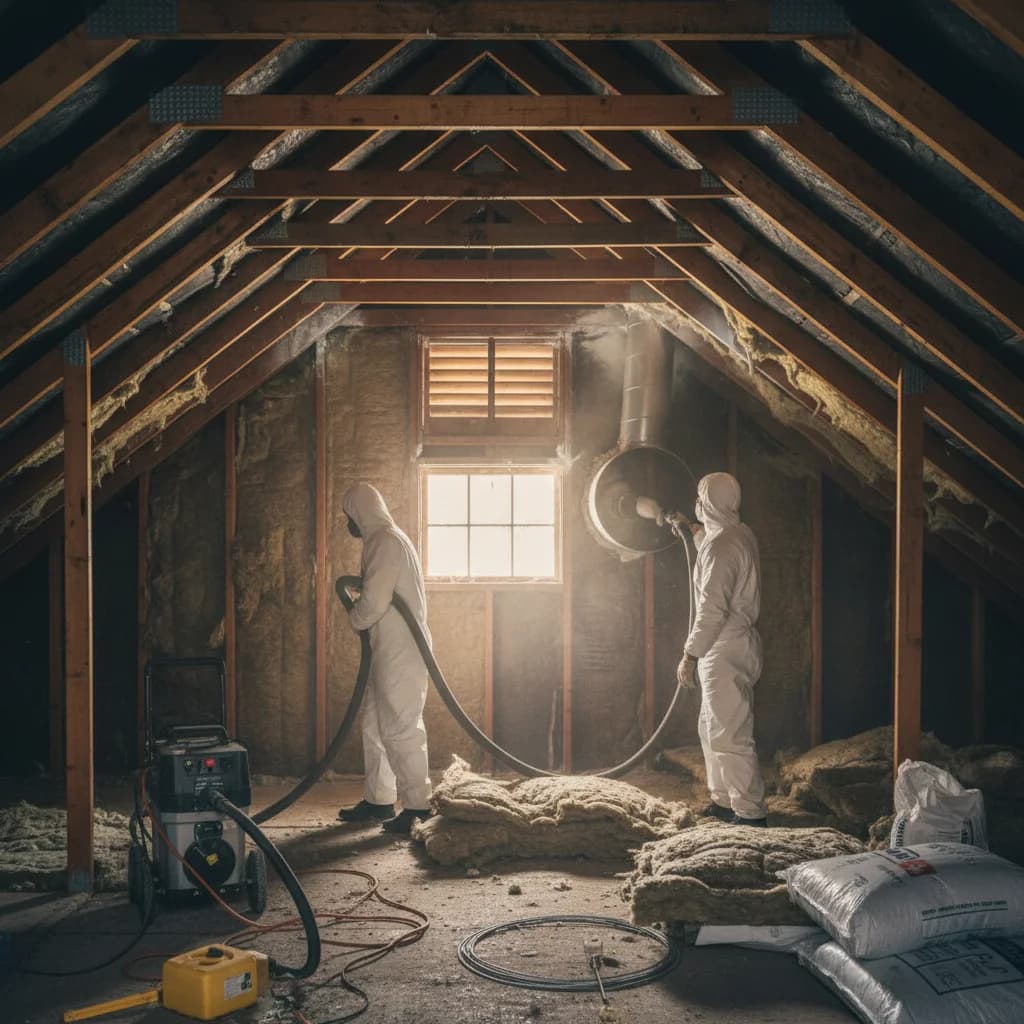
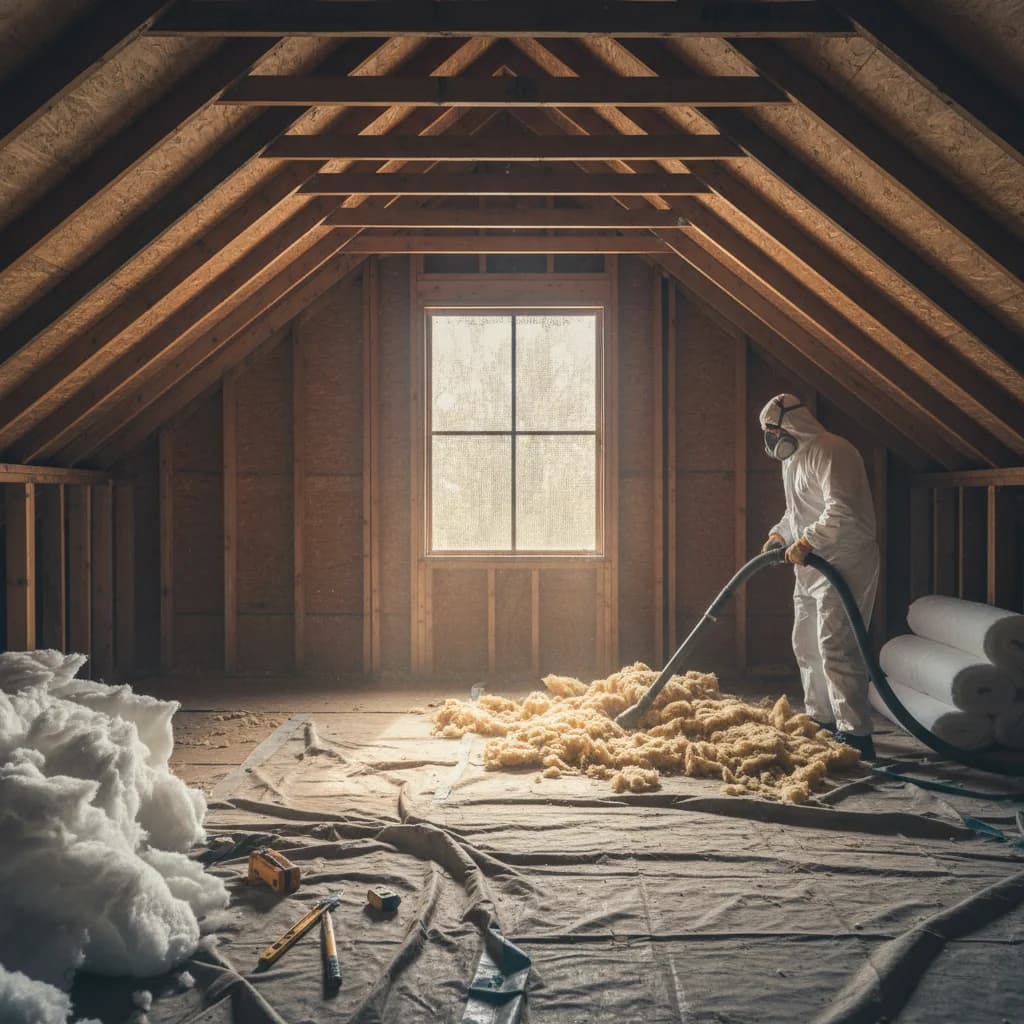
- Preparation — Drop cloths protect your home's interior, and a high-powered vacuum system is positioned outside with a hose running into the attic
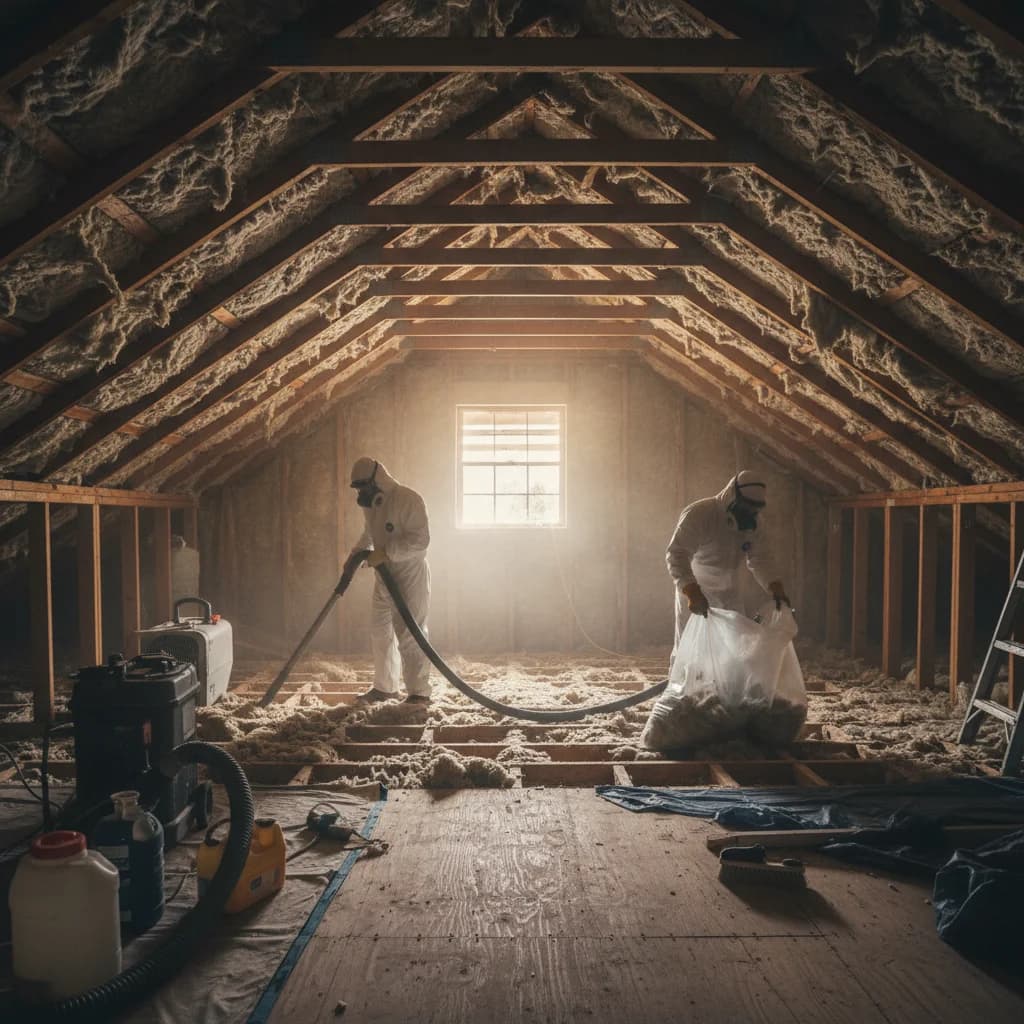
- Removal — Industrial vacuum machines with HEPA filtration pull loose-fill insulation directly into containment bags. Batts are rolled, bagged, and carried out
- Cleaning — The attic floor is vacuumed clean of debris, dust, and remaining insulation fragments
- Inspection — With the attic floor exposed, technicians can identify air leaks, damaged wiring, plumbing issues, and structural concerns that were previously hidden
For homeowners in Sacramento, where older homes frequently have outdated insulation from the 1960s and 1970s, this process often reveals issues that improve both comfort and safety.
Blown-In vs. Batt Removal
The removal approach varies by insulation type. Loose-fill insulation (cellulose or fiberglass) is removed with industrial vacuum systems — large, truck-mounted machines that can clear an attic in a few hours. Batt insulation (fiberglass rolls) is removed by hand, rolled up, bagged, and hauled out, which is more labor-intensive but still straightforward for experienced crews.
Some attics have multiple layers of different insulation types stacked over decades. In Minneapolis and other cold-climate cities, it's common to find original batts from the 1970s buried under blown-in cellulose added in the 1990s with another layer of fiberglass on top. Professional removal handles all layers efficiently.
What Happens After Removal
Insulation removal is rarely the end of the project. Once the attic floor is clean and accessible, most professionals recommend:
- Air sealing — Caulking and foam-sealing gaps around wiring penetrations, plumbing stacks, recessed light fixtures, and the top plates of interior walls
- Inspection — Checking for mold, structural damage, or wiring issues now visible
- New insulation — Installing fresh insulation to current energy code standards, which typically means higher R-values than what was removed
The combination of air sealing and new insulation can reduce heating and cooling costs by 15-25%, making the investment worthwhile for most homeowners. For a deeper look at how air sealing works alongside insulation, see our guide on air sealing your attic for energy savings.
If you're deciding between insulation types for the replacement, our comparison of blown-in vs. batt insulation covers the key differences in performance, cost, and suitability for different attic configurations.
Cost Factors
Insulation removal costs depend on attic size, insulation type, and whether hazardous materials are present. Standard removal for a typical 1,000-1,500 square foot attic runs $1,000 to $2,500. If asbestos-containing materials are found, specialized abatement adds significantly to the cost — often $3,000 to $8,000 or more depending on the extent of contamination. For a complete breakdown of pricing factors and how to compare estimates, see our insulation removal cost guide.
Many companies offer bundled pricing for removal plus new insulation installation, which can provide better overall value than scheduling these as separate projects. When comparing quotes, ask whether the price includes disposal fees, air sealing, and post-installation cleanup. Some companies quote low removal prices but add significant charges for these essential services.
Utility rebates and energy efficiency incentives may also help offset costs. Many state and local programs offer $200 to $1,000 in rebates for insulation upgrades that meet current energy code standards. Your insulation contractor should be familiar with available programs in your area.