When a pest infestation, sewage backup, or animal decomposition contaminates your attic, standard cleaning isn't enough. Attic decontamination is the specialized process that eliminates biological hazards — bacteria, viruses, parasites, and allergens — at a level that protects your family's health. In Dallas, where hot attic temperatures intensify odors and accelerate bacterial growth, decontamination is a service that's more commonly needed than many people realize.
There are 83 attic cleaning companies in Dallas with an average rating of 4.8 stars.What Makes Decontamination Different from Cleaning
Standard attic cleaning addresses visible debris, dust, and damaged insulation. Decontamination targets the invisible threats — pathogens that remain on surfaces even after physical contamination has been removed. The distinction matters because:
- Rodent urine and droppings contain hantavirus, salmonella, and leptospirosis bacteria that persist on surfaces long after the animals are gone
- Raccoon feces harbor Baylisascaris procyonis roundworm eggs that remain infectious for years
- Bird droppings carry histoplasmosis fungal spores that become airborne when disturbed
- Decomposing animals release harmful bacteria and attract secondary pest infestations
Simply removing the contaminated insulation and wiping down surfaces isn't enough. Professional decontamination uses antimicrobial agents, enzymatic cleaners, and HEPA-filtered air scrubbing to eliminate these hazards at a microscopic level. Understanding the line between what you can safely handle yourself and what demands professional intervention is essential — our guide on DIY vs. professional attic cleaning helps you make that determination.
When Decontamination Is Recommended
Several scenarios call for professional attic decontamination:
- After rodent infestation — Any significant rodent presence leaves behind biological contamination that standard cleanup can't fully address
- After wildlife intrusion — Raccoons, bats, birds, and opossums leave species-specific pathogens that require targeted treatment
- After sewage or water contamination — Plumbing failures or backed-up sewer lines that affect the attic space introduce dangerous bacteria
- After fire or smoke damage — Soot and chemical residues require specialized removal and treatment
- Persistent unexplained odors — If your attic smells despite cleaning, biological contamination may be embedded in wood and structural materials
In hot climates like Phoenix and Las Vegas, attic temperatures regularly exceed 150°F in summer. While extreme heat can kill some pathogens, it also bakes contaminants into porous surfaces, making them harder to remove without professional-grade treatments.
The Decontamination Process
Professional attic decontamination follows a methodical approach:
- Hazard assessment — Technicians identify the type and extent of contamination, which determines the appropriate treatment protocol
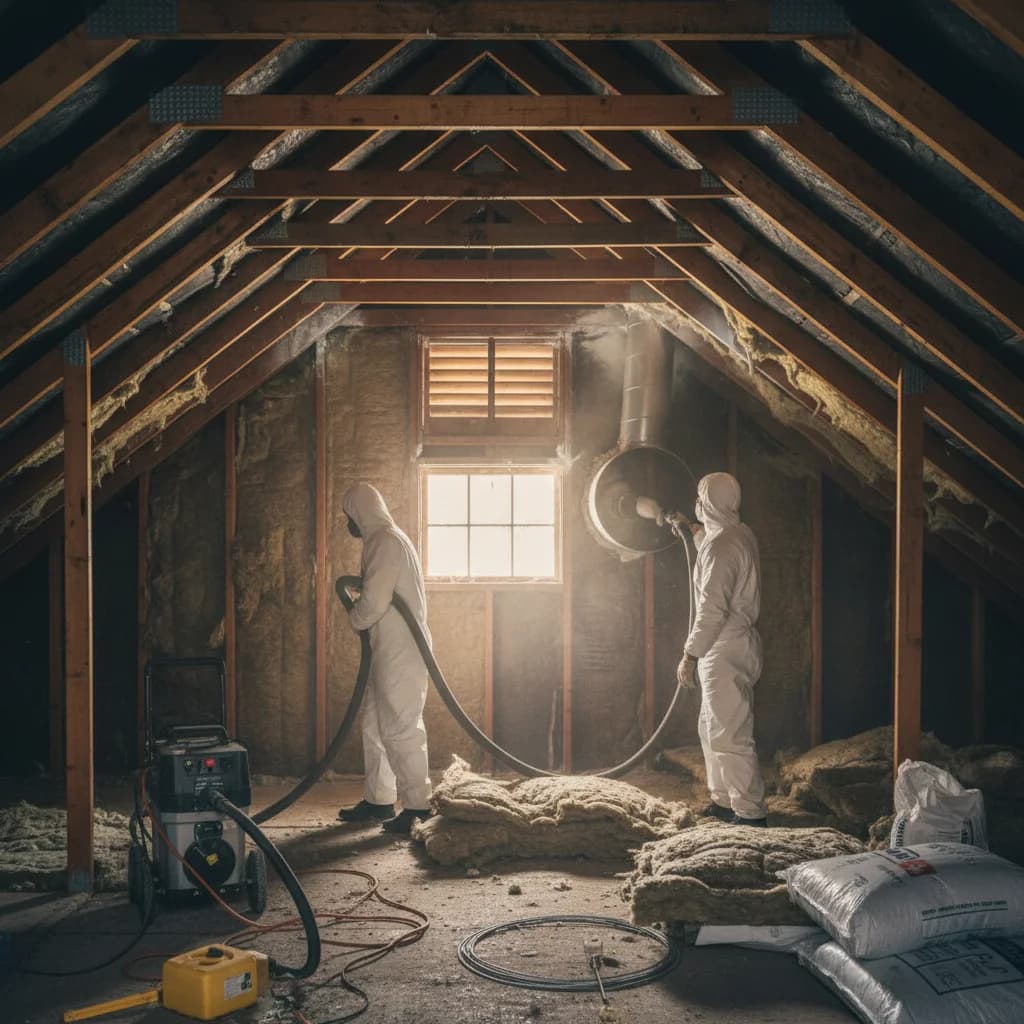
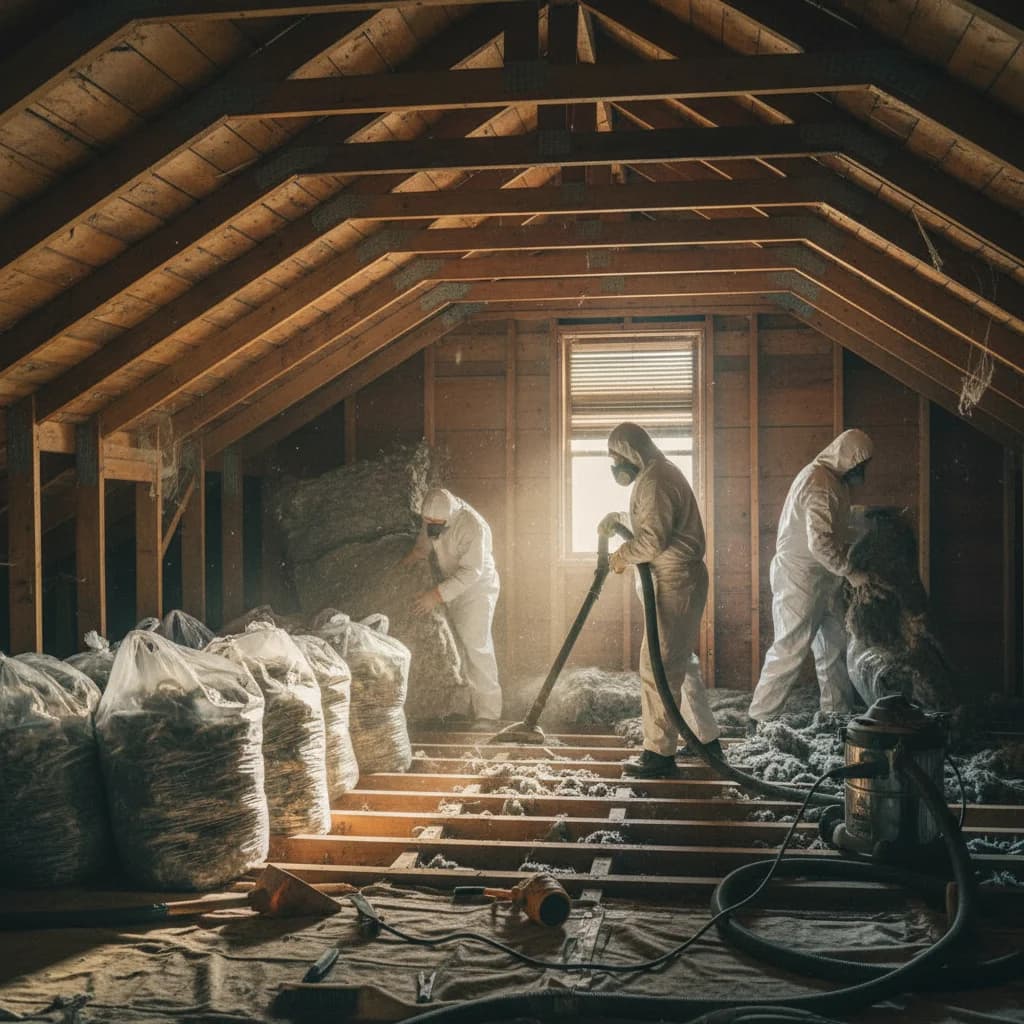
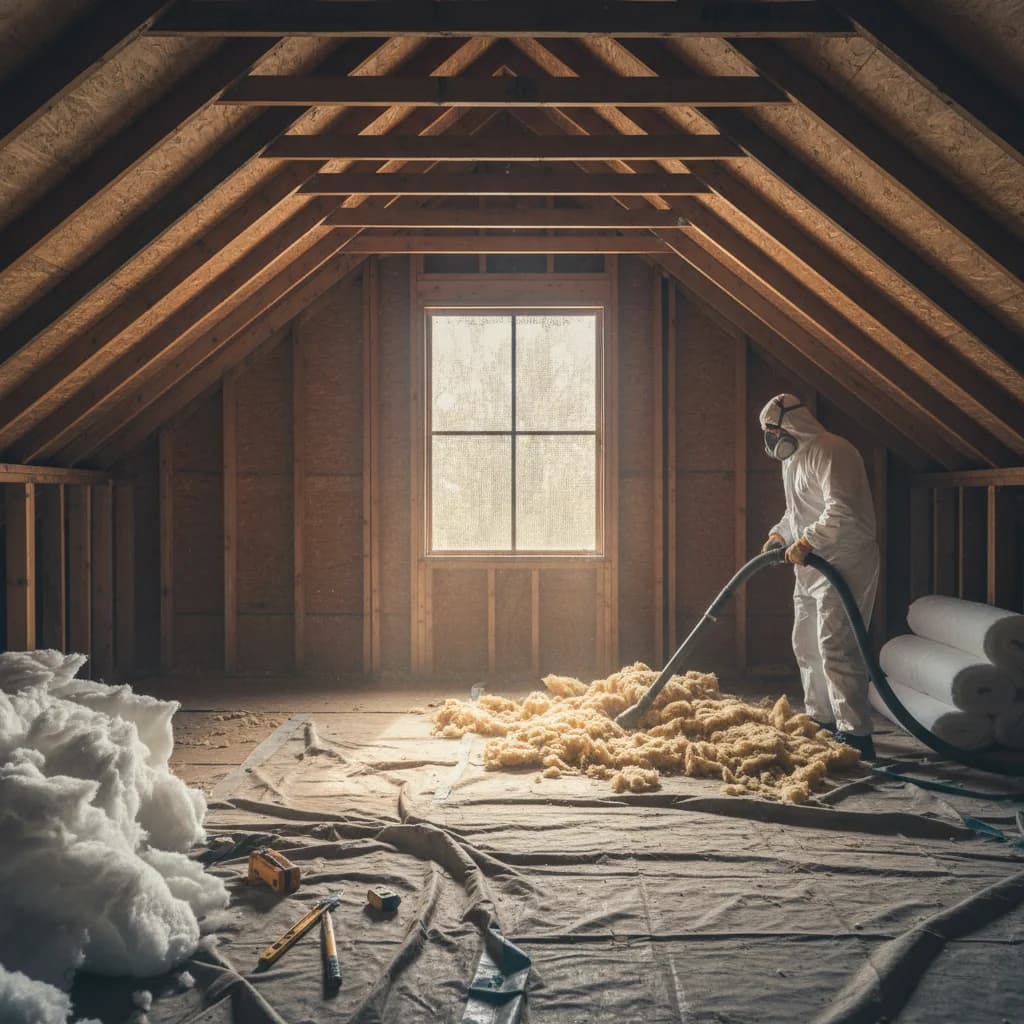
- Personal protective equipment — Full Tyvek suits, HEPA respirators, and sealed goggles protect workers from exposure
- Contaminated material removal — All affected insulation, debris, and materials are removed using HEPA-filtered vacuum systems and sealed in biohazard bags
- Surface treatment — Wood framing, sheathing, and other structural surfaces are treated with hospital-grade antimicrobial solutions
- Enzymatic cleaning — For biological waste and odors, enzyme-based cleaners break down organic compounds at a molecular level
- Air scrubbing — HEPA air filtration machines run throughout the process and after treatment to capture airborne particles and spores
- Verification — Some companies perform post-treatment testing to confirm pathogen levels have been reduced to safe thresholds
Decontamination vs. Sanitization
These terms are often used interchangeably, but there's a practical difference. Sanitization reduces bacteria and pathogens to safe levels as defined by public health standards. Decontamination aims to eliminate all biological hazards entirely. For most residential attic situations, thorough sanitization is sufficient and more cost-effective. Full decontamination is reserved for severe contamination — large-scale rodent infestations, significant wildlife damage, or situations involving immunocompromised residents.
Ask your service provider which level of treatment they recommend for your situation and what products they use. Reputable companies will explain their protocol and why it's appropriate for your specific contamination type. For more detail on how sanitization products and techniques work, including thermal fogging and enzyme-based treatments, see our guide on attic sanitizing and deodorizing after pest infestation.
Cost and Timeline
Attic decontamination typically costs between $1,500 and $4,000 depending on attic size and contamination severity. The process usually takes one to two days for an average-sized attic. Many companies combine decontamination with insulation removal and replacement as a complete restoration package, which provides better value than scheduling these as separate projects.
Insurance may cover decontamination costs if the contamination resulted from a covered event like a roof leak or storm damage. Check with your homeowner's policy before starting work — document all damage thoroughly with photos and get a written assessment from your contractor before filing a claim.
When evaluating decontamination companies, ask about their technicians' training and certifications. Look for companies certified by the Institute of Inspection, Cleaning and Restoration Certification (IICRC) or similar industry bodies. These certifications indicate the company follows established protocols for biohazard remediation rather than improvising their approach.