Hiring a professional attic cleaning company is a smart decision, but many homeowners aren't sure what the process actually involves. Understanding each step helps you evaluate quotes, ask the right questions, and verify that the job is done properly. For homeowners in Los Angeles, where attic cleaning is one of the most requested home services due to the region's active pest populations, knowing what to expect is especially valuable.
There are 37 attic cleaning companies in Los Angeles with an average rating of 4.8 stars.Initial Inspection and Assessment
Every professional attic cleaning starts with a thorough inspection. A qualified technician will enter your attic to evaluate:
- Insulation condition — Type, depth, R-value, and whether it's contaminated or degraded
- Pest evidence — Droppings, nesting materials, gnaw marks, entry points, and any live or deceased animals
- Moisture and mold — Signs of water intrusion, condensation, or active mold growth
- Structural concerns — Damaged framing, wiring, ductwork, or plumbing
- Ventilation — Whether soffit and ridge vents are functioning properly
Many reputable companies offer this inspection free of charge or for a minimal fee that gets credited toward the work. After the inspection, you should receive a written assessment with photos documenting what was found and a detailed proposal outlining the recommended work. For help understanding what these proposals should include and typical price ranges by service type, see our attic cleaning cost guide.
Preparation and Protection
Before work begins, the crew prepares your home to prevent contamination of your living space:
- Drop cloths and plastic sheeting protect hallways, furniture near the attic access point, and flooring
- The attic access area is sealed with plastic and tape to create a contained work zone
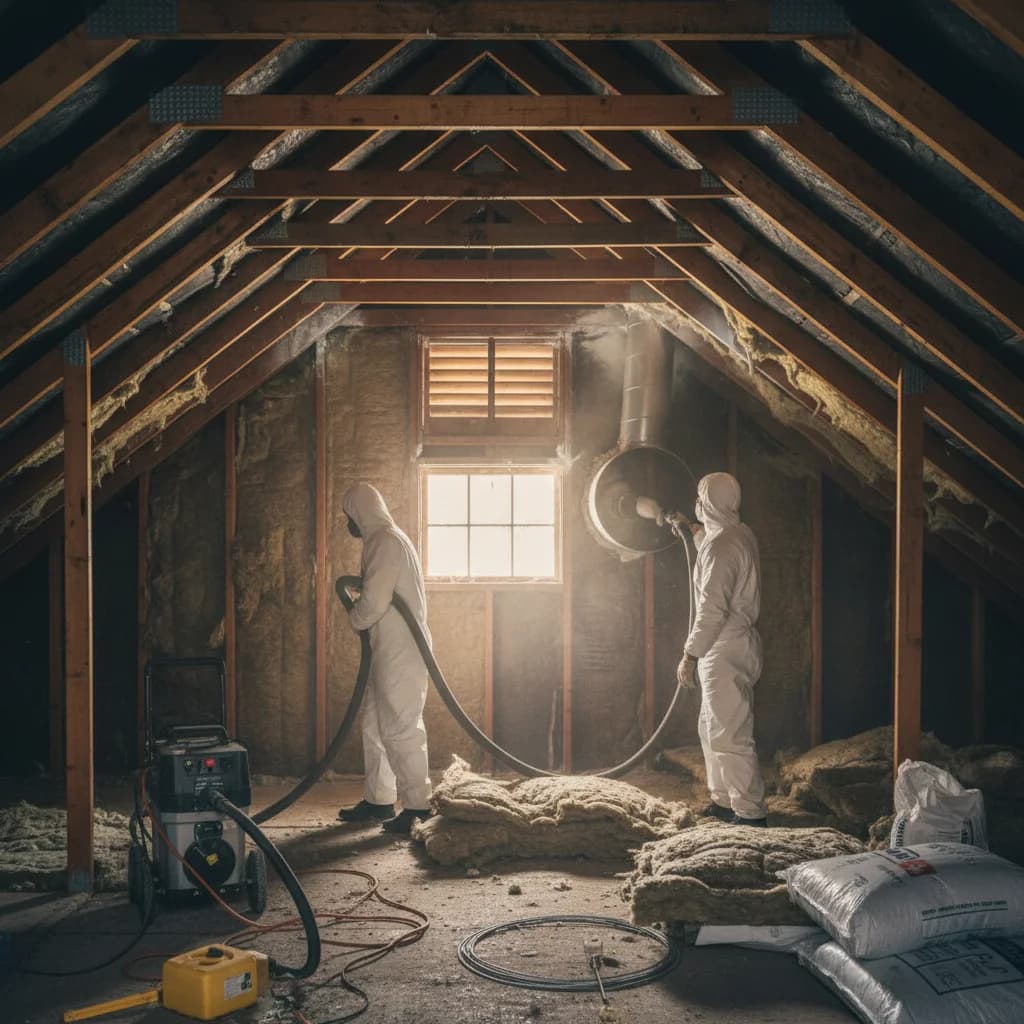
- Industrial vacuum hoses are routed from the attic through a window or the attic access to the collection equipment outside
- HEPA air scrubbers may be set up to filter airborne particles during the work
This preparation phase typically takes 30-60 minutes and is a sign of a professional operation. Companies that skip containment procedures risk spreading contaminants throughout your home.
Insulation Removal
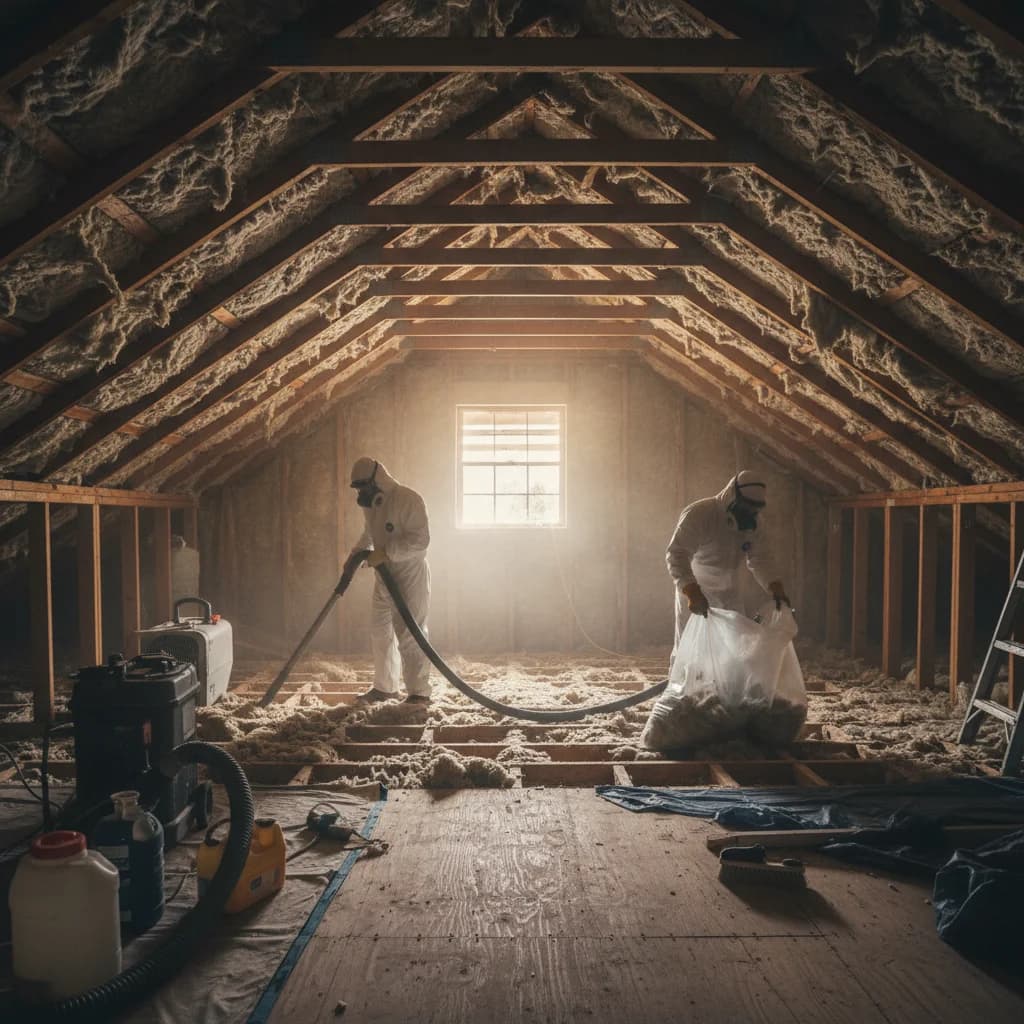
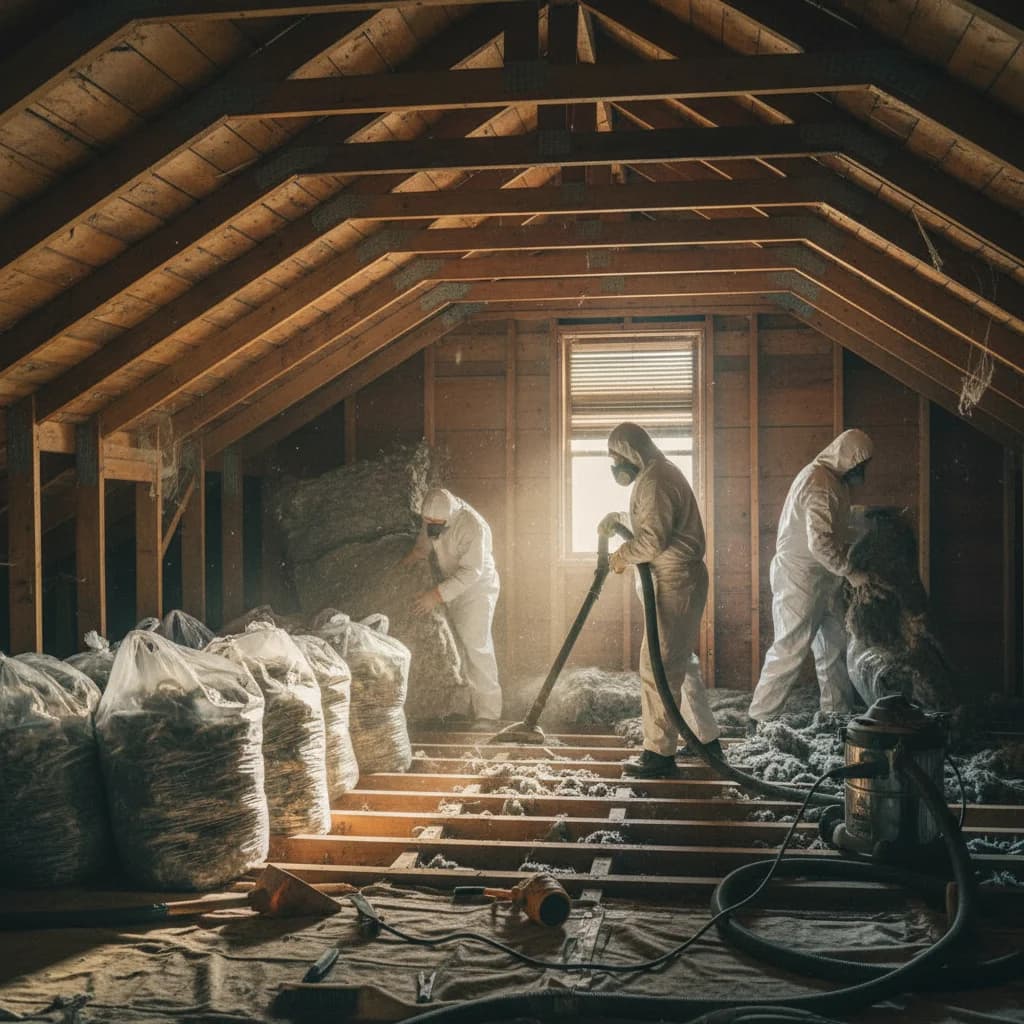
If contaminated or damaged insulation needs to come out, it's removed using industrial vacuum systems. For loose-fill insulation like cellulose or blown-in fiberglass, a high-powered vacuum machine — often truck-mounted — pulls the material through large-diameter hoses directly into sealed collection bags. Batt insulation is removed by hand, rolled, bagged, and carried out.
In the San Diego and broader Southern California market, most homes built after 1980 have blown-in insulation, which is faster and cleaner to remove with vacuum equipment compared to older batt installations.
Cleaning and Sanitization
Once the old insulation is out, the attic floor and accessible surfaces are thoroughly cleaned. This includes:
- HEPA vacuuming of all surfaces to remove dust, debris, and fine particulates
- Antimicrobial treatment of wood surfaces to eliminate bacteria and inhibit future microbial growth
- Odor neutralization using enzyme-based products that break down biological residue rather than simply masking smells
- Spot treatment of any stained or heavily contaminated areas
This stage is where the real health benefit of professional cleaning comes in. The combination of HEPA filtration and antimicrobial treatment addresses contaminants that regular cleaning methods simply can't reach.
Air Sealing and Repairs
With the attic floor exposed and clean, this is the ideal time to address air leaks and minor repairs. Common air sealing targets include:
- Gaps around electrical and plumbing penetrations
- Open top plates of interior walls
- Recessed lighting housings
- HVAC duct connections
- The attic hatch or pull-down stair perimeter
Not every attic cleaning project includes air sealing, but companies that offer it provide significantly better value. Air sealing before re-insulation can improve energy efficiency by 15-25%. For a detailed breakdown of what air sealing involves and why it matters, see our guide on air sealing your attic for energy savings.
New Insulation and Final Walkthrough
The final major step is installing fresh insulation. Most professionals recommend blown-in insulation for attic floors because it fills irregular spaces, covers obstructions, and achieves consistent depth across the entire area. The target R-value varies by climate zone — in San Francisco and the Bay Area, R-38 to R-49 is standard for attic floors. For a detailed comparison of insulation materials, see our guide on blown-in vs. batt insulation.
The installation process is fast. A two-person crew can insulate most residential attics in 2-4 hours using a blowing machine that feeds insulation through a hose from bags loaded at ground level.
Once installation is complete, a quality company will walk you through the finished work, pointing out what was done and answering questions. You should receive:
- Before and after photos documenting the work
- An invoice detailing all services performed
- Warranty information for insulation and any exclusion work
- Maintenance recommendations for keeping your attic in good condition
The entire process — from arrival to cleanup — typically takes one full day for a standard residential attic. Larger homes or complex projects may require a second day.