When it's time to insulate or re-insulate your attic, the choice between blown-in and batt insulation is one of the most important decisions you'll make. Both options have legitimate advantages, and the right choice depends on your attic's characteristics, your climate, and your budget. For homeowners in Sacramento, where summer attic temperatures can exceed 150°F and winter nights drop near freezing, selecting the right insulation type directly impacts year-round comfort and energy costs.
There are 34 attic cleaning companies in Sacramento with an average rating of 4.6 stars.Blown-In Insulation: How It Works
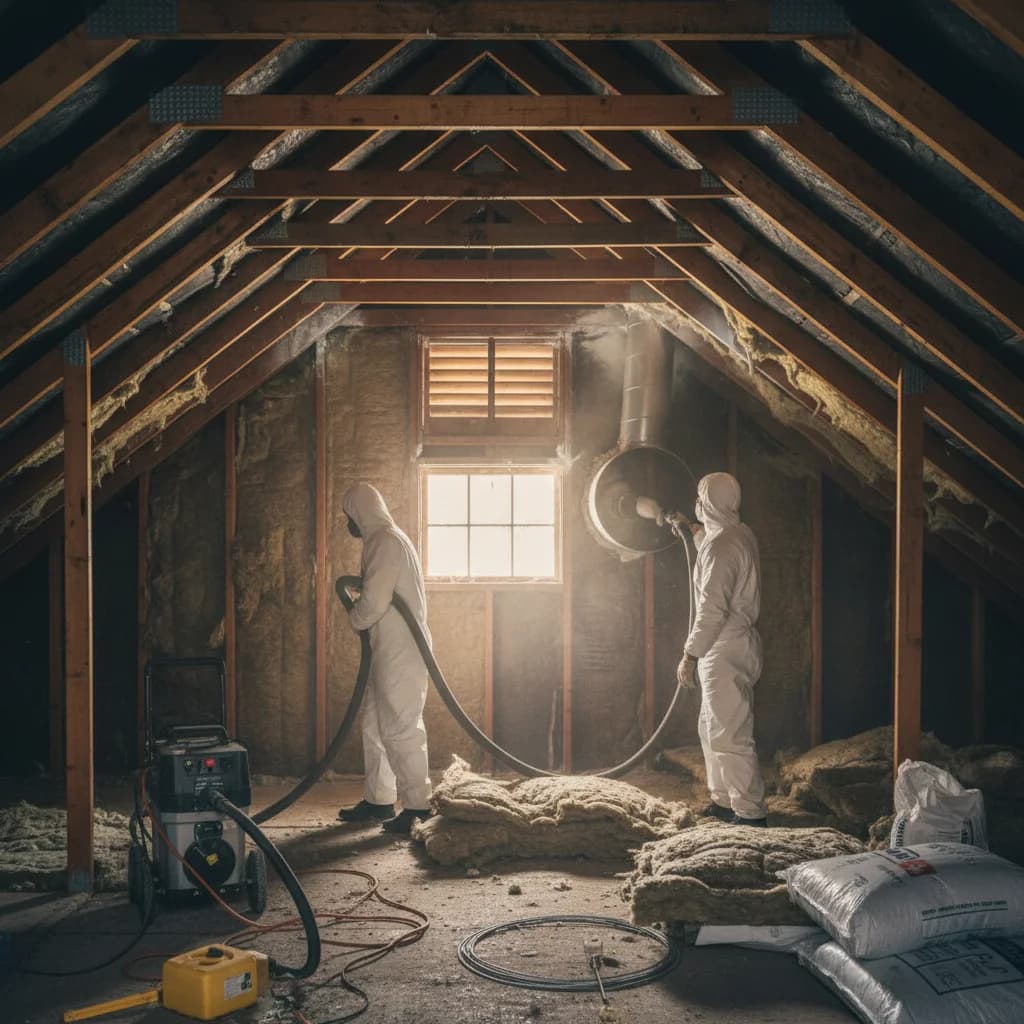
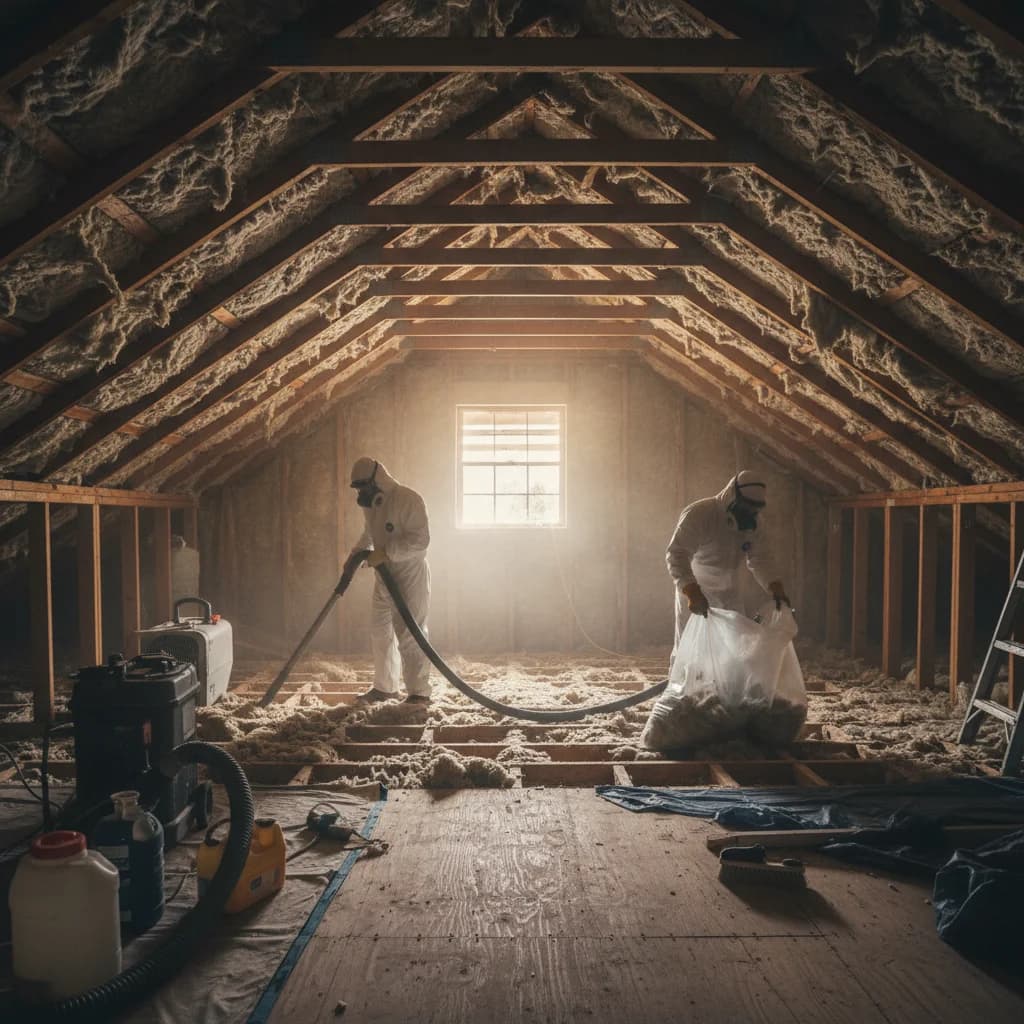
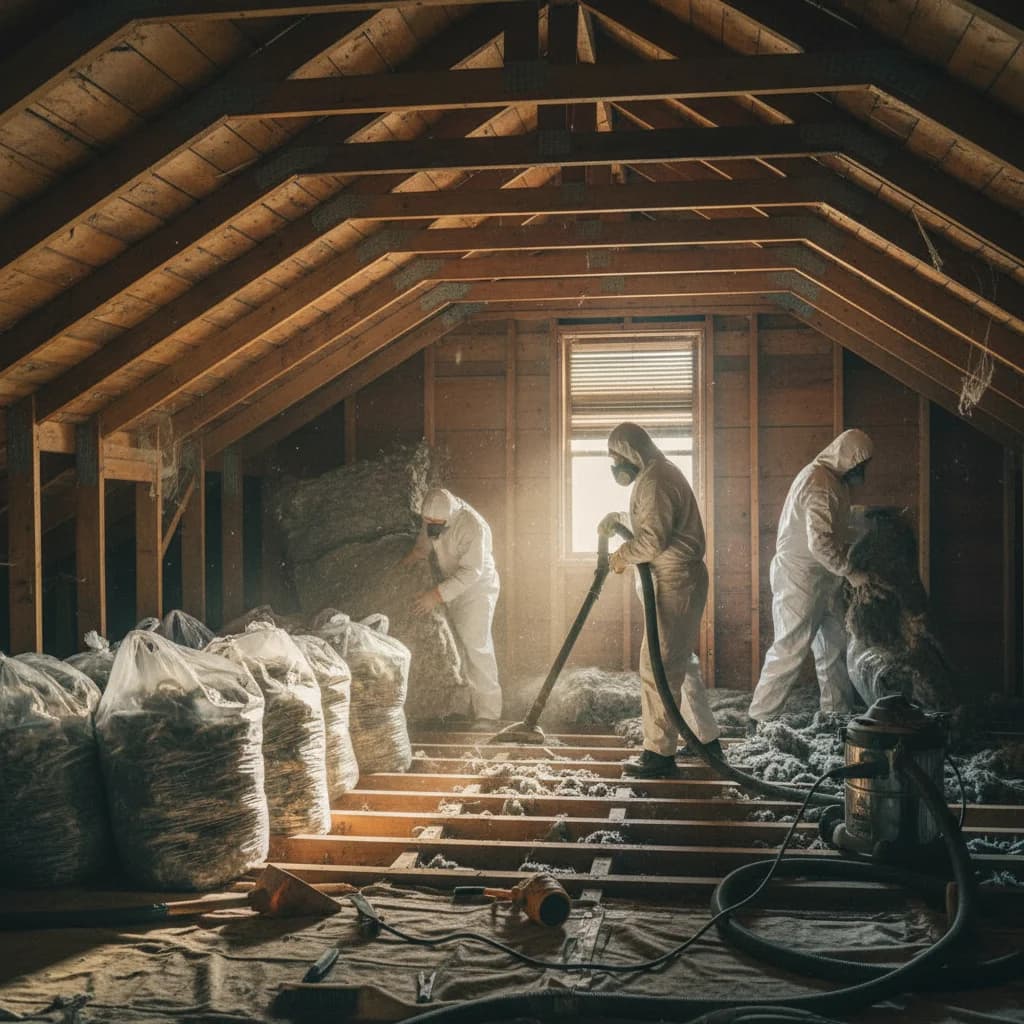
Blown-in insulation — either fiberglass or cellulose — is installed using a machine that blows loose material through a hose into the attic space. The material settles around obstacles, fills gaps, and creates a continuous thermal blanket across the attic floor.
Blown-in fiberglass consists of small, fluffy fiberglass clusters. It doesn't absorb moisture, resists settling, and is naturally non-combustible. R-value: approximately R-2.5 per inch.
Blown-in cellulose is made from recycled newsprint treated with fire retardants (typically borate). It has a slightly higher R-value per inch than fiberglass and is often less expensive. However, it absorbs moisture more readily and settles 15-20% over time. R-value: approximately R-3.5 per inch.
Batt Insulation: How It Works
Batt insulation comes in pre-cut rolls or panels, typically fiberglass or mineral wool, designed to fit between standard joist spacing (16 or 24 inches on center). Installers cut pieces to length and lay them between and over the joists.
Fiberglass batts are the most familiar insulation product — the pink or yellow rolls you see at home improvement stores. R-value: approximately R-3.1 per inch.
Mineral wool batts (also called rock wool) are denser, more fire-resistant, and easier to cut precisely. They resist moisture better than fiberglass batts and hold their shape over time. R-value: approximately R-3.3 per inch.
Performance Comparison
The critical difference between blown-in and batt insulation isn't the material — it's the coverage quality:
Blown-in advantages:
- Fills around wiring, pipes, junction boxes, and irregular framing automatically
- Creates continuous coverage without gaps or compression
- Faster installation — a typical attic takes 2-4 hours
- Better real-world performance because it doesn't rely on perfect fit
- Easier to achieve high R-values by simply adding more depth
Batt advantages:
- Predictable R-value when installed perfectly
- No special equipment needed for basic DIY installation
- Can be removed and replaced more easily for future access
- Doesn't settle over time (fiberglass batts maintain their loft)
- No dust or loose material that can shift with air movement
In Aurora and other Front Range communities, where homes often have complex attic framing with multiple levels and dormers, blown-in insulation consistently outperforms batts because it fills the irregular spaces that batts can't conform to.
Real-World Performance Gap
Here's what research consistently shows: batt insulation installed in real-world conditions typically delivers 50-70% of its rated R-value. The culprits are gaps at edges, compression around wiring and pipes, sections cut slightly too short, and areas where batts don't fully contact the air barrier.
Blown-in insulation achieves 90-95% of its rated R-value in real-world conditions because the machine installation process naturally fills voids and maintains consistent depth.
This performance gap means that R-38 blown-in insulation often outperforms R-49 batts in actual energy savings — a counterintuitive result that makes blown-in the preferred choice for most professional installers.
Cost Comparison
For a typical 1,000-1,500 square foot attic:
| Factor | Blown-In Fiberglass | Blown-In Cellulose | Fiberglass Batts |
|---|---|---|---|
| Material cost | $400-$700 | $300-$500 | $350-$600 |
| Professional install | $800-$1,500 | $700-$1,200 | $600-$1,200 |
| DIY feasible? | Equipment rental needed | Equipment rental needed | Yes |
| Time to install | 2-4 hours | 2-4 hours | 6-10 hours |
When professional installation is included, the cost difference between options is relatively small — typically a few hundred dollars either way. Given the performance advantages of blown-in products, most professionals recommend them for attic floors.
Which Should You Choose
Choose blown-in insulation if:
- Your attic has many obstructions (wiring, pipes, HVAC equipment)
- You want the best real-world performance
- You're hiring professionals for the installation
- Your joist spacing is irregular or your attic has multiple levels
- You need R-49 or higher (much easier to achieve with blown-in)
Choose batt insulation if:
- You plan to use the attic for storage and need to walk between joists
- You may need to access specific areas frequently for maintenance
- You're doing a DIY installation with a limited budget
- Your attic has clean, uniform joist spacing with minimal obstructions
For homeowners in Charlotte, where most attic insulation projects are performed by professionals as part of comprehensive cleanup and re-insulation packages, blown-in fiberglass or cellulose is the standard recommendation. For a complete walkthrough of the professional replacement process, including air sealing and R-value targets by climate zone, see our guide on attic insulation replacement.