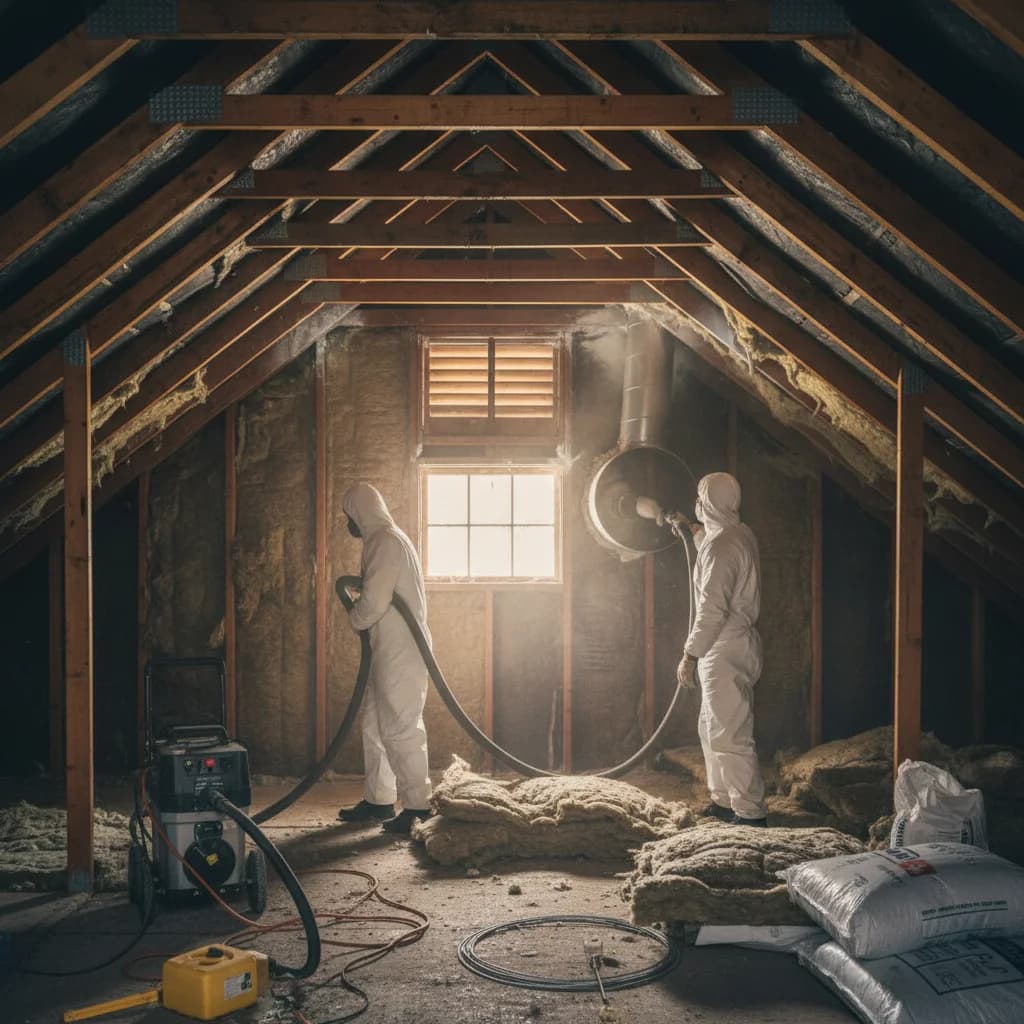
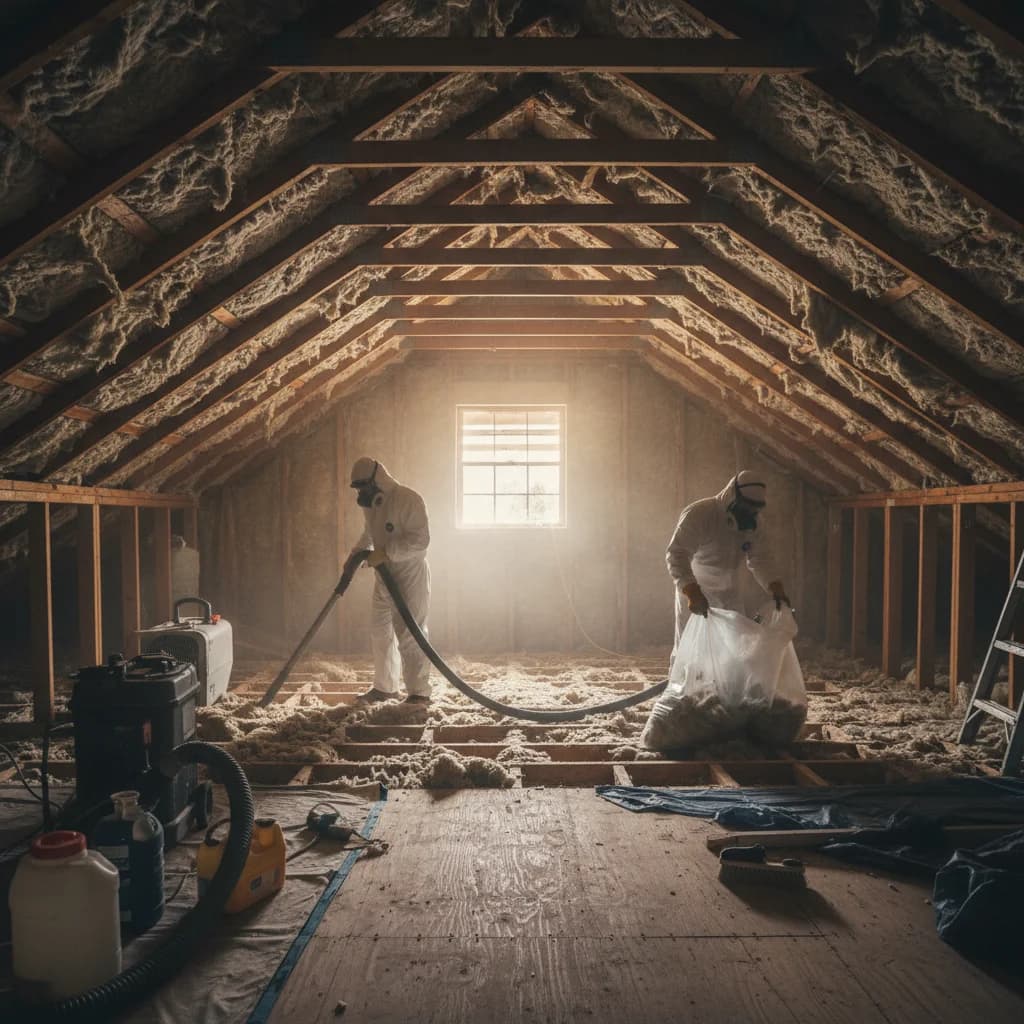
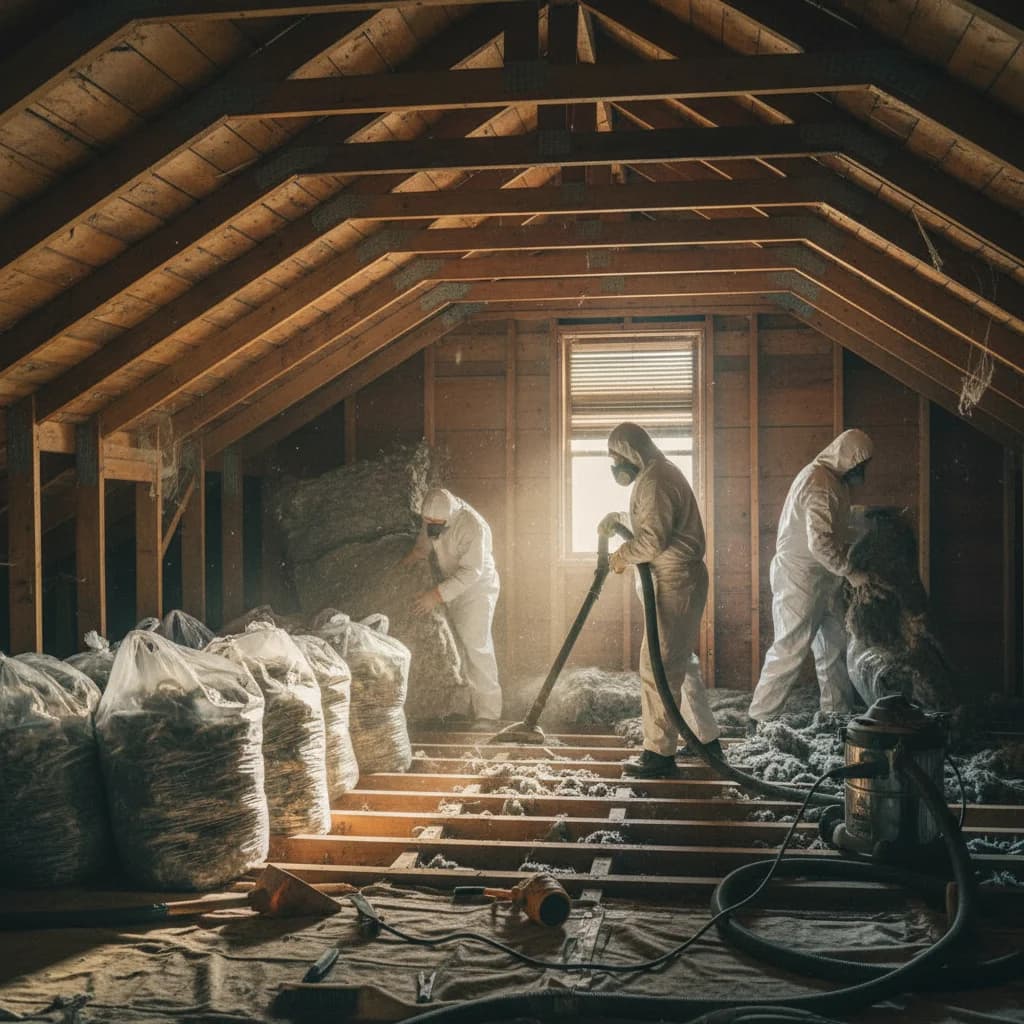
Replacing your attic insulation is one of the most impactful home improvements you can make. Worn, compressed, or contaminated insulation forces your HVAC system to work harder, drives up energy bills, and can compromise your home's air quality. For homeowners in Chicago, where harsh winters demand peak insulation performance, upgrading your attic insulation can reduce heating costs by 20% or more.
There are 9 attic cleaning companies in Chicago with an average rating of 4.7 stars.When Replacement Makes Sense
Several factors indicate it's time for new attic insulation:
- Your insulation is more than 20 years old — Fiberglass and cellulose lose effectiveness over time as they settle, compress, and absorb moisture
- Uneven temperatures between rooms — Hot spots and cold spots often trace back to inconsistent attic insulation coverage
- Rising energy bills — If your heating and cooling costs have climbed without a rate increase, degraded insulation is a likely culprit
- Post-pest cleanup — After rodent or wildlife removal, contaminated insulation must be replaced for health and hygiene reasons
- Renovation projects — Adding air sealing, updating electrical, or addressing structural issues requires temporary insulation removal, making it the perfect time to upgrade
Understanding Insulation Materials
Each insulation type has distinct characteristics that affect performance, cost, and suitability for your attic:
Blown-in fiberglass is the most common choice for attic floors. It fills irregular spaces effectively, doesn't absorb moisture, and resists settling better than cellulose. It's non-combustible and doesn't support mold growth. Typical cost: $1.00-$1.50 per square foot installed.
Blown-in cellulose is made from recycled paper treated with fire retardants. It has a slightly higher R-value per inch than fiberglass and is often less expensive. However, it absorbs moisture more readily and can settle 15-20% over time, reducing effective R-value. Typical cost: $0.80-$1.20 per square foot installed.
Fiberglass batts are pre-cut rolls installed between joists. They're effective when installed perfectly, but gaps around wiring, pipes, and irregular framing reduce real-world performance significantly. Batts work best in attics with uniform joist spacing and minimal obstructions. Typical cost: $0.70-$1.10 per square foot installed.
Spray foam (open-cell or closed-cell) is applied to the underside of the roof deck rather than the attic floor, creating a conditioned attic space. It's the premium option, offering the highest R-value per inch and excellent air sealing. However, it costs 3-4 times more than blown-in options and is unnecessary for most standard attic cleanups.
R-Value Requirements by Climate
The Department of Energy recommends different R-values based on your climate zone:
- Zones 1-3 (Southern states) — R-30 to R-49
- Zone 4 (Mid-Atlantic, lower Midwest) — R-38 to R-60
- Zones 5-7 (Northern states) — R-49 to R-60
In Denver and Lakewood, located in Zone 5, the recommended R-value is R-49 or higher. Many older homes in these areas have R-19 or less — well below current standards — making insulation replacement a high-return investment. Colorado homeowners face additional altitude-related insulation challenges — our Colorado attic care guide covers how elevation affects insulation performance and the specific R-value targets for Front Range homes.
The Replacement Process
Professional insulation replacement follows a clear sequence:
- Pre-installation inspection — Assessing current insulation, checking for hazards, and measuring the attic to calculate material quantities
- Old insulation removal — Using industrial vacuum equipment for loose-fill or hand removal for batts
- Air sealing — The most important step that many budget installers skip. Sealing gaps around penetrations, top plates, and the attic hatch before new insulation goes in makes the new material dramatically more effective
- Installation — Blowing in or laying new insulation to the target R-value, ensuring consistent coverage across the entire attic floor
- Depth markers — Installing rulers or markers at intervals so future inspections can verify insulation depth hasn't decreased
The entire process takes one to two days for most residential attics.
Air Sealing: The Critical First Step
Installing new insulation over unsealed gaps is like putting on a winter coat with the zipper open. Air sealing before insulation addresses:
- Gaps around electrical wiring and plumbing penetrations
- Open chase ways and soffits above interior walls
- Recessed light fixtures (using IC-rated covers)
- The attic hatch or pull-down stair
- HVAC duct boot connections
Studies consistently show that air sealing plus insulation outperforms insulation alone by 30-40% in energy savings. Always ask your installer about air sealing — it's the difference between a good job and a great one. For a deeper look at the air sealing process and specific techniques, see our guide on air sealing your attic for energy savings.
Getting the Best Value
When comparing quotes for insulation replacement, look beyond the price per square foot:
- Does the quote include air sealing? This should be standard, not an add-on
- What R-value will be achieved? Ensure it meets or exceeds your climate zone recommendation
- Is old insulation removal included? Installing over old, contaminated insulation defeats the purpose
- What material is being installed? Verify the specific product and its rated R-value per inch
- What warranty is offered? Reputable installers warranty both materials and labor