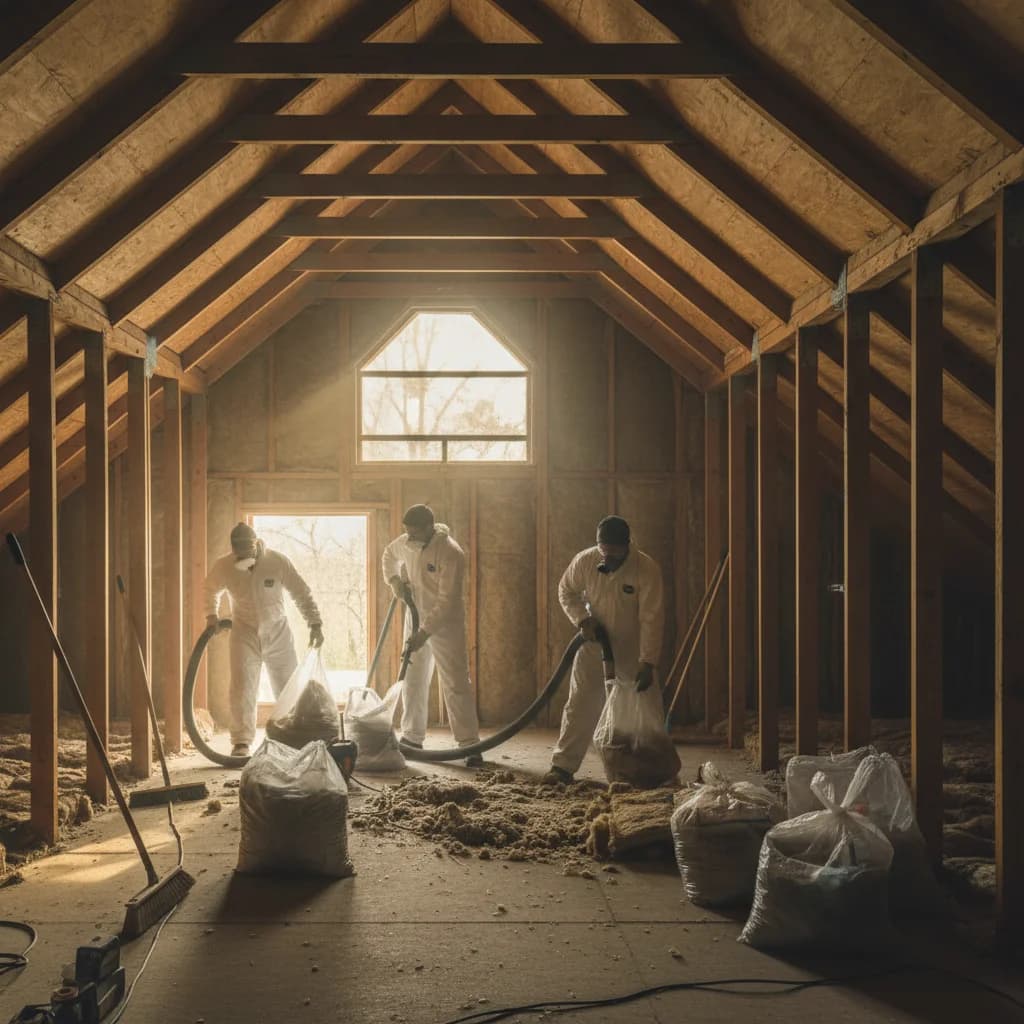
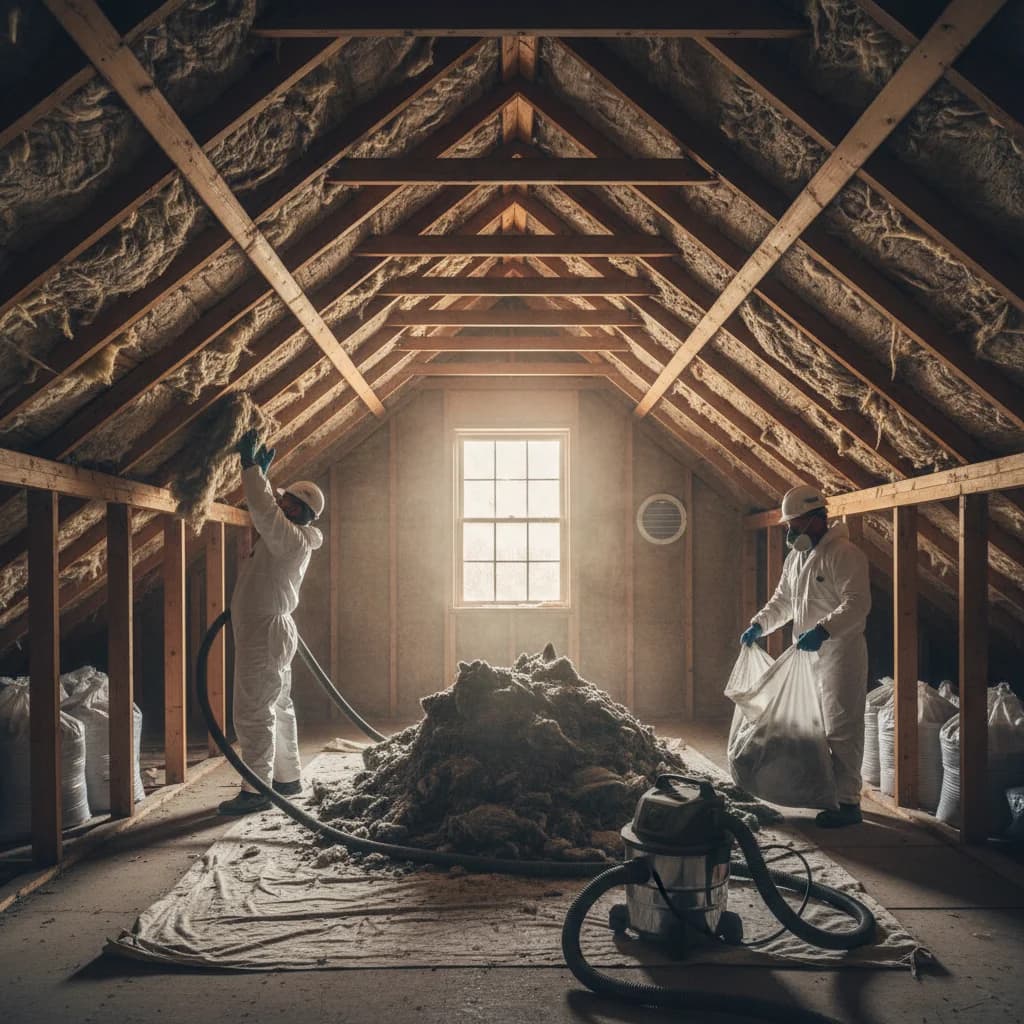
Each year, thousands of emergency room visits result from attic-related injuries — falls through ceilings, electrical shocks, heat exhaustion, and exposure to hazardous materials. The attic is statistically one of the most dangerous spaces in a residential home, yet most homeowners enter without any preparation or awareness of the risks above their heads. Whether you're in Indianapolis dealing with summer attic temperatures above 130 degrees or in any other climate, understanding these hazards before you climb that ladder could prevent a serious injury or a costly health issue.
There are 24 attic cleaning companies in Indianapolis with an average rating of 4.5 stars.Physical Hazards: Falls, Heat, and Confined Spaces
The most immediate danger in any attic is the risk of falling through the ceiling. In most homes, the only solid surfaces to step on are the tops of the ceiling joists — narrow wooden beams typically spaced 16 or 24 inches apart. The drywall between joists is not designed to support weight. One misplaced step onto drywall, and you'll crash through into the room below, frequently resulting in broken bones, back injuries, and head trauma.
Tripping hazards compound the fall risk. Attics are cluttered with electrical wiring draped between joists, HVAC ductwork, plumbing pipes, and framing members at unexpected angles. In low-clearance attics, moving while crouched makes it nearly impossible to see footing obstacles clearly.
Head injuries are another common risk. Roof nails protruding through sheathing, low rafters, and metal ductwork connections are all at head height when navigating on joists. A sudden stand-up in a low attic means driving your skull into a nail point or beam.
Heat exhaustion is a serious seasonal hazard. Attics in Indianapolis can exceed 130 degrees during summer, and in southern climates like Marietta, temperatures routinely reach 150 degrees or higher. Heat exhaustion can set in within 15 to 20 minutes at these temperatures, causing dizziness, confusion, and loss of coordination — exactly the conditions that make navigating narrow joists dangerous.
Material Hazards: Asbestos, Fiberglass, and Lead
Older homes harbor material hazards that many homeowners don't realize exist in their attic. The most serious is asbestos, commonly used in building materials through the 1980s. Vermiculite insulation — small, accordion-shaped granules often gray-brown or silver-gold — is the most well-known attic asbestos risk. Approximately 70% of vermiculite insulation sold in the United States came from a mine contaminated with tremolite asbestos. If your home has vermiculite insulation, do not disturb it — asbestos fibers become dangerous when airborne.
Asbestos can also be present in pipe insulation wraps, older duct sealants, and some attic floor tiles. Any home built before 1990 should be assumed to potentially contain asbestos until testing proves otherwise.
Fiberglass insulation poses its own risks. Direct contact causes significant skin irritation, and inhaling fiberglass particles irritates the lungs and respiratory tract. The tiny glass fibers embed in skin and can cause itching and rashes lasting days. Always wear long sleeves, gloves, and a proper respirator when working around fiberglass.
Lead paint may be present on older attic framing, especially in homes built before 1978. Disturbing lead paint through sanding, scraping, or friction creates hazardous lead dust.
Biological Hazards: Animals, Mold, and Insects
The biological hazards in attics are among the most underestimated risks homeowners face. Rodent droppings and urine can carry hantavirus, a potentially fatal respiratory disease. The virus becomes airborne when dried droppings are disturbed — sweeping or vacuuming rodent waste without respiratory protection is a common exposure route.
Raccoon feces carry Baylisascaris procyonis, a roundworm whose eggs survive for years and cause severe neurological damage. Bat guano harbors Histoplasma capsulatum, a fungus causing histoplasmosis. Bird droppings carry similar fungal risks along with salmonella and E. coli.
Mold is another significant biological hazard. Attic mold thrives where moisture accumulates from roof leaks, condensation, or improperly vented bathroom exhaust fans. Mold spores irritate the respiratory system and trigger severe reactions in people with allergies, asthma, or compromised immune systems.
Stinging insects including wasps, hornets, and yellow jackets frequently build nests in attic spaces. Disturbing a nest triggers aggressive defensive behavior and multiple stings, which is especially dangerous for anyone with sting allergies. In Brooklyn and other dense urban areas, bee colonies also establish hives in attic voids, requiring specialized removal. For a thorough breakdown of how professionals handle biological contamination, see our guide on attic decontamination services.
Electrical Hazards: Wiring and Junction Boxes
Attic electrical hazards range from nuisance-level risks to life-threatening dangers. Exposed wiring is the most common issue. In older homes, wiring runs across joists or hangs loosely between rafters without protective conduit. Stepping on or snagging wiring can damage conductor insulation and create shock or fire risks.
Knob-and-tube wiring, found in homes built before the 1950s, presents a particular danger. This system uses ceramic knobs and tubes to route conductors through the attic. The wiring isn't inherently dangerous when undisturbed, but it becomes hazardous when insulation is piled on top — knob-and-tube was designed to dissipate heat through open air, and burying it creates a fire risk. Do not add insulation over knob-and-tube wiring until an electrician evaluates the system.
Open junction boxes allow accidental contact with live wire connections. Missing cover plates are a common code violation in attics, often left by previous owners who did electrical work without permits. Overloaded circuits serving attic fans or HVAC equipment can also overheat wiring — a fire risk not visible until insulation is pulled back.
Essential Safety Equipment for Attic Entry
Never enter your attic without proper preparation. The following equipment should be considered mandatory for any attic visit:
- NIOSH-rated N95 respirator or P100 half-face respirator — Paper dust masks are insufficient for protection against mold spores, asbestos fibers, or animal waste pathogens
- Safety glasses or sealed goggles — Protect your eyes from fiberglass particles, dust, and protruding nails
- Hard hat or bump cap — Essential in low-clearance attics with exposed nails and framing
- Long sleeves and long pants — Preferably disposable coveralls that you can remove before re-entering your living space
- Work gloves — Protect hands from fiberglass, splinters, and sharp edges
- Sturdy headlamp plus a backup flashlight — Hands-free lighting is critical when navigating joists
- Knee pads — Crawling on narrow wooden joists without protection leads to painful bruising and knee injuries
- Portable planks or walkboards — Laying boards across joists creates stable footing and reduces the risk of stepping through drywall
If you encounter any hazard you're not equipped to handle safely — significant animal waste, suspected asbestos, extensive mold, or dangerous wiring — stop and leave the attic immediately. These situations require trained professionals with specialized equipment. Our guide on when to hire an attic professional can help you determine which problems are safe to address yourself and which demand expert intervention.