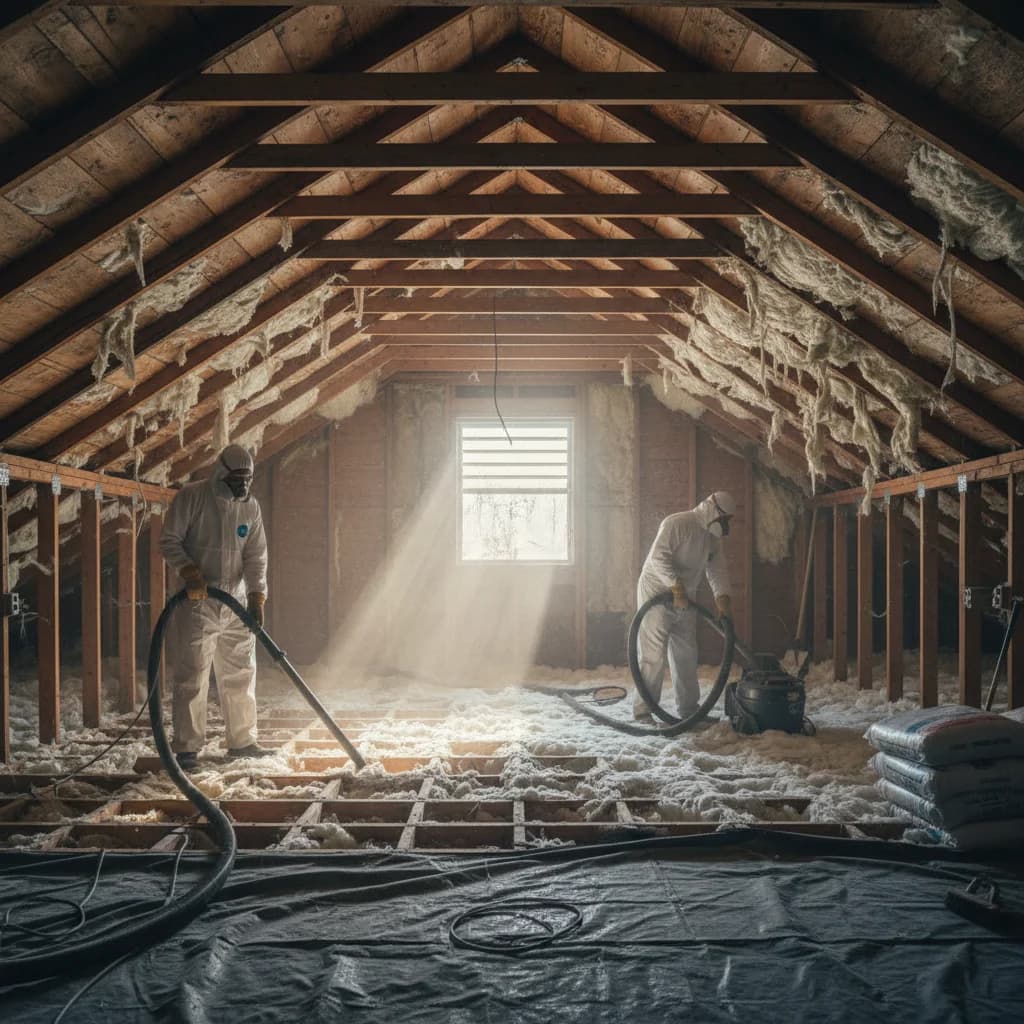
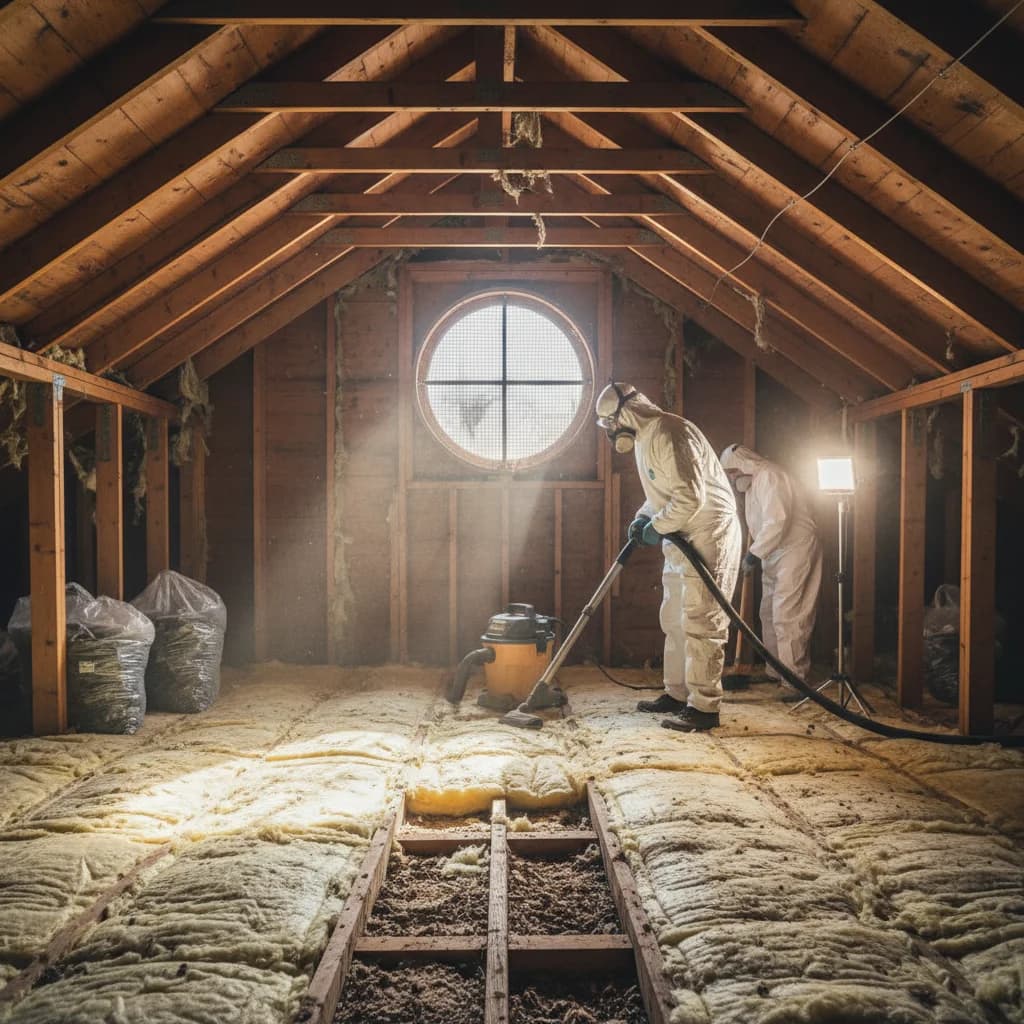
A relative humidity level above 60 percent in your attic is all it takes for mold to begin colonizing wood surfaces — and in the Gulf Coast and southeastern states, outdoor humidity regularly exceeds 80 percent for months at a time. That persistent moisture creates conditions where attic problems don't just happen occasionally; they happen inevitably unless homeowners take deliberate preventive steps. In Miami and Houston, the combination of high humidity, warm temperatures, and frequent rain events makes attic maintenance a year-round priority that directly affects structural integrity, air quality, and energy efficiency.
There are 12 attic cleaning companies in Miami with an average rating of 4.9 stars.How Humidity Damages Wood and Insulation
Moisture is a slow destroyer. Unlike a sudden roof leak that produces obvious damage, high ambient humidity works gradually, and its effects may not become visible for months or years. Wood framing in attics — rafters, joists, sheathing — absorbs moisture from humid air. When the moisture content of wood consistently exceeds 20 percent, conditions become favorable for wood-decay fungi, the organisms responsible for structural rot. Over time, affected wood loses its load-bearing capacity, becomes spongy, and may eventually require replacement.
Insulation suffers as well. Fiberglass insulation does not absorb water readily, but it traps moisture in its air pockets, which reduces its thermal resistance. Wet fiberglass sags and compresses, permanently losing loft even after it dries. Cellulose insulation, made from treated paper fibers, absorbs moisture more readily and can become a host for mold growth when it stays damp. In humid climates, insulation degradation from chronic moisture exposure is one of the leading reasons homeowners experience rising energy costs without an obvious explanation. The insulation may appear to be in place, but its R-value has diminished significantly.
Condensation Cycles and Vapor Drive
Understanding how moisture enters your attic is essential to preventing damage. In humid climates, the dominant moisture mechanism is different from what occurs in cold regions. During summer, hot humid air from outside is driven inward toward the cooler, air-conditioned living space below. This vapor drive pushes moisture through the roof assembly and into the attic, where it can condense on cooler surfaces — particularly on ductwork, metal strapping, and the backside of ceiling drywall.
At night, when the roof surface cools rapidly, moisture in the attic air can condense on the underside of the roof sheathing. This daily condensation cycle — moisture accumulating at night and partially evaporating during the day — gradually saturates wood surfaces and creates the persistent dampness that mold and rot organisms require. In Jacksonville and across Florida, this cycle is intensified by the frequency of afternoon thunderstorms that spike ambient humidity to near-saturation levels. The attic may never experience a dramatic leak, yet it becomes chronically damp through this invisible process. For a detailed explanation of how vapor barriers and vapor retarders function in different climates, see our guide on attic vapor barriers.
Vapor Barriers in Humid Climates
Vapor barrier strategy in humid regions is counterintuitive compared to cold climates. In northern states, a vapor barrier is placed on the warm side of the insulation — the ceiling side — to prevent interior moisture from reaching the cold attic. In hot, humid climates, the vapor drive is reversed: moisture pushes inward from the hot, wet exterior toward the cooler interior. Placing a traditional vapor barrier on the ceiling side in this scenario traps moisture against the drywall, creating ideal conditions for hidden mold growth.
For homes in humid regions, the general recommendation is to avoid polyethylene vapor barriers on the attic floor entirely. Instead, moisture control relies on a combination of air sealing, adequate ventilation, and allowing the building assembly to dry in at least one direction. Kraft-faced insulation batts are acceptable because the kraft paper acts as a vapor retarder rather than a vapor barrier — it slows moisture movement without completely blocking it. If your home has an existing polyethylene vapor barrier and you're experiencing moisture issues, a professional assessment can determine whether it's contributing to the problem and what alternatives exist.
Ventilation Strategies for Humid Attics
Ventilation in humid climates serves a dual purpose: removing heat and removing moisture. The challenge is that the incoming ventilation air itself carries significant humidity. Unlike dry climates where outdoor air helps dry out the attic, humid-climate ventilation introduces air that may have a dew point close to or even above the temperature of air-conditioned surfaces inside the attic.
Despite this complication, proper ventilation remains essential. Balanced intake and exhaust ventilation — soffit vents paired with ridge vents — provides continuous airflow that prevents moisture from stagnating in any one area. The movement of air across surfaces reduces the likelihood of condensation even when the air itself carries moisture. Ventilation baffles at the eaves are critical to maintain clear airflow channels and prevent insulation from blocking soffit vents. In some cases, dehumidifiers rated for attic use can supplement ventilation in chronically damp attics, though this adds ongoing electrical cost and maintenance requirements.
Mold Prevention: A Proactive Approach
In humid climates, mold prevention is not a one-time project — it's an ongoing maintenance discipline. Mold spores are omnipresent in outdoor air; what determines whether they colonize your attic is the presence of sustained moisture and organic material to feed on. Since wood framing provides the organic material and humidity provides the moisture, prevention focuses entirely on moisture control.
Key preventive measures include ensuring all bathroom exhaust fans and dryer vents terminate outside the home rather than into the attic, repairing any roof leaks promptly no matter how minor, and maintaining HVAC systems so that ductwork running through the attic is properly insulated and sealed to prevent condensation on cold surfaces. Antimicrobial treatments applied to wood surfaces during attic cleaning or insulation replacement provide an additional layer of protection by inhibiting mold growth even if moisture levels temporarily rise. For a comprehensive look at what mold remediation involves when prevention falls short, see our guide on attic mold remediation.
Monitoring Humidity Levels
One of the most practical steps homeowners in humid climates can take is installing a wireless hygrometer in the attic to continuously monitor temperature and relative humidity. These devices cost under twenty dollars and transmit readings to a base unit or smartphone app, allowing you to track conditions without climbing into the attic.
Target attic humidity levels should remain below 60 percent relative humidity whenever possible. Readings consistently above this threshold indicate that ventilation is inadequate, a moisture source exists, or both. Seasonal patterns are expected — humidity will be higher during summer months — but sustained readings above 70 percent warrant investigation. Tracking humidity over time also helps you identify trends, such as a gradual increase that might indicate a developing roof leak or a blocked vent. This kind of early warning system is inexpensive and can prevent thousands of dollars in mold remediation and structural repair by catching moisture problems before they become visible.