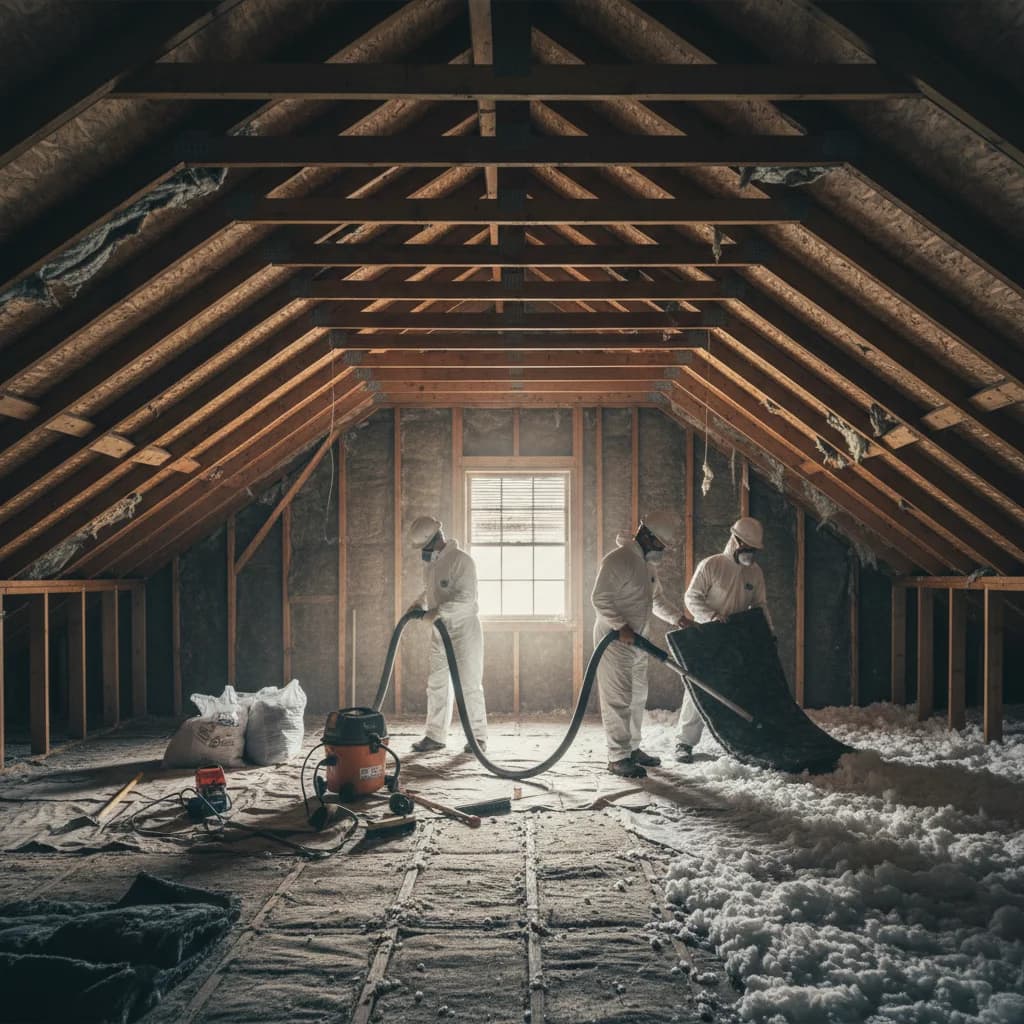
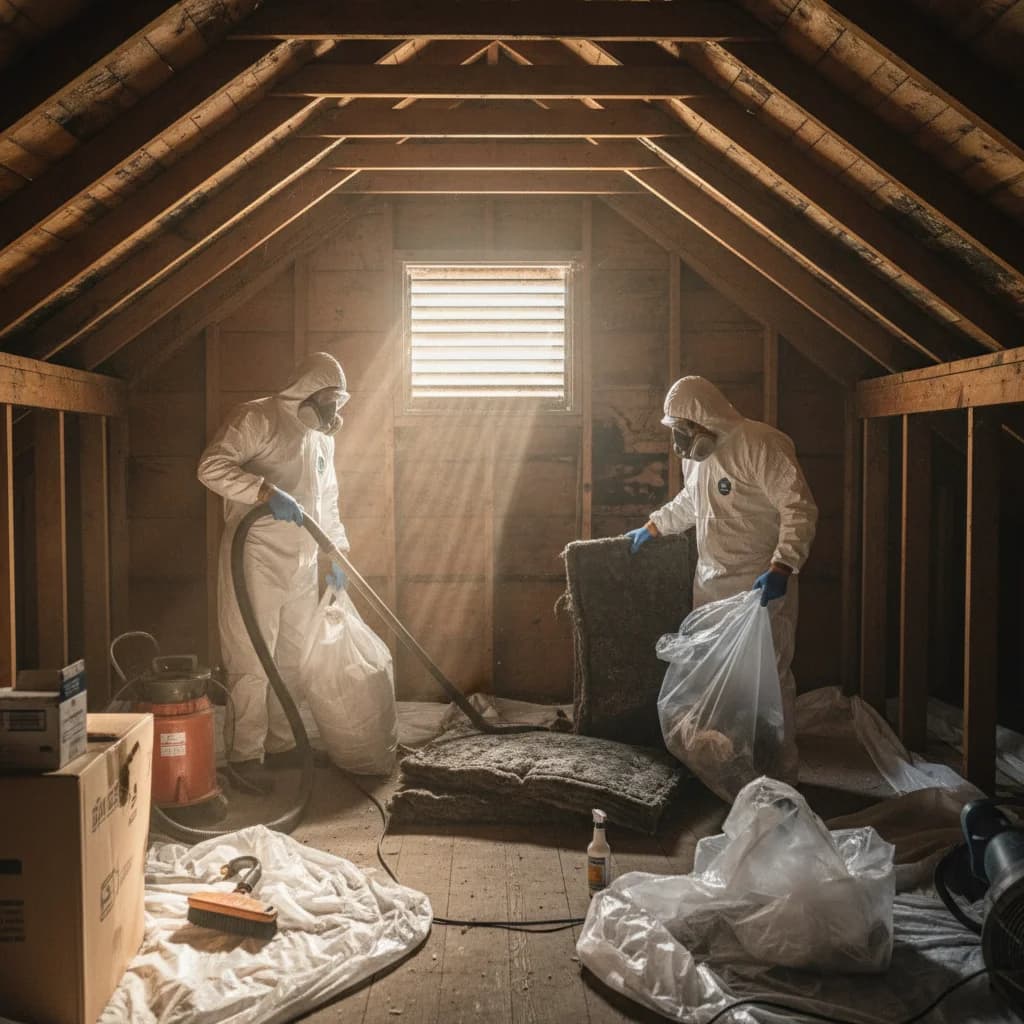
You've just learned your attic insulation is contaminated, degraded, or simply not doing its job anymore. The next question is inevitable: how much is this going to cost? Insulation removal pricing varies widely — from under $1,000 for a straightforward cleanout to $8,000 or more when hazardous materials are involved. The difference comes down to a handful of factors that are worth understanding before you start calling contractors.
There are 83 attic cleaning companies in Dallas with an average rating of 4.8 stars.Costs by Insulation Type
The type of insulation in your attic has a direct impact on removal cost because each material requires different equipment, techniques, and handling procedures.
| Insulation Type | Removal Cost (1,000–1,500 sq ft attic) | Notes |
|---|---|---|
| Blown-in fiberglass | $1,000–$2,000 | Fastest to remove; industrial vacuum handles it efficiently |
| Blown-in cellulose | $1,000–$2,200 | Heavier than fiberglass; takes slightly longer to vacuum |
| Fiberglass batts | $800–$1,800 | Removed by hand; labor-intensive but no special equipment needed |
| Mineral wool batts | $1,000–$2,000 | Dense and heavy; more labor to handle and dispose of |
| Vermiculite (non-asbestos) | $1,500–$3,000 | Requires careful handling and testing before removal begins |
| Vermiculite (asbestos-containing) | $4,000–$10,000+ | Requires licensed abatement crew, containment, and specialized disposal |
In Dallas and the broader North Texas market, blown-in fiberglass is the most common attic insulation in homes built after 1985, and removal costs tend to fall in the lower portion of these ranges due to straightforward access and competitive pricing.
Key Factors That Drive Cost
Beyond insulation type, several variables determine what you'll actually pay.
Attic square footage is the baseline. Most contractors price removal at $1.00 to $2.50 per square foot, so a small 600-square-foot attic costs significantly less than a 2,500-square-foot space. Measure your attic floor area — not your home's total square footage — to get a rough starting estimate.
Contamination adds cost. If your insulation is contaminated with rodent droppings, urine, mold, or water damage, the job shifts from a simple removal to a remediation project. Contaminated insulation requires HEPA-filtered equipment, antimicrobial treatment of exposed surfaces, and sometimes biohazard disposal fees. This can add $500 to $2,000 or more to the base removal price.
Asbestos testing is essential for homes built before 1990, especially those with vermiculite insulation. Testing typically costs $25 to $75 per sample through an accredited lab. If asbestos is confirmed, only licensed abatement contractors can legally perform the removal — and the cost reflects the specialized containment, worker protection, and disposal requirements.
Accessibility affects labor time and therefore cost. Low-clearance attics, narrow access hatches, and attics cluttered with stored items all increase the hours needed to complete the work. Companies may add $200 to $500 for difficult-access situations.
Disposal fees vary by location and material. Standard insulation disposal at most facilities runs $50 to $200 per load. Contaminated or hazardous materials carry higher disposal fees and may require transport to specialized facilities.
What a Complete Quote Should Include
A quality insulation removal quote should be specific and transparent. When reviewing estimates, look for these line items:
- Removal labor — Detailed by insulation type and attic area
- Equipment — Industrial vacuum setup, HEPA filtration, and hose routing
- Disposal — Where the material is going and what the disposal fee covers
- Attic floor cleaning — HEPA vacuuming of the exposed attic floor after removal
- Containment and protection — Drop cloths, plastic sheeting, and protection of your living space
- Hazard testing — Asbestos or mold sampling if applicable
Be cautious of quotes that list only a single lump sum with no breakdown. Without itemization, you can't tell whether essential steps like HEPA vacuuming or proper disposal are actually included. For homeowners in Sacramento, where older homes from the 1950s through 1970s frequently contain outdated or contaminated insulation, thorough quotes are especially important because the scope of work can vary significantly from house to house.
DIY vs. Professional Cost Comparison
Removing attic insulation yourself is technically possible for non-hazardous materials, but the cost savings are smaller than most homeowners expect.
DIY costs for a typical attic:
- Industrial vacuum rental: $200–$400 per day
- Protective gear (respirator, suits, gloves): $50–$100
- Disposal bags and transport: $100–$300
- Your time: 8–16 hours of physically demanding work in a hot, cramped space
Total DIY cost: $350–$800 — compared to $1,000–$2,500 for professional removal.
The gap narrows further when you consider that professionals complete the work in 3-5 hours, include disposal in their price, and carry insurance that covers any accidental damage to your home. They also have the experience to identify hidden issues — damaged wiring, mold, or structural problems — that you might miss.
DIY removal is never appropriate for contaminated or asbestos-containing insulation. The health risks and legal requirements make professional handling the only responsible option. For a full overview of when removal makes sense and what the process involves, see our guide on when and why to remove attic insulation.
Getting Replacement Quotes at the Same Time
Since insulation removal is rarely the end of the project, the most cost-effective approach is to get bundled quotes for removal and replacement together. Most professional companies offer both services, and scheduling them as a single project eliminates duplicate setup time, reduces total cost, and ensures air sealing happens while the attic floor is accessible.
When comparing bundled estimates, ask about the R-value of the replacement insulation. Current energy codes call for R-38 to R-60 in most U.S. climate zones, and your new insulation should meet or exceed the standard for your area. In Chicago and other cold-climate cities, R-49 or higher is the target, which requires significant depth — about 16 inches of blown-in fiberglass or 13 inches of cellulose.
For a detailed breakdown of insulation material options and how they compare on performance and cost, our comparison of blown-in vs. batt insulation covers the key differences.
Many utility companies and state energy programs offer rebates for insulation upgrades. These rebates, often $200 to $1,000, can offset a meaningful portion of the replacement cost. Ask your contractor about available programs in your area — reputable companies should be familiar with local incentives.