After a pest infestation, removing the animals and replacing insulation is only part of the solution. The odors and biological residue left behind require professional sanitizing and deodorizing to fully restore your attic to a safe, habitable condition. In Houston, where the combination of heat and humidity intensifies attic odors and accelerates bacterial growth, thorough sanitization is especially critical for protecting indoor air quality.
There are 112 attic cleaning companies in Houston with an average rating of 4.7 stars.Why Sanitizing Goes Beyond Cleaning
Standard cleaning removes visible debris. Sanitizing targets the invisible contamination that remains on wood, metal, and structural surfaces after physical material has been removed:
- Bacteria from urine and feces — Salmonella, E. coli, and leptospirosis organisms persist on surfaces for weeks or months
- Viral particles — Hantavirus from rodent droppings remains infectious in dust for days even after the droppings dry out
- Parasitic eggs — Raccoon roundworm (Baylisascaris) eggs survive on surfaces for years without treatment
- Fungal spores — Mold triggered by moisture from pest waste continues growing after the source is removed
- Allergens — Dander, hair, and decomposed organic matter trigger allergic reactions when disturbed by HVAC airflow
These contaminants don't just stay in the attic. Your HVAC system's return air pathways can distribute them throughout your living space, affecting the air your family breathes every day.
The Professional Sanitizing Process
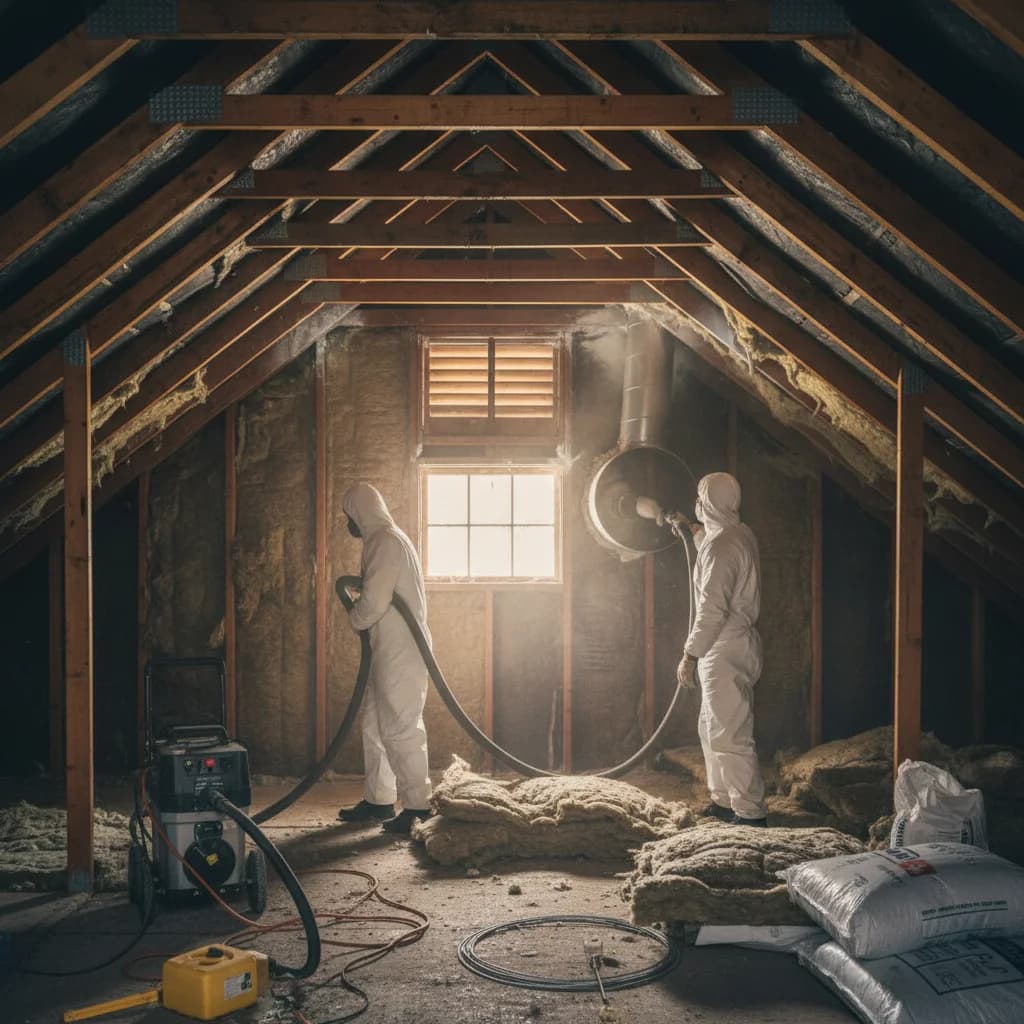
Professional attic sanitization follows a systematic approach that addresses contamination at every level:
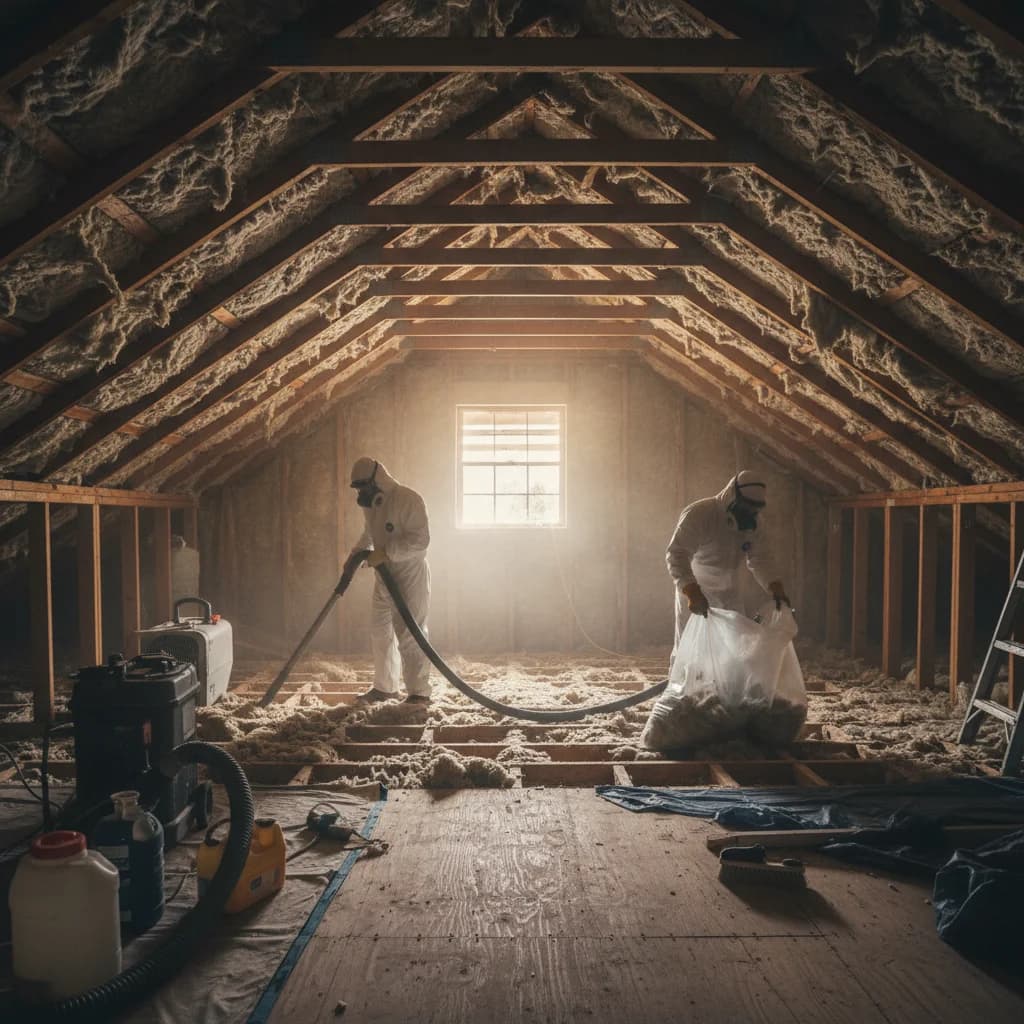
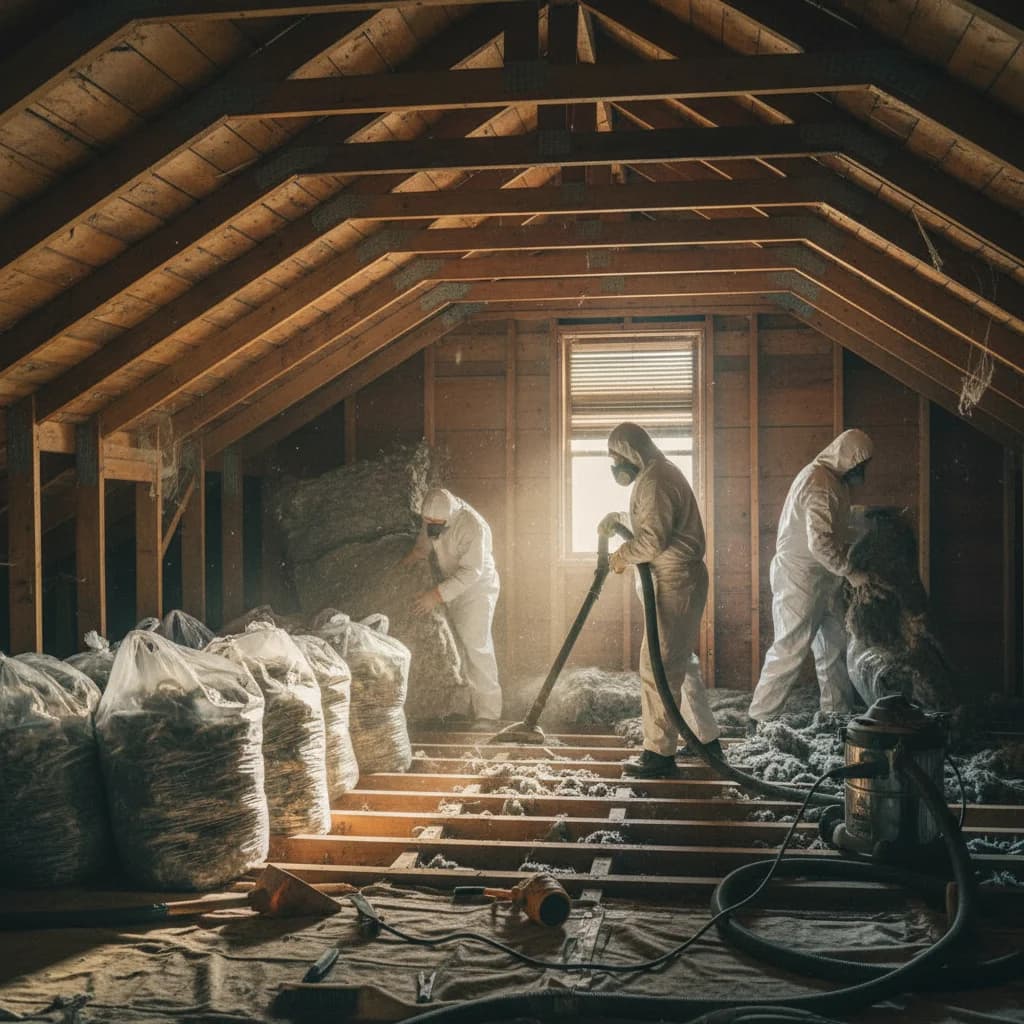
- Contaminated insulation removal — All affected material is removed first, giving technicians direct access to contaminated surfaces
- HEPA vacuuming — Every accessible surface is vacuumed with HEPA-filtered equipment to remove particulate matter, dried droppings, and debris
- Antimicrobial application — Hospital-grade biocides are applied to all wood framing, sheathing, and structural surfaces using sprayers that ensure complete coverage
- Enzyme treatment — Enzymatic cleaners break down biological compounds at a molecular level, neutralizing odors rather than masking them
- Air scrubbing — HEPA air filtration machines run during and after treatment to capture airborne particles and spores
- Spot treatment — Heavily soiled areas receive additional attention with concentrated products
The difference between professional sanitization and consumer-grade products is significant. Retail sprays and household bleach solutions don't penetrate porous wood surfaces, leaving embedded contaminants untreated.
Understanding Deodorizing
Attic odors after pest infestation come from multiple sources — urine that has soaked into wood, decomposed nesting materials, and the animals' scent glands. These odors are persistent because the organic compounds are embedded in porous materials and continue to off-gas, especially in hot weather.
Professional deodorizing approaches this problem in layers:
Source removal comes first. You can't deodorize an attic that still contains contaminated insulation or debris. This seems obvious, but some companies apply deodorizers over existing contamination, which provides only temporary relief.
Enzyme-based products are the most effective deodorizing agents for biological odors. Unlike chemical deodorizers that mask smells with a stronger fragrance, enzymes actually break down the odor-causing molecules. The process takes 24-48 hours to reach full effectiveness.
Thermal fogging may be used for severe cases. This technique disperses a fine mist of deodorizing solution that penetrates cracks and porous surfaces more effectively than spray applications. In Dallas, where summer attic temperatures regularly exceed 140°F, thermal fogging is particularly effective because the heat helps drive the solution deeper into wood surfaces.
When Is Sanitizing Necessary
Not every attic cleaning requires full sanitization. Here's a practical guide:
Sanitizing recommended:
- Any rodent infestation with visible droppings and urine staining
- Raccoon or wildlife intrusion (due to roundworm and other parasites)
- Dead animal removal and surrounding area
- Bat colonies (histoplasmosis risk from guano)
- Any situation where immunocompromised individuals live in the home
Basic cleaning may be sufficient:
- Minor pest evidence limited to a small area
- Old, dry contamination with no active infestation
- Insulation replacement due to age rather than contamination
When in doubt, request a professional assessment. A reputable company will recommend the appropriate level of treatment based on the actual contamination type and extent, not upsell unnecessary services.
Maintaining Air Quality After Treatment
Once your attic has been sanitized and re-insulated, protect the investment:
- Complete pest exclusion work to prevent re-infestation — sanitization is wasted if animals return
- Ensure proper attic ventilation to keep moisture levels low
- Replace HVAC filters after attic work is completed to remove any residual particles from the duct system
- Consider having your air ducts professionally cleaned if the infestation was severe or long-standing
In San Antonio, where homes rely heavily on HVAC systems year-round, post-treatment duct cleaning is a worthwhile addition to any comprehensive attic sanitization project. For homeowners dealing with a rodent infestation specifically, our complete guide to attic rodent cleanup covers the full process from removal through sanitization and prevention.