Texas attics are among the harshest residential environments in the country. During summer months, attic temperatures in Houston and Dallas routinely exceed 150 degrees Fahrenheit, with peak readings above 160 degrees on the hottest days. This extreme heat, combined with one of the most active pest populations in the nation and a climate that cycles between intense heat and occasional hard freezes, creates a unique set of challenges that Texas homeowners need to understand. What works for attic maintenance in the Midwest or Pacific Northwest does not necessarily apply here, and the consequences of neglect tend to be more severe and more expensive.
There are 112 attic cleaning companies in Houston with an average rating of 4.7 stars.Texas-Specific Heat Challenges
The defining feature of a Texas attic is heat. When outdoor temperatures reach the mid-90s to low 100s — routine from June through September across most of the state — attic temperatures climb to 150 to 165 degrees Fahrenheit. This extreme heat accelerates the degradation of nearly every material in the attic. Insulation breaks down faster, losing R-value as fibers deteriorate and settle. Roofing materials age prematurely from the combination of UV exposure above and radiant heat below. Plastic components on vent covers, junction boxes, and wiring insulation become brittle and crack.
For homeowners, this heat creates a narrow window for attic work. Professional companies in Texas schedule most work between October and April, when attic temperatures are manageable. Summer work requires strict safety protocols — heat exhaustion and heat stroke are real risks, and most companies limit attic exposure to 15-to-20-minute intervals with mandatory cooling breaks. Radiant barriers, reflective sheets installed on the underside of the roof deck, are far more common in Texas than in other regions because they reduce attic temperatures by 20 to 30 degrees and significantly lower cooling costs.
Common Texas Pests
Texas supports one of the most diverse pest populations that target attics. Roof rats are the dominant rodent concern, particularly in Houston and Austin, where mature tree canopies provide aerial highways directly to rooflines. Unlike Norway rats that typically enter from ground level, roof rats climb and nest in upper structures, making attic exclusion work more challenging because entry points are often along the roofline rather than at the foundation.
Fox squirrels and eastern gray squirrels are active year-round in Texas, entering attics through damaged soffit panels and chewed fascia boards. Mexican free-tailed bats, which migrate to Texas in massive numbers each spring, frequently establish maternity colonies in residential attics. These colonies can number in the dozens within a single attic, producing large accumulations of guano that create health hazards and strong odors. Texas wildlife regulations protect bats during maternity season, restricting removal to specific times of year. Effective pest management in Texas requires year-round vigilance rather than seasonal attention. For a thorough walkthrough of what rodent cleanup involves, see our complete guide to attic rodent cleanup.
Insulation Degradation From Heat Cycling
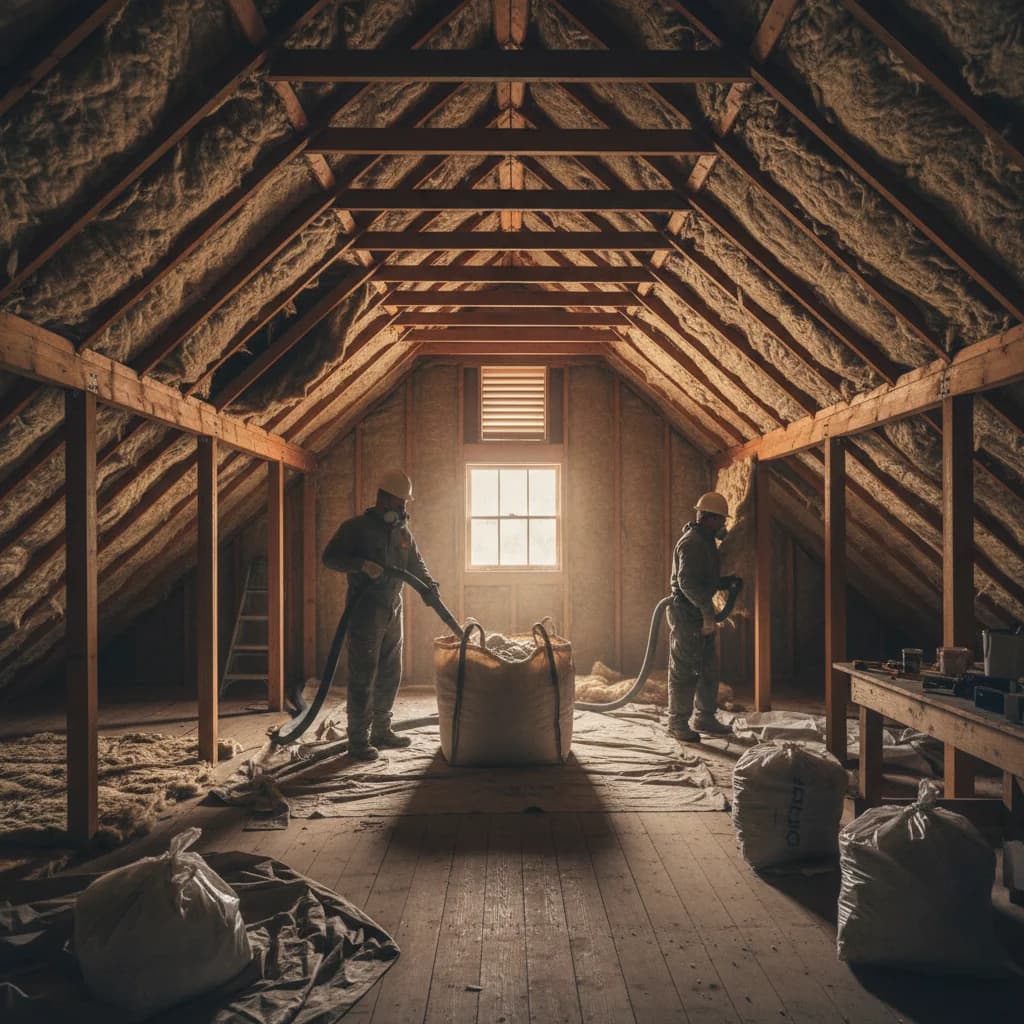
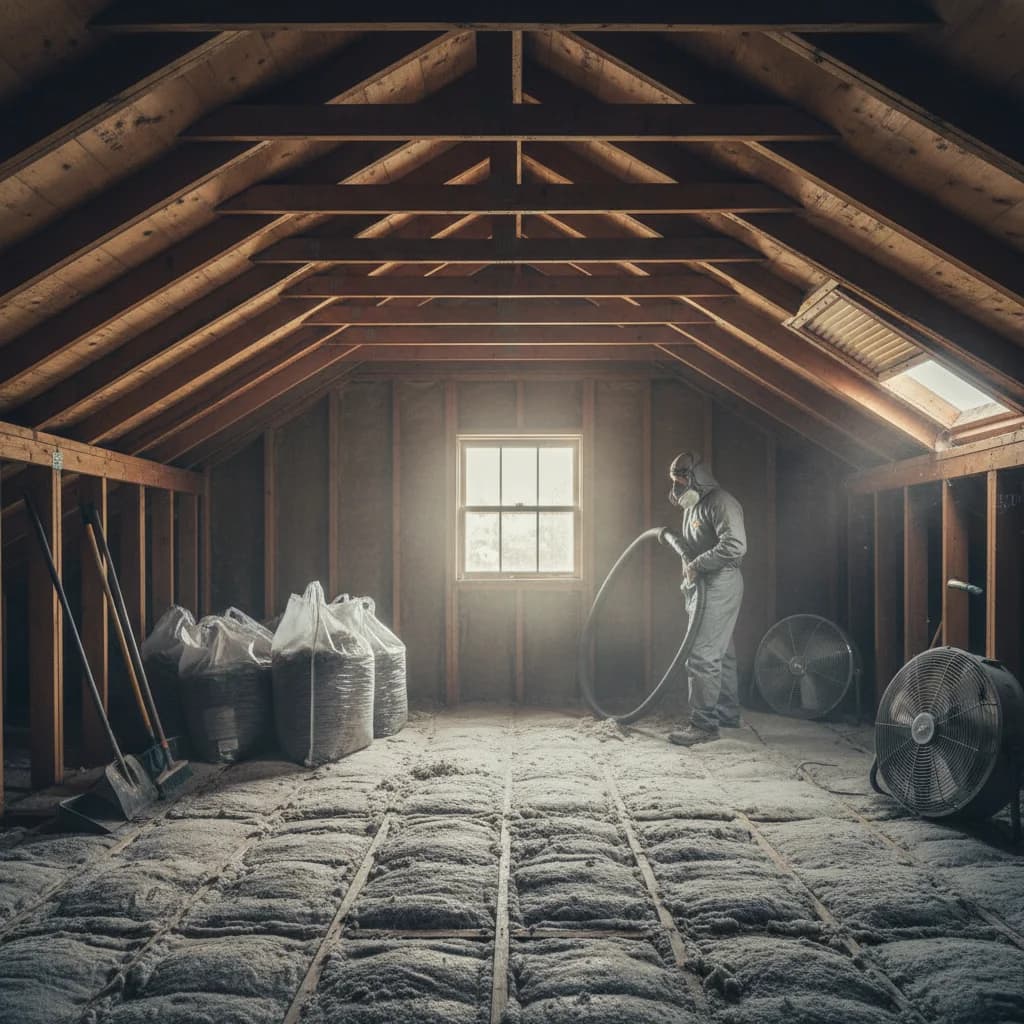
Texas insulation degrades faster than in most other states due to the combination of extreme heat and thermal cycling. Blown-in fiberglass insulation settles and compresses over time in any climate, but the intense attic heat in Texas accelerates this process. Insulation that started at R-38 may test at R-25 or lower after just five to seven years, well below the R-38 minimum recommended by the Department of Energy for Texas climate zones.
Cellulose insulation resists settling somewhat better but faces its own Texas-specific challenge: high humidity events — tropical storms, extended rain, and humid Gulf air — can introduce moisture that causes cellulose to clump and lose thermal performance. Batt insulation sags away from the attic floor over time, creating gaps that allow conditioned air to escape. Regular insulation assessment every two to three years is more important in Texas than in milder climates because degradation happens faster and the energy penalty for poor insulation is higher when air conditioning runs six to eight months a year.
Energy Costs and Attic Performance
Texas homeowners spend an average of $2,000 to $3,000 annually on cooling costs, and a significant portion of that expense is directly tied to attic performance. An attic with degraded insulation, air leaks, and poor ventilation forces the HVAC system to work harder and run longer to maintain comfortable indoor temperatures. In a state where air conditioning accounts for the largest share of residential energy use, attic improvements often deliver the fastest return on investment of any home upgrade.
Air sealing the attic floor before insulation replacement is particularly impactful in Texas. The stack effect — warm air rising through the home and escaping through attic floor penetrations — operates in reverse during summer, pulling hot attic air down into the living space through the same gaps. Sealing these pathways reduces the cooling load directly. Combined with insulation replacement to current standards and a radiant barrier installation, a comprehensive attic upgrade can reduce cooling costs by 15 to 25 percent.
Texas Building Codes for Insulation
Texas follows the International Energy Conservation Code with state-specific amendments. Most of Texas falls into climate zones 2 and 3, which require a minimum attic insulation level of R-38. Some municipalities in North Texas, including the Dallas-Fort Worth area, fall into zone 3 where the same R-38 minimum applies. When insulation is being replaced, bringing it up to current code is both a practical and legal requirement in most jurisdictions.
Homeowners should be aware that building codes set minimum standards, not optimal ones. In practice, insulating to R-49 or higher delivers measurably better performance in Texas, particularly in attics with limited ventilation or no radiant barrier. Many Texas utility companies offer rebates for insulation upgrades that exceed code minimums, and some municipalities provide additional incentives for energy efficiency improvements.
Regional Pricing Factors
Attic cleaning and insulation costs in Texas are influenced by several regional factors. The large number of service providers in major Texas metros — Houston, Dallas, Austin, and San Antonio — creates competitive pricing that generally falls below national averages. However, the extreme heat limits the working season and increases labor costs during summer months when emergency work is needed. For a detailed breakdown of how pricing works across service types, see our attic cleaning cost guide.
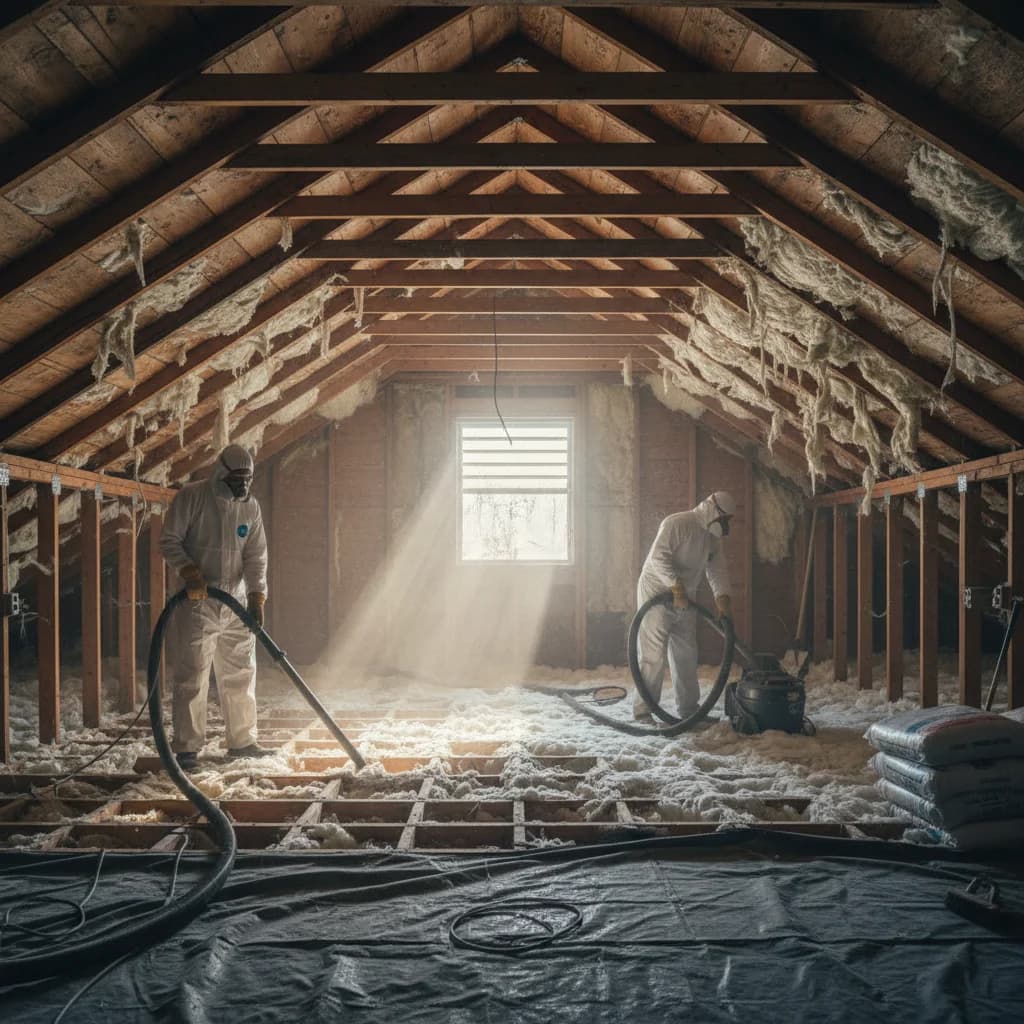
Pest-related cleanup tends to cost more in Texas because the scope of contamination is often larger by the time homeowners discover the problem. Roof rat infestations can spread across an entire attic before visible signs appear indoors. Full insulation replacement including removal, disposal, air sealing, and new blown-in insulation typically runs between $1,500 and $4,000 for a standard Texas home, varying based on attic size, accessibility, and whether pest remediation is also needed.