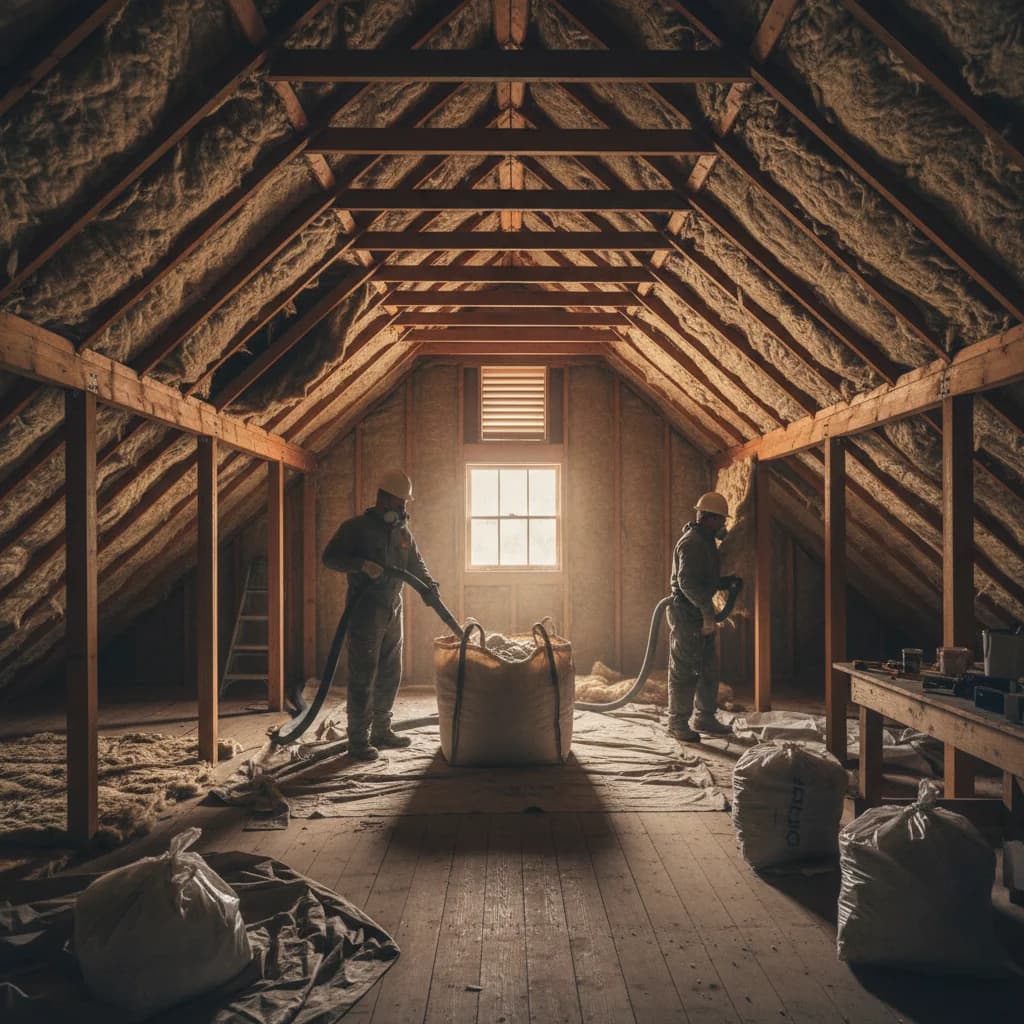
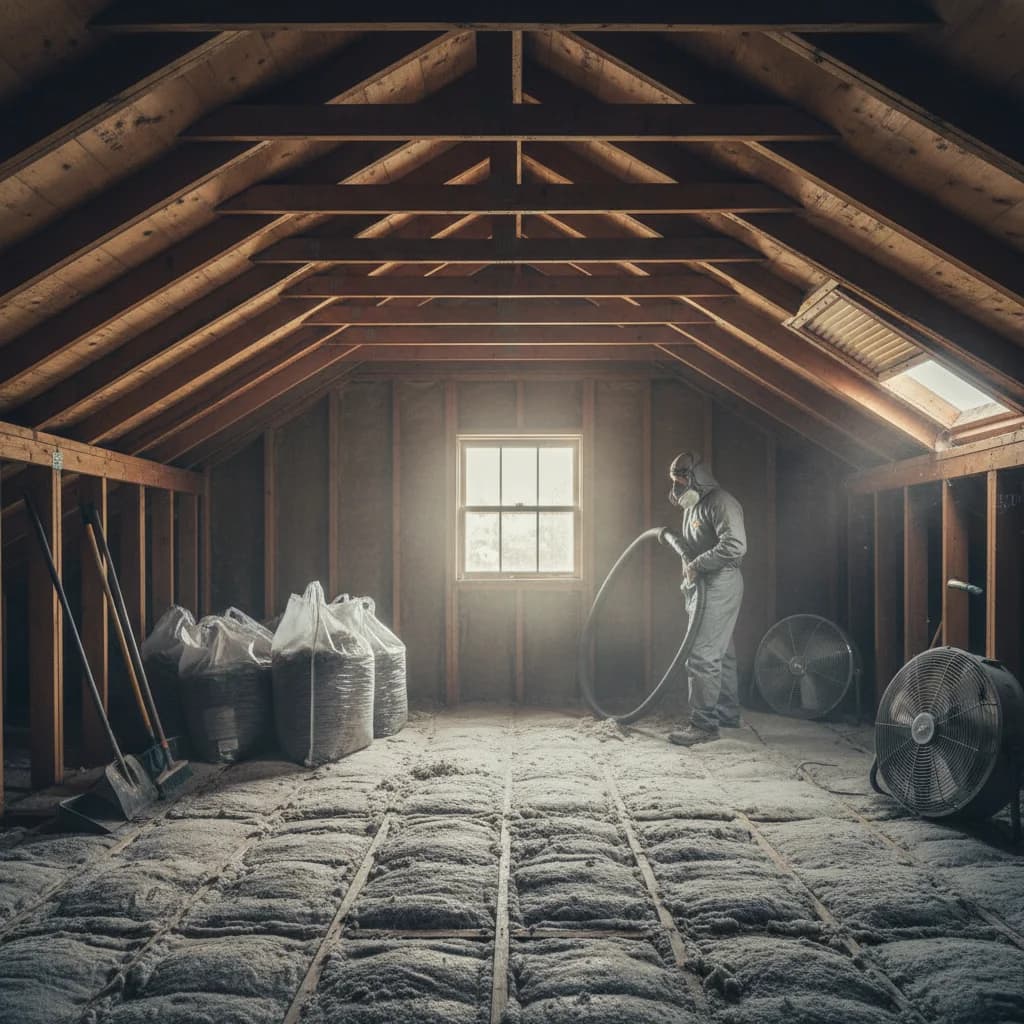
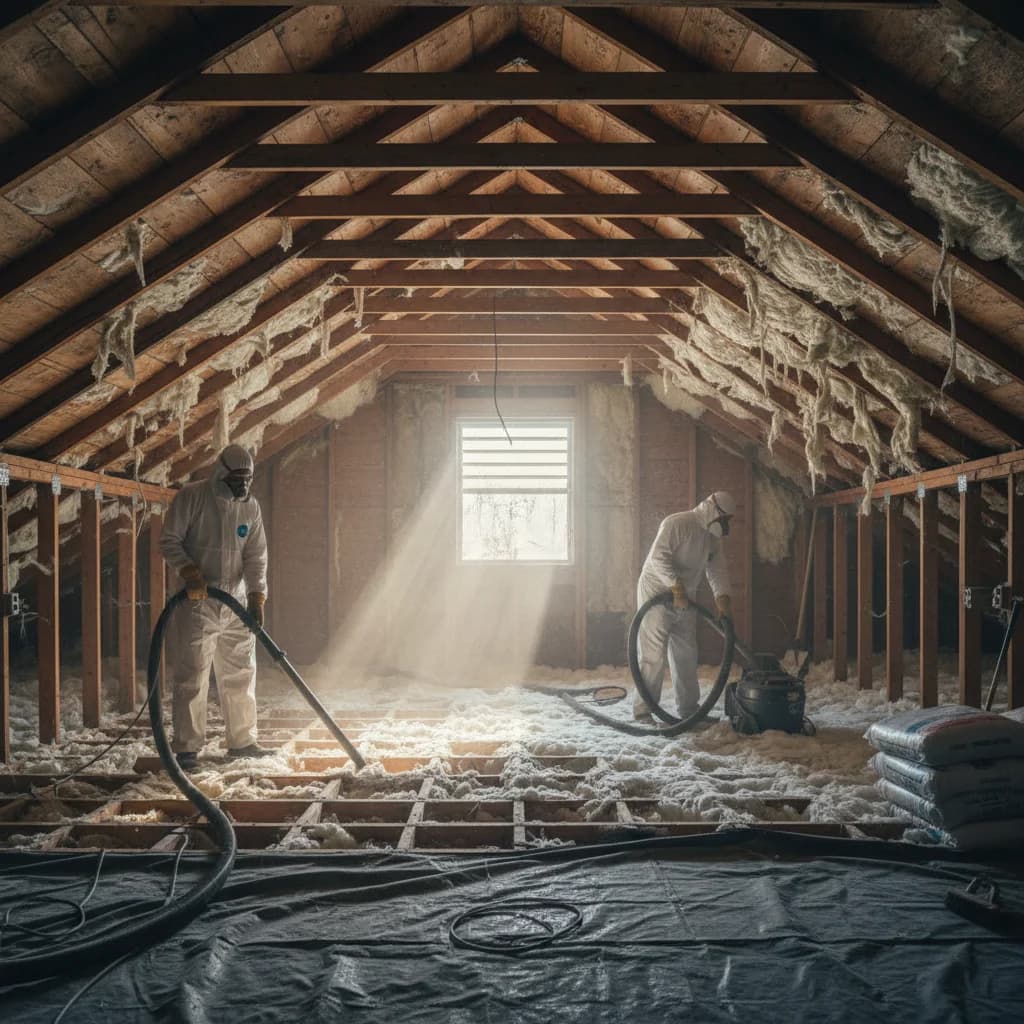
What does it take to keep a home comfortable when outdoor temperatures swing from negative 20 degrees in January to over 100 degrees in July? For Midwest homeowners, the answer starts in the attic. The attic is the largest surface area separating your conditioned living space from the outside air, and in a region where the temperature spread can exceed 120 degrees across a single year, attic insulation performance is the single greatest factor in both energy costs and indoor comfort. In Chicago and Minneapolis, where winters are long and heating bills are substantial, getting your attic insulation right is one of the highest-return investments you can make in your home.
There are 9 attic cleaning companies in Chicago with an average rating of 4.7 stars.DOE-Recommended R-Values for Zones 5 and 6
The Department of Energy divides the country into climate zones and assigns recommended insulation R-values for each. Most of the Midwest falls within Zones 5 and 6 — Zone 5 covers the central Midwest including Indianapolis, central Illinois, and most of Ohio, while Zone 6 covers the upper Midwest including Minneapolis, northern Wisconsin, and the Dakotas. Chicago sits at the boundary of Zones 5 and 6, and the DOE recommendation for both zones is attic insulation of R-49 to R-60.
In practice, many older Midwest homes have attic insulation in the R-19 to R-30 range — significantly below current recommendations. Insulation installed in the 1970s and 1980s was often specified to the standards of that era, which were lower, and has since settled or compressed, reducing its effective R-value further. Bringing a Midwest attic from R-19 to R-49 can reduce annual heating costs by 15 to 25 percent, depending on the home's overall air tightness and the efficiency of its heating system. In Indianapolis, where natural gas heating is standard and winter lasts five months, that reduction translates to meaningful savings year after year. For a detailed comparison of insulation materials and how each performs in real-world conditions, see our guide on blown-in versus batt insulation.
Ice Dam Mechanics and Prevention
Ice dams are one of the most destructive wintertime problems in the Midwest, and their root cause is almost always inadequate attic insulation and air sealing. The mechanics are straightforward: heat escaping from the living space warms the attic, which warms the roof deck, which melts snow on the upper portion of the roof. That meltwater flows downward to the eaves, where the roof extends past the exterior wall and is no longer warmed from below. At the cold eave, the water refreezes into a ridge of ice. As the ice ridge grows, it traps additional meltwater behind it, which backs up under shingles and penetrates into the attic and wall cavities.
The damage from ice dams includes water-stained ceilings, saturated insulation, mold growth on sheathing, peeling exterior paint, and in severe cases rotted fascia boards and structural framing. The only reliable long-term solution is preventing the heat loss that starts the cycle. This means achieving adequate insulation depth across the entire attic floor — including the critical area directly above exterior walls at the eave — and air sealing every penetration through the ceiling plane. Ice and water shield membrane on the roof provides a secondary defense, but it is a backup measure, not a substitute for proper attic thermal management. Homes in Minneapolis and other northern Midwest cities that experience prolonged sub-zero temperatures are particularly vulnerable because the freeze-melt cycle operates continuously whenever there is snow on the roof.
Air Sealing in Cold Climates
In cold climates, air sealing is arguably more important than insulation itself. Warm air leaking through ceiling penetrations into the attic carries both heat and moisture. The heat loss contributes to ice dams and higher energy bills. The moisture condenses on cold attic surfaces — sheathing, rafters, and nail tips — creating conditions for mold growth and wood deterioration. Research by the Building Performance Institute and other organizations consistently shows that air sealing combined with insulation reduces energy consumption 30 to 40 percent more than insulation alone.
The primary air leakage pathways in a typical Midwest home include gaps around recessed light fixtures, the attic hatch or pull-down stair, plumbing vent stacks, electrical wire penetrations, HVAC duct chase ways, and open soffits above kitchen and bathroom cabinets. Sealing these penetrations with appropriate materials — caulk for small gaps, expanding foam for medium gaps, rigid foam or sheet metal for large openings — should always precede any insulation installation. A blower door test before and after air sealing quantifies the improvement and identifies leakage points that visual inspection misses. When planning a comprehensive attic project, addressing air sealing first ensures that new insulation performs at its full rated R-value rather than being undermined by warm air bypasses. For more on how cold weather preparation affects attic health overall, see our guide on cold weather attic preparation.
Condensation From Heated Air
When warm, moisture-laden air from the living space leaks into a cold Midwest attic, the resulting condensation can be dramatic. During a severe cold snap when outdoor temperatures drop below zero, the temperature of roof sheathing falls well below the dew point of indoor air. Any warm air that reaches the attic through unsealed penetrations deposits its moisture almost immediately upon contacting these cold surfaces. In extreme cases, homeowners discover what appears to be frost or even ice coating the underside of their roof sheathing — a clear indication of serious air leakage from the living space below.
This frost accumulates during cold periods and then melts during brief warm spells or sunny days, releasing a pulse of liquid water that drips onto insulation and framing. The wet-dry cycling promotes both mold growth and wood deterioration. Bathrooms, kitchens, and laundry areas generate the highest indoor humidity levels, and homes where these rooms have inadequate exhaust ventilation contribute more moisture to the attic through the stack effect. Verifying that all bathroom and kitchen exhaust fans vent to the exterior — not into the attic — and that they are used consistently during and after moisture-producing activities is a critical step in reducing attic condensation risk in cold climates.
Insulation Settling and Maintenance Over Time
All loose-fill insulation settles to some degree after installation, and in the Midwest this settling has direct consequences for energy performance and ice dam risk. Blown-in cellulose typically settles 15 to 20 percent within the first few years, while blown-in fiberglass settles approximately 5 to 10 percent. An attic insulated to R-49 with cellulose at installation may drop to an effective R-40 or less after settling — still above the R-38 minimum for older codes but below the current DOE recommendation.
Checking insulation depth every two to three years is a simple maintenance task that prevents gradual performance loss from going unnoticed. Depth markers — rulers or marked stakes installed at intervals across the attic floor during insulation installation — make this check easy without requiring you to measure manually. If depth has dropped below the target, adding a supplemental layer of blown-in insulation restores performance without requiring full removal of the existing material, provided the existing insulation is clean, dry, and free from contamination. Compressed or water-damaged insulation, however, should be replaced rather than supplemented, as it no longer performs to its rated specifications.
Utility Rebate Programs
Many Midwest utilities and state energy offices offer rebates or incentive programs for attic insulation upgrades, particularly when combined with air sealing. Programs vary by utility territory and change periodically, but common incentives include per-square-foot rebates for insulation added above a minimum R-value threshold, fixed rebates for professional air sealing verified by blower door testing, and income-qualified weatherization programs that cover the full cost of improvements for eligible homeowners.
Checking with your local utility before starting an attic insulation project is worthwhile for two reasons. First, the financial incentive can offset 10 to 30 percent of the project cost. Second, many rebate programs require pre-approval or specific contractor certifications, and completing the work before applying may disqualify you from the rebate. Your utility's website or a call to their energy efficiency hotline will clarify what is available in your service territory. In the Chicago metro area and across Minnesota, utility-sponsored rebate programs have been among the most generous in the country, reflecting the significant energy savings that attic improvements deliver in cold climate zones.