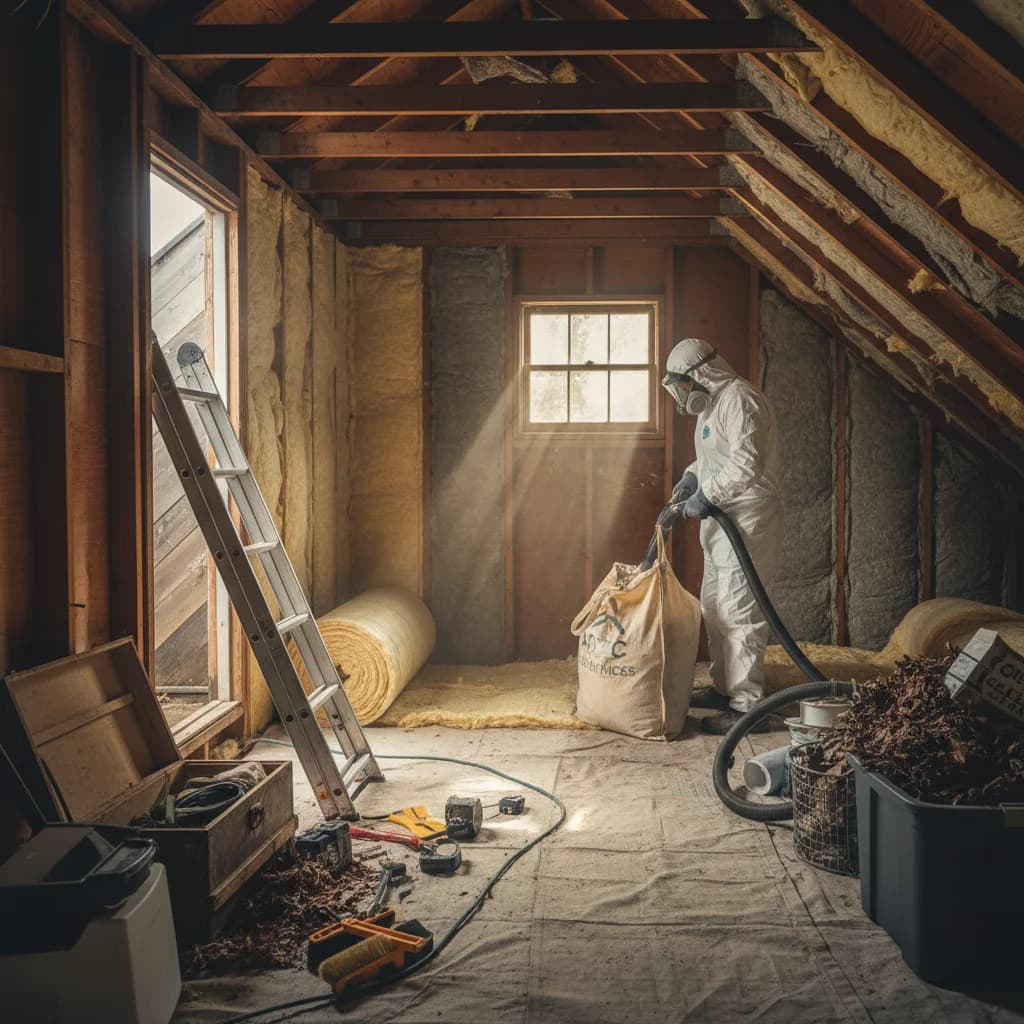
Every fall, homeowners in cold climates turn their attention to furnace tune-ups, gutter cleaning, and weatherstripping around doors and windows. But the single most important space to prepare for winter is the one most people ignore: the attic. Your attic is the primary barrier between your heated living space and the frigid outdoor air above. When that barrier has gaps, thin insulation, or ventilation problems, the consequences show up as ice dams, frozen pipes, drafty rooms, and heating bills that climb steadily through the season. In Chicago and Minneapolis, where winter temperatures routinely drop below zero, a poorly prepared attic can cost hundreds of dollars in wasted energy every month — and create structural damage that persists long after the spring thaw.
There are 9 attic cleaning companies in Chicago with an average rating of 4.7 stars.Ice Dam Prevention
Ice dams are one of the most damaging winter problems a home can face, and they originate in the attic. An ice dam forms when heat escaping from the living space warms the roof deck unevenly. Snow on the warmer sections of the roof melts, and the water flows downhill until it reaches the cold eave overhang, where it refreezes into a ridge of ice. As more melt water backs up behind this ice ridge, it pools under shingles and seeps into the roof structure, staining ceilings, soaking insulation, and promoting mold growth.
The root cause is almost always inadequate insulation and air leakage in the attic. When warm air from the living space enters the attic through gaps around light fixtures, plumbing penetrations, and unsealed top plates, it heats the roof sheathing from below. The solution is not adding heat cables to the roof edge — that treats the symptom, not the cause. Effective ice dam prevention requires sealing air leaks in the attic floor and ensuring insulation depth meets current standards for your climate zone. In Chicago and the upper Midwest, the recommended attic insulation level is R-49 to R-60. For a detailed explanation of how air sealing works and what the process involves, see our guide on air sealing your attic for energy savings.
Insulation Depth Checks
Before cold weather arrives, a visual inspection of your attic insulation can reveal whether you're adequately protected. Bring a tape measure or ruler into the attic and check insulation depth in several locations — near the center, at the edges near the eaves, and around any penetrations or obstacles where insulation tends to be thinner.
For fiberglass batts, R-49 requires approximately 16 inches of insulation depth. For blown-in cellulose, the same R-value requires about 14 inches. For blown-in fiberglass, you'll need approximately 18 inches. If your insulation falls significantly short of these depths, adding more before winter will directly reduce heating costs and improve comfort. Pay particular attention to areas near the eaves, where insulation is often compressed or missing due to the tight space between the roof deck and the attic floor. Insulation should extend fully to the exterior wall line without blocking soffit vents — this requires ventilation baffles that maintain an air channel from the soffit into the attic space. Also check for areas where insulation has been disturbed by pest activity, storage, or previous work by electricians or plumbers.
Air Sealing Drafts
Air leakage through the attic floor is responsible for more heat loss than thin insulation in most homes. Warm air naturally rises and exits through any available pathway — a principle called the stack effect. The attic floor in a typical home has dozens of penetrations and gaps that create direct connections between the heated living space and the cold attic above.
Common air leak locations include the gaps around electrical wires and plumbing pipes that pass through the ceiling, open tops of interior wall cavities, recessed light fixtures that are not IC-rated and sealed, the perimeter of the attic hatch or pull-down stairway, and duct boots where HVAC supply and return lines connect to the ceiling. In Denver, where elevation intensifies the stack effect due to lower atmospheric pressure, air sealing is especially impactful. Sealing these gaps with caulk, expanding foam, or rigid foam board before winter can reduce heating energy loss by 15 to 25 percent. The attic hatch deserves special attention — it's often the single largest air leak in the home and can be sealed with adhesive weatherstripping and a rigid foam insulation cap.
Pipe Freeze Protection
Water supply lines that run through or near the attic are vulnerable to freezing in cold climates. A frozen pipe is more than an inconvenience — when water freezes it expands, and the pressure can rupture the pipe, causing catastrophic water damage when the ice eventually thaws. Attic pipe freezes are particularly destructive because the water flows down through ceiling cavities and wall spaces before anyone notices the leak.
If your home has water lines in the attic — common for upstairs bathrooms, ice maker lines, and whole-house humidifiers — verify that they are properly insulated with foam pipe insulation sleeves. Standard foam sleeves provide moderate protection, but in extreme cold climates, wrapping pipes with thermostatically controlled heat tape before applying the foam sleeve provides an additional safety margin. For pipes in the most exposed locations near the eaves or in uninsulated knee walls, relocating them to interior spaces during a renovation is the most reliable long-term solution. As a temporary measure during extreme cold snaps, keeping a faucet at a slow drip on the affected line prevents pressure buildup.
Attic Hatch Weatherstripping
The attic access point — whether it's a simple hatch panel, a pull-down folding stairway, or a knee wall door — is consistently one of the most overlooked energy loss locations in a home. Attic hatches are often uninsulated and poorly sealed, creating a direct pathway for warm air to escape into the cold attic. During a cold night, you can often feel cold air flowing down through the gaps around an unsealed hatch.
For a standard hatch panel, the fix is straightforward: apply self-adhesive foam weatherstripping around the frame where the panel rests, and glue a piece of rigid foam insulation (at least two inches thick) to the attic side of the panel. Pull-down stairways are more challenging because the folding mechanism makes a tight seal difficult. Insulated stairway covers — box-shaped assemblies that sit over the stairway opening on the attic side — are available commercially and can also be built from rigid foam board and foil tape. The cover should sit flat on the attic floor and create an airtight seal around the entire perimeter. For a broader checklist of attic items to evaluate before each season, see our attic inspection checklist for homeowners.
Ventilation in Winter
It may seem counterintuitive to ventilate an attic during winter when you're trying to keep the house warm, but winter ventilation serves a critical purpose: moisture removal. Warm, moist air from the living space migrates into the attic through air leaks and vapor diffusion. Without ventilation, this moisture condenses on the cold roof sheathing, forming frost that later melts and drips onto insulation and framing. Over time, this moisture cycle causes mold growth, wood rot, and sheathing delamination.
Proper winter ventilation requires the same balanced system that works in summer — intake air from soffit vents flowing upward and out through ridge or gable vents. The key is that the attic should be cold in winter, close to the outdoor temperature. A warm attic is a sign of heat loss from below, which wastes energy and creates the temperature conditions for ice dams. Verify that soffit vents are not blocked by insulation, bird nests, or debris, and that ridge vents are clear of ice or snow buildup. If your home has gable vents, ensure they are not sealed or painted shut. A well-ventilated attic in winter should feel cold when you enter it — that's a sign the system is working correctly.