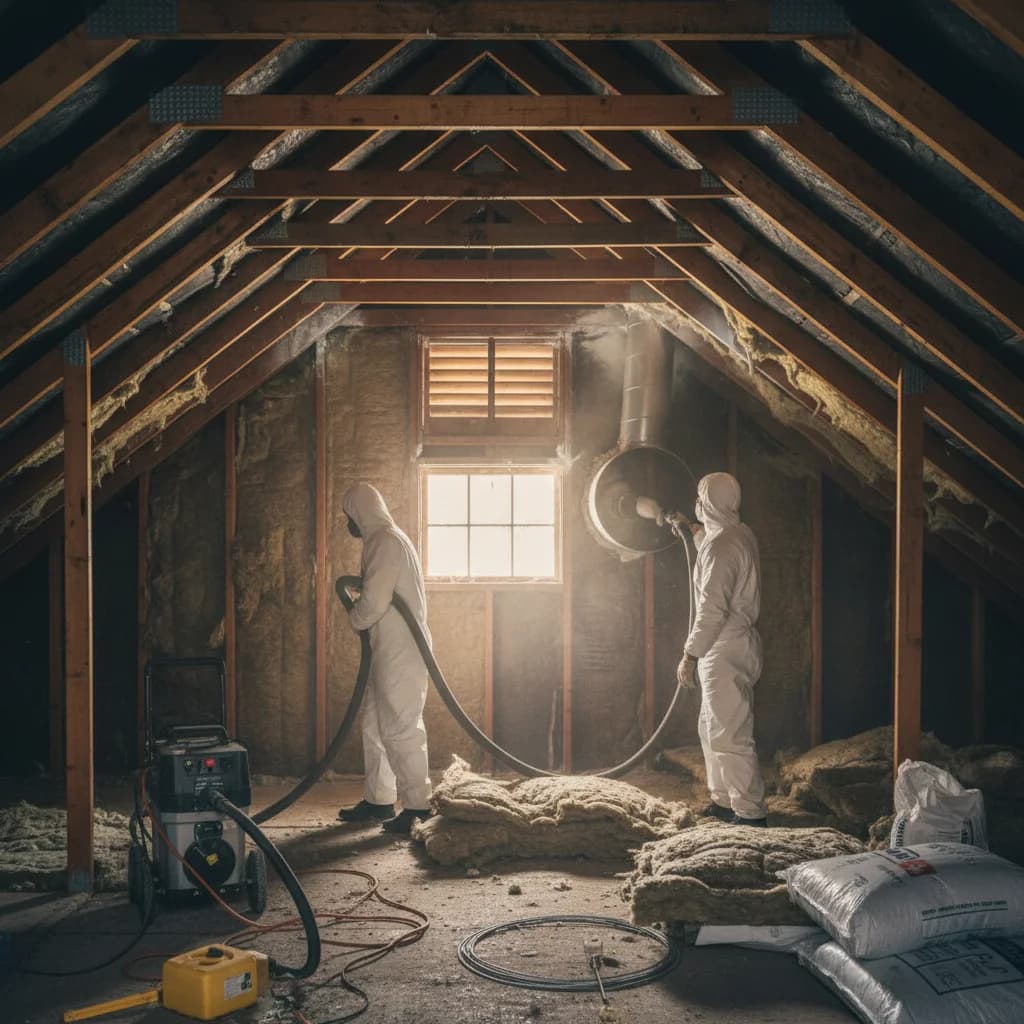
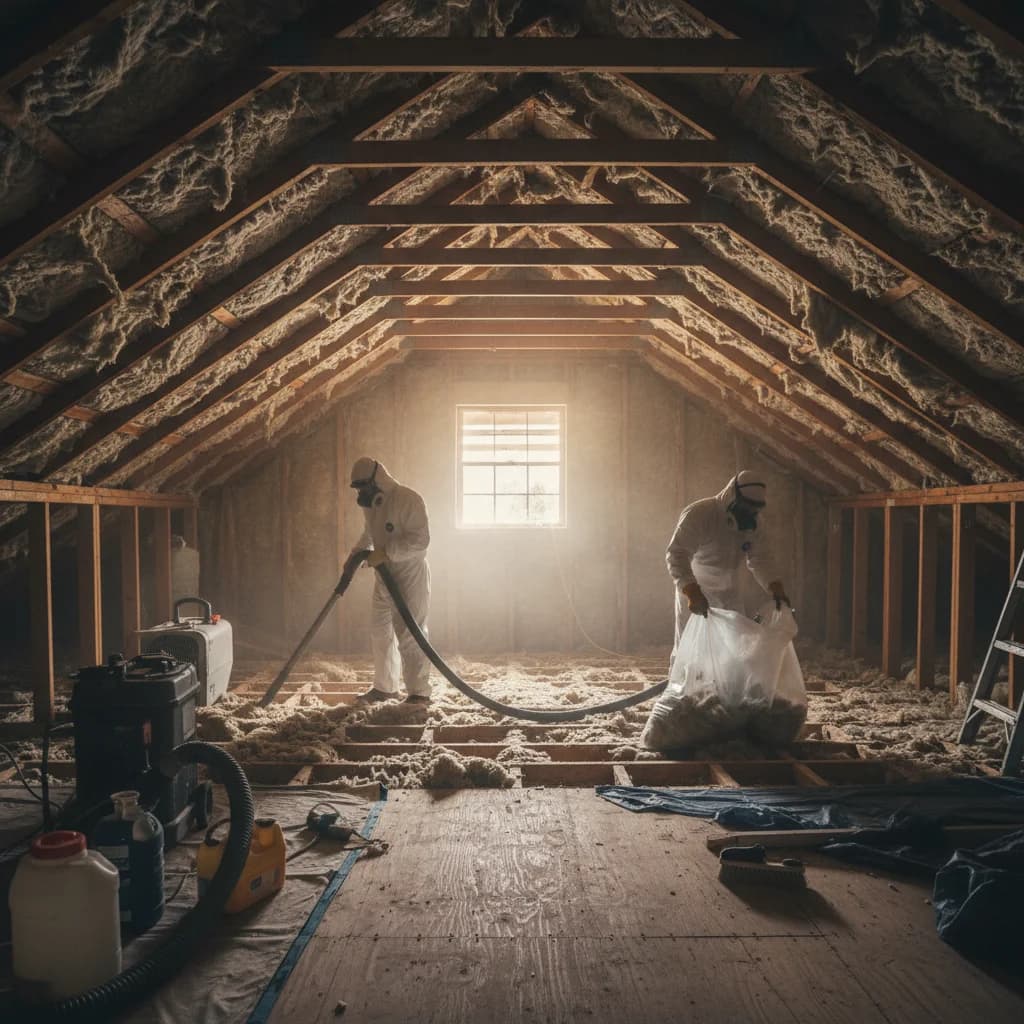
Few topics in home construction generate more confusion than vapor barriers in attics. Some builders swear by them, others say they cause problems, and homeowners are often left wondering whether their attic needs one. The truth depends almost entirely on your climate zone and your attic's specific construction. For homeowners in Miami, where hot, humid conditions dominate most of the year, understanding vapor barriers is particularly important because the wrong approach can trap moisture and create serious problems.
There are 12 attic cleaning companies in Miami with an average rating of 4.9 stars.What a Vapor Barrier Does
A vapor barrier (more accurately called a vapor retarder) is a material that restricts the movement of water vapor through building assemblies. In the context of an attic, it controls how moisture moves between your conditioned living space and the unconditioned attic above.
Moisture naturally moves from areas of higher concentration to lower concentration — and this direction changes with the seasons:
- In winter (heating season): Warm, moist indoor air pushes moisture upward into the cooler attic space
- In summer (cooling season): Hot, humid outdoor air pushes moisture downward toward the cooler, air-conditioned living space
This seasonal reversal is exactly why vapor barrier placement is so climate-dependent. What works in Minnesota can cause damage in Florida.
Climate Zone Guidelines
The building science community has reached a clear consensus on vapor barrier placement in attics:
Cold climates (Zones 5-7: Northern states): A vapor retarder on the warm side (ceiling side, below insulation) is generally recommended. It prevents indoor moisture from migrating into the cold attic where it would condense on frigid roof sheathing. Kraft-faced insulation batts provide this function when installed with the paper facing toward the living space.
Mixed climates (Zone 4: Mid-Atlantic, lower Midwest): Recommendations vary by specific location. A Class III vapor retarder (standard latex paint on drywall) is usually sufficient. Avoid polyethylene sheeting, which can trap moisture during both heating and cooling seasons.
Hot-humid climates (Zones 1-3: Southern states): In Jacksonville and Tampa, a traditional vapor barrier on the ceiling can actually cause problems. During summer, when your air conditioning creates a cool interior, the vapor drive pushes moisture downward from the hot attic. A ceiling-side vapor barrier traps this moisture against the drywall, potentially leading to mold growth and material damage. In these climates, the recommendation is typically no vapor barrier on the ceiling, or a vapor-permeable membrane only.
Common Vapor Barrier Mistakes
Several well-intentioned practices cause more harm than good:
Double vapor barriers are the most common mistake. This happens when polyethylene sheeting is installed on the ceiling and the insulation also has kraft paper facing. Moisture that enters the assembly from either direction gets trapped between the two barriers with no way to dry out.
Polyethylene on the wrong side causes condensation at the barrier surface. In southern climates, installing poly sheeting on the ceiling side — a practice borrowed from cold-climate construction — traps summer moisture and creates an ideal environment for mold.
Sealing the attic floor completely while ignoring ventilation creates a moisture trap. The attic floor should be air sealed (to prevent conditioned air from leaking into the attic), but this must be paired with adequate attic ventilation to manage the moisture that does reach the attic space through vapor diffusion.
Vapor Barrier vs. Air Barrier
This distinction is critical and frequently confused:
An air barrier stops the physical movement of air through holes, cracks, and gaps. Air carries far more moisture than vapor diffusion alone. Sealing the attic floor — around penetrations, top plates, and the attic hatch — is almost always beneficial regardless of climate zone.
A vapor barrier slows the diffusion of water vapor through solid materials (like drywall). Whether this helps depends on which direction moisture is moving, which depends on your climate.
The practical takeaway: air sealing your attic floor is universally recommended. Adding a vapor barrier requires climate-specific analysis.
When to Consult a Professional
If you're planning insulation work and are uncertain about vapor barriers, a professional assessment is worth the investment. Key situations that warrant expert guidance:
- You're re-insulating after pest damage or water intrusion — The cleanup may have removed existing vapor control layers that need proper replacement
- You're in a mixed climate zone — These transitional areas require the most careful analysis
- Your home has unusual construction — Cathedral ceilings, finished attics, or spray foam installations change the vapor dynamics significantly
- You've noticed moisture problems — Condensation, mold, or musty odors in the attic or on upper-floor ceilings may indicate improper vapor management
A qualified insulation contractor or building science consultant can evaluate your specific situation and recommend the appropriate vapor control strategy. The cost of a professional assessment is minimal compared to the damage that improper moisture management can cause over time.
The Bottom Line
For most homeowners, the takeaway is straightforward: focus on air sealing and ventilation first. These two measures handle the vast majority of moisture management in residential attics. Vapor barriers are an additional layer of protection that should be selected and placed based on your specific climate zone — not applied as a one-size-fits-all solution.