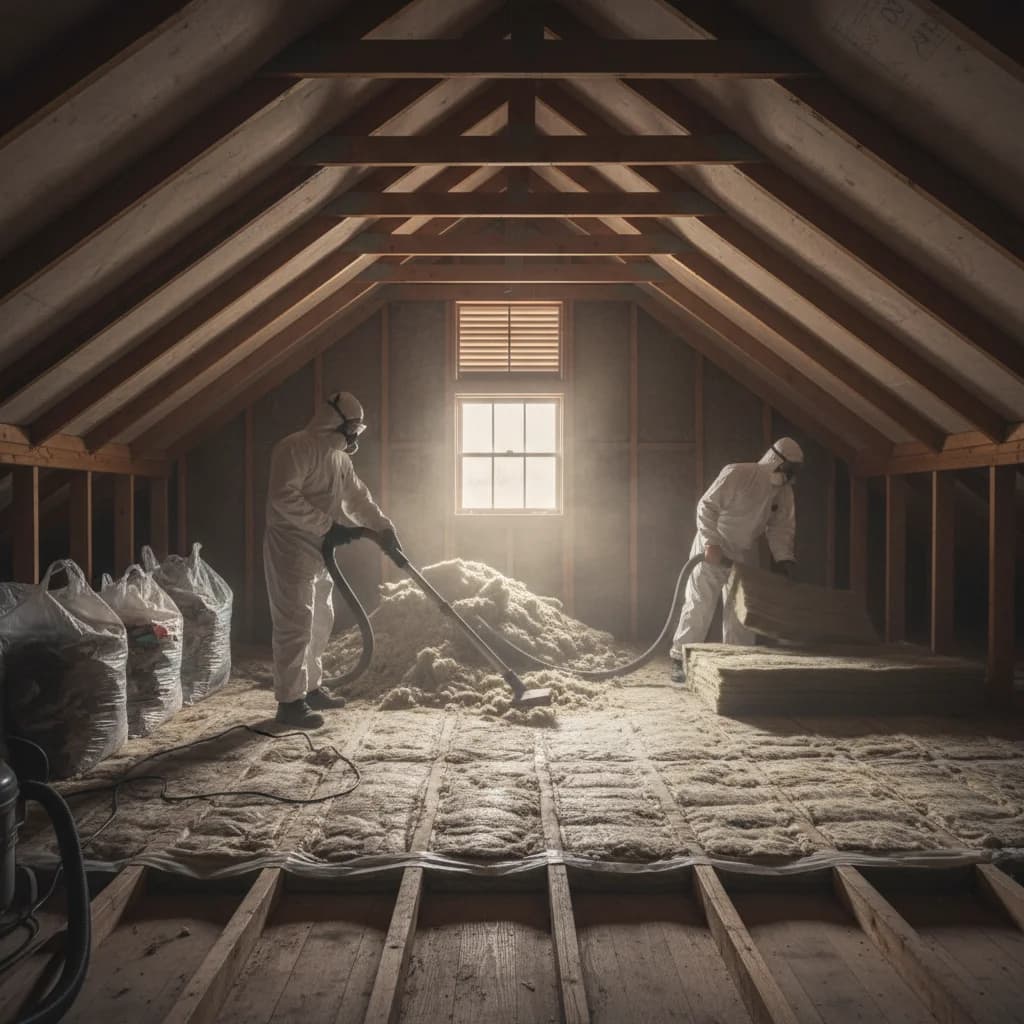
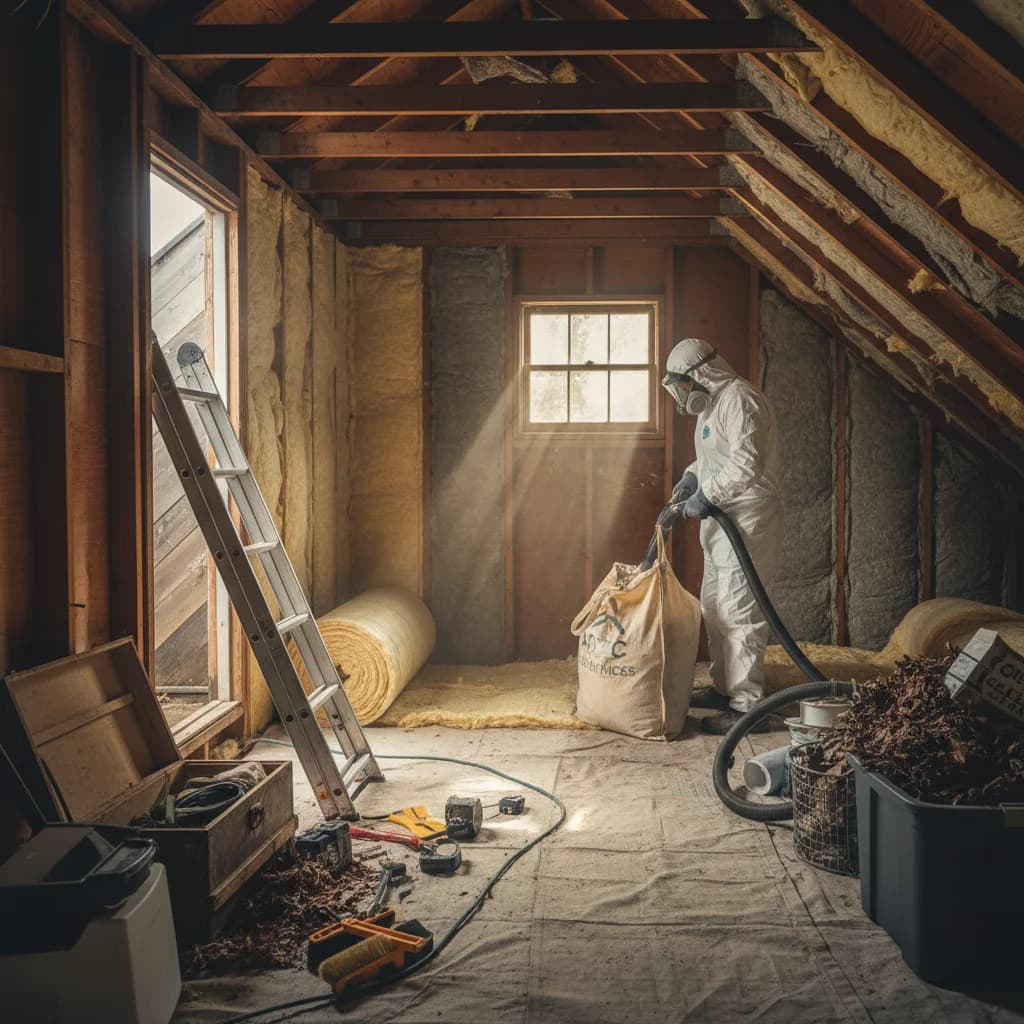
Warning: if you haven't been in your attic during a summer afternoon, the temperature up there may shock you. On a 95-degree day, a poorly ventilated attic can reach 150 to 160 degrees Fahrenheit — and in the hottest regions of the country, readings above 170 degrees are not uncommon. That extreme heat doesn't just stay in the attic. It radiates downward through the ceiling into your living space, forcing your air conditioning system to work continuously and driving up electricity costs throughout the summer. For homeowners in Phoenix and Austin, where summer stretches from May through October, managing attic heat is one of the most impactful things you can do for both comfort and energy savings.
There are 92 attic cleaning companies in Phoenix with an average rating of 4.8 stars.Why Attics Overheat
Understanding why attics get so hot is the first step toward solving the problem. The primary heat source is direct solar radiation striking the roof. Dark-colored asphalt shingles — the most common roofing material in the United States — absorb up to 90 percent of the solar energy that hits them. This energy heats the shingle surface to temperatures that can exceed 170 degrees, and that heat conducts through the shingles into the roof sheathing and then radiates into the attic space below.
Once inside the attic, heat accumulates because most attics have limited ability to shed it. The insulation on the attic floor does its job by slowing heat transfer into the living space, but it also means the attic itself retains heat. Without adequate ventilation to carry that heat out, the attic becomes a thermal reservoir that continues radiating heat downward well into the evening — which is why upper floors often feel warm long after sunset. The combination of intense solar input, limited ventilation, and the insulating effect of the attic floor creates a cycle where temperatures climb rapidly during the day and cool slowly at night, never fully dissipating before the next morning's sun starts the process again.
Radiant Barriers and Reflective Insulation
Radiant barriers are one of the most effective tools for reducing attic heat in summer. A radiant barrier is a highly reflective material, usually aluminum foil bonded to a backing, installed on the underside of the roof rafters. Instead of absorbing radiant energy from the hot roof sheathing and re-emitting it downward onto the insulation, the barrier reflects up to 97 percent of that radiant heat back toward the roof.
The result is a measurable reduction in attic temperature — typically 20 to 30 degrees — which directly reduces the amount of heat that reaches your living space. In Sacramento and across California's Central Valley, where air conditioning is the dominant energy expense from June through September, radiant barriers can reduce cooling costs by 5 to 10 percent. Radiant barriers are most effective in hot climates where cooling loads are high and the sun angle is steep. They're less impactful in cold climates where heating is the primary concern. Installation involves stapling or fastening the material to the underside of the rafters with the reflective side facing down toward the attic floor. It's critical that the barrier is not laid directly on top of attic insulation, as this can trap moisture and reduce insulation effectiveness. For additional strategies specific to homes in consistently hot environments, see our guide on attic care in hot climates.
Powered Versus Passive Ventilation
Attic ventilation systems fall into two categories: passive systems that rely on natural convection, and powered systems that use fans to actively move air. Both aim to reduce attic temperatures by exchanging hot attic air with cooler outside air, but they work differently and suit different situations.
Passive ventilation uses the principle that hot air rises. Cooler air enters through intake vents at the soffits (the lowest point of the roof overhang), warms as it contacts hot attic surfaces, and exits through ridge vents, gable vents, or static roof vents near the peak. This system is maintenance-free and costs nothing to operate, but its effectiveness depends on adequate vent sizing, proper balance between intake and exhaust, and sufficient wind or temperature differential to drive airflow. On very hot, still days, passive ventilation alone may not move enough air to prevent extreme heat buildup.
Powered attic ventilators — either hardwired electric fans or solar-powered units — actively pull hot air out of the attic, increasing the volume and speed of airflow. Solar-powered models are particularly well-suited for summer heat management because they operate at peak capacity during the sunniest hours when attic heat is most intense. However, powered ventilation carries an important caveat: if the attic doesn't have sufficient intake vent area, a powered exhaust fan can create negative pressure that pulls air-conditioned air from the living space up through ceiling gaps, actually increasing cooling costs rather than reducing them.
Insulation as a Heat Barrier
While ventilation works to reduce attic temperatures, insulation works to keep whatever heat remains in the attic from reaching your living space. These two systems are complementary, and neither can fully compensate for deficiencies in the other. Adequate insulation depth on the attic floor is the most important factor in preventing attic heat from affecting indoor comfort.
The recommended insulation levels for attic floors vary by climate zone, but in hot southern climates, R-38 to R-49 is standard. At these levels, blown-in insulation should be 12 to 18 inches deep depending on the material. Any areas where insulation is thin, displaced, or missing create hot spots where heat conducts rapidly into the ceiling below. Common problem areas include spaces near attic access hatches, around HVAC equipment, along the eaves where insulation may be compressed, and anywhere previous work has disturbed the insulation layer. A thorough check of insulation depth and coverage before summer arrives can prevent comfort problems and wasted energy during the hottest months. For a detailed explanation of how ventilation and insulation systems work together, see our guide on why proper attic ventilation matters.
Storing Items Safely in a Hot Attic
Many homeowners use their attic for storage, but extreme summer heat damages or destroys a wide range of commonly stored items. Temperatures above 130 degrees can melt candles and crayons, warp vinyl records and plastic containers, degrade photographs and important documents, dry out leather goods, and cause adhesives on labels and tapes to fail. Electronics, paint cans, and aerosol containers are particularly dangerous in extreme heat — batteries can leak or rupture, and pressurized cans can explode.
If you must store items in a hot attic, limit storage to materials that tolerate heat: holiday decorations made of fabric or metal, sturdy plastic bins rated for high temperatures, and non-perishable items that won't be damaged by thermal cycling. Keep all storage away from the attic's perimeter walls and roof line where temperatures are highest. Never store anything directly against the roof sheathing. For items with any sensitivity to heat, moisture, or temperature swings — documents, photographs, electronics, clothing — a climate-controlled area of the home or an off-site storage unit is a far safer choice.
Impact on HVAC Costs and System Longevity
The connection between attic heat and air conditioning costs is direct and substantial. Your ceiling is the largest surface area separating conditioned space from the attic, and when attic temperatures reach 150 degrees or more, even well-insulated ceilings allow significant heat gain into the living space. The air conditioning system must run longer cycles and operate more frequently to overcome this constant thermal load.
In hot climates, cooling typically accounts for 50 to 70 percent of a home's summer electricity bill. Reducing attic temperatures by 20 to 30 degrees through improved ventilation and a radiant barrier, combined with maintaining proper insulation depth, can lower cooling costs by 15 to 25 percent. Over a typical summer season in Phoenix or Austin, that translates to meaningful savings on monthly utility bills. Beyond the direct energy savings, reducing the cooling load extends the lifespan of your HVAC equipment. Air conditioning compressors that run fewer hours per day experience less wear, fewer breakdowns, and a longer service life. The investment in attic heat management pays returns not only through lower monthly bills but also by delaying the eventual cost of HVAC system replacement.