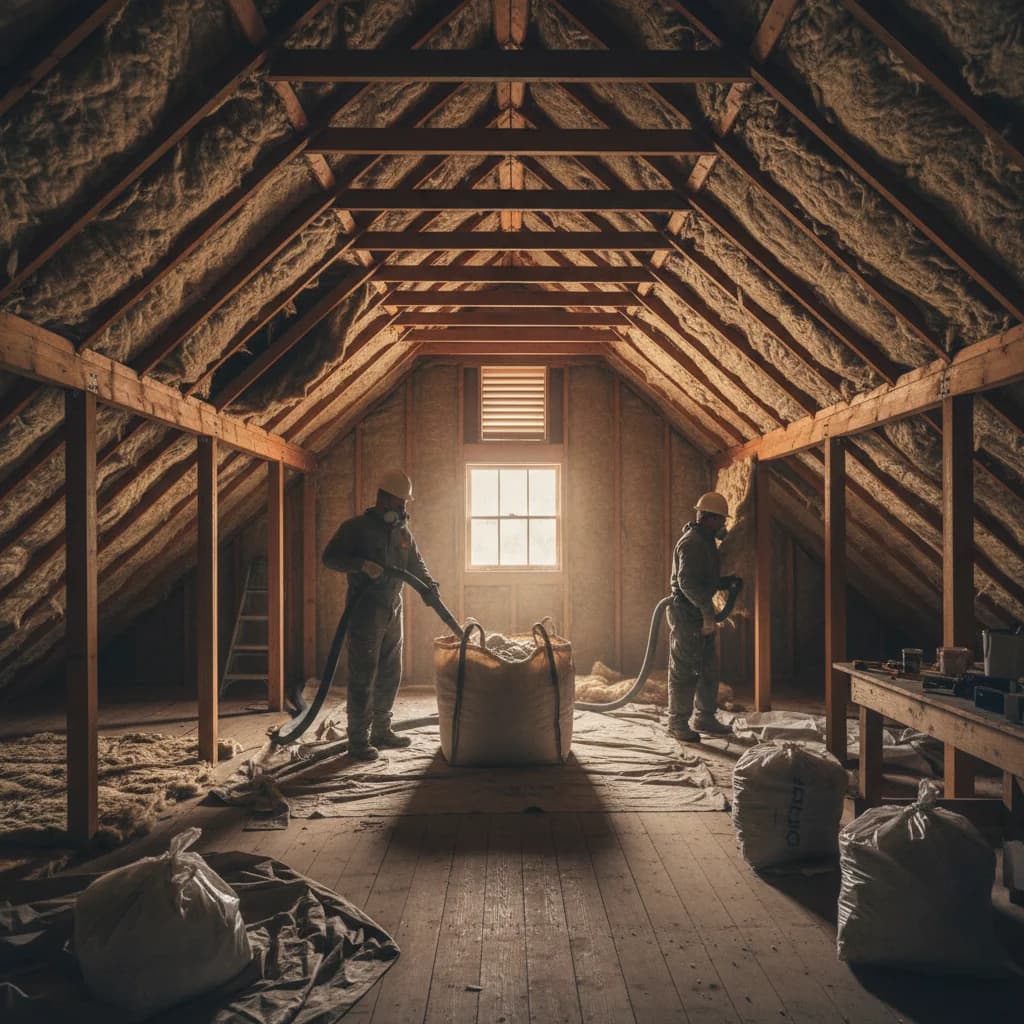
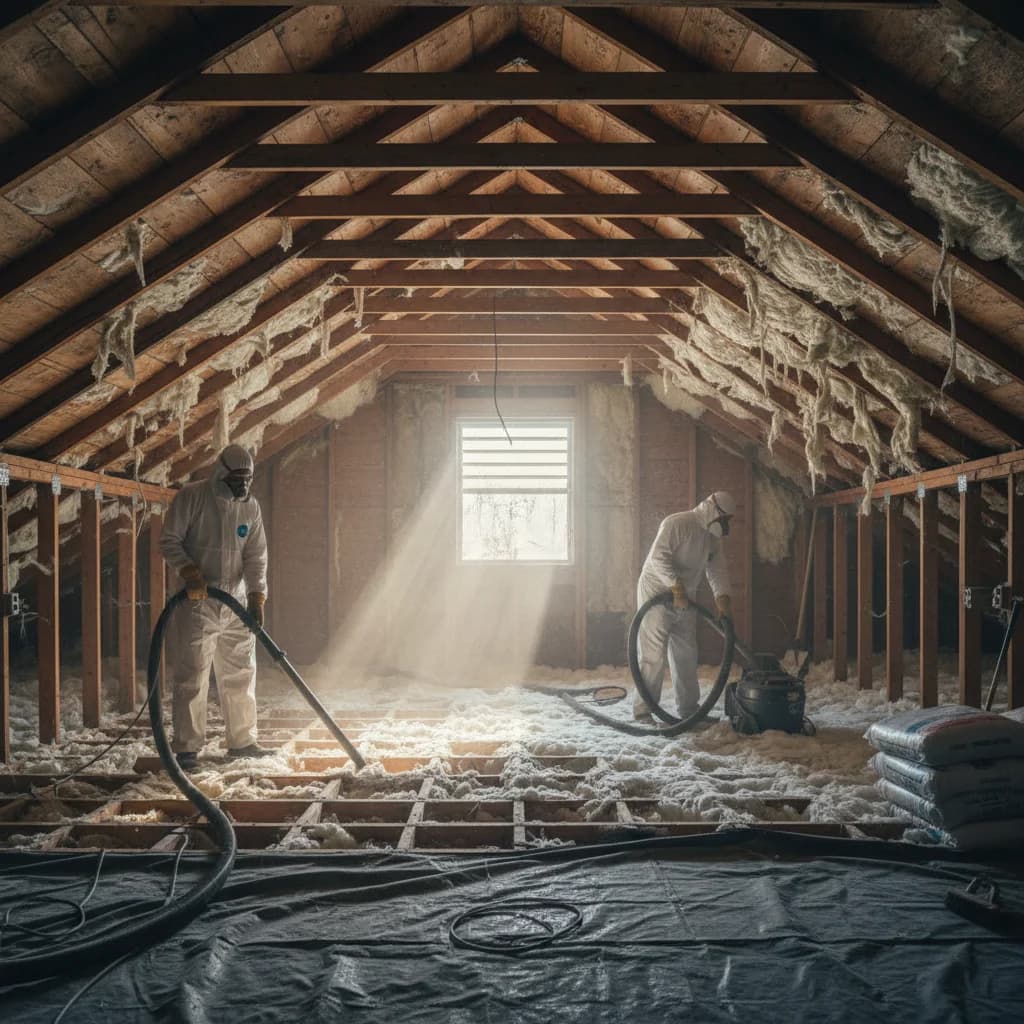
The southeastern United States sits at the intersection of heat and humidity in a way that few other regions experience. From June through September, outdoor relative humidity routinely exceeds 80 percent before sunrise, and afternoon temperatures push well into the 90s. That combination creates a moisture load on residential attics that is fundamentally different from the dry heat of the desert Southwest or the cool dampness of the Pacific Northwest. In Atlanta and Charlotte, where summer dew points frequently reach the low to mid-70s, attic humidity management is not optional — it is a requirement for preventing mold, preserving insulation performance, and protecting the structural integrity of your roof system.
There are 36 attic cleaning companies in Atlanta with an average rating of 4.8 stars.Understanding Southeast Humidity Patterns
Humidity in the Southeast follows a distinct seasonal pattern that directly impacts attic conditions. During summer months, warm moist air from the Gulf of Mexico dominates the region's weather, pushing outdoor dew points into the 70 to 75 degree range for weeks at a time. When outdoor air at these dew points enters an attic through soffit vents and other openings, it encounters surfaces that may be at different temperatures depending on time of day, sun exposure, and insulation levels. At night, when roof sheathing cools below the dew point of the entering air, condensation forms on interior attic surfaces — the same process that puts dew on your car windshield each morning.
This nighttime condensation cycle is particularly damaging because it is invisible and repetitive. Each night deposits a thin film of moisture on sheathing and framing. Each day, solar heating partially dries those surfaces. But the cycle is not balanced — more moisture accumulates than evaporates over the course of a humid summer, gradually raising the moisture content of wood sheathing to levels that support mold growth. Wood moisture content above 20 percent creates favorable conditions for mold, and in the Southeast summer, unventilated or poorly ventilated attics can exceed this threshold within weeks. Monitoring wood moisture content with an inexpensive pin-type moisture meter during summer provides a direct measurement of whether your attic is staying within safe limits.
The Stack Effect and Bathroom Fan Venting
The stack effect — warm air naturally rising through the home and exiting at the highest points — is a year-round phenomenon, but it interacts with Southeast humidity in specific ways. In winter, the stack effect pulls heated indoor air upward through ceiling penetrations into the attic, carrying moisture with it. In summer, the dynamic can reverse in air-conditioned homes where the attic is significantly hotter than the living space below, though air leakage through ceiling penetrations remains a primary moisture transport mechanism in both seasons.
Bathroom exhaust fans that terminate in the attic rather than exhausting through the roof or a gable wall to the exterior are one of the most common and damaging code violations in southeastern homes. Each shower generates roughly half a pint of water vapor, and a family of four may produce two or more pints of moisture daily from bathing alone. When that moisture is pumped directly into the attic, it overwhelms whatever ventilation capacity exists. In Nashville, where building stock includes a significant number of homes built before modern code enforcement tightened, bathroom fans venting into the attic remain a widespread issue. Correcting this by extending ductwork through the roof with a proper cap and boot is a straightforward repair that eliminates one of the largest controllable moisture sources in any attic. For a detailed look at how attic moisture leads to mold and the process for addressing it once it takes hold, see our guide on attic mold remediation.
Powered Ventilation and Airflow Strategies
Passive ventilation — soffit vents paired with ridge vents — is the standard approach in most climates, but the Southeast's extreme humidity loads push many attics beyond what passive systems can manage alone. When outdoor air entering through soffit vents already carries high moisture content, simply moving more of it through the attic does not necessarily reduce humidity. In fact, during the most humid periods of summer, increasing ventilation can actually introduce more moisture than it removes.
This paradox has led many southeastern building professionals to recommend powered attic ventilation with humidity-sensing controls. Solar-powered attic fans equipped with humidistats activate when attic humidity exceeds a set threshold — typically 60 to 65 percent — and shut off when levels drop below it. This approach avoids the common criticism of powered ventilation, which is that it can pull conditioned air from the living space through ceiling leaks. By operating based on humidity rather than temperature, humidistat-controlled fans run primarily during the morning hours when attic humidity is highest and shut down during peak heat when the attic temperature alone drives natural convection. Ensuring adequate intake area — at minimum the 1:150 ratio of net free area to attic floor space — remains essential regardless of whether exhaust ventilation is passive or powered.
Insulation That Resists Moisture
Not all insulation materials respond equally to the moisture conditions found in southeastern attics. Fiberglass insulation — both batts and blown-in — does not absorb water readily, which gives it an advantage in humid environments. Even when exposed to high ambient humidity, fiberglass maintains most of its R-value because the glass fibers themselves are non-absorbent. However, if liquid water contacts fiberglass insulation from a roof leak or condensation drip, it can mat down and lose loft, reducing thermal performance until it dries completely.
Cellulose insulation, while offering a slightly higher R-value per inch and often costing less than fiberglass, absorbs moisture more readily. In a Southeast attic where relative humidity remains elevated for months, cellulose can gain moisture weight over time, which accelerates settling and compresses the material below its installed depth. The borate fire retardant in cellulose does provide some mold resistance, but it cannot compensate for chronic moisture exposure. For southeastern homeowners considering insulation replacement, the interaction between insulation material properties and regional humidity patterns is an important factor in the decision. Our guide on attic ventilation and why it matters explains how ventilation works together with insulation choice to manage attic conditions effectively.
Mold-Resistant Materials and Crawlspace Interaction
In the Southeast, specifying mold-resistant materials during any attic work is a practical measure given the region's persistent humidity. Mold-resistant drywall (often called green board or purple board depending on the manufacturer) resists mold growth better than standard paper-faced drywall when used for attic knee walls or access enclosures. Mold-resistant roof sheathing, which uses fiberglass facing instead of paper, provides the same structural performance as standard OSB while eliminating the organic paper food source that mold colonies require.
Homeowners should also be aware that attic humidity does not always originate from above or from the living space. In many southeastern homes with vented crawlspaces, moisture migrates upward from the ground through the crawlspace, through the floor system, through the living space, and ultimately into the attic. A home with chronically high attic humidity despite adequate ventilation and no obvious leaks may be dealing with ground moisture entering through an unlined crawlspace. Installing a heavy-gauge vapor barrier on the crawlspace floor and ensuring crawlspace vents are functioning properly can reduce the total moisture load on the attic from below. Addressing the attic without considering the crawlspace often produces disappointing results in southeastern homes where both spaces contribute to the overall moisture equation.