Birds nesting in your attic might seem like a minor nuisance compared to rodents or raccoons, but the reality is that bird infestations create significant health hazards, property damage, and legal complications that require careful handling. For homeowners in Phoenix, where species like pigeons, house sparrows, and starlings actively seek sheltered nesting sites to escape the desert heat, attic bird infestations are a year-round concern.
There are 92 attic cleaning companies in Phoenix with an average rating of 4.8 stars.Why Birds in Attics Are a Serious Problem
Birds in your attic aren't just noisy — they create multiple hazards:
Health risks: Bird droppings (guano) carry histoplasmosis, a fungal respiratory disease caused by Histoplasma capsulatum spores that thrive in accumulated droppings. Cryptococcosis and psittacosis are additional diseases associated with bird waste. When dried droppings are disturbed, these pathogens become airborne and can enter your HVAC system.
Structural damage: Accumulated droppings are acidic and corrode metal surfaces, stain wood, and damage insulation. Nesting materials block vents and create fire hazards near electrical components. Over time, the weight of accumulated guano can even stress ceiling structures.
Parasites: Bird nests harbor mites, lice, ticks, and bed bugs that can migrate into your living space once the birds leave. These secondary infestations often catch homeowners off guard weeks after the birds are gone.
Odor: The combination of droppings, decomposed nesting materials, and occasionally deceased birds creates persistent odors that are difficult to eliminate without professional treatment.
Legal Considerations
Before attempting any bird removal, understand the legal landscape:
The Migratory Bird Treaty Act protects most native bird species in the United States. It is illegal to disturb active nests with eggs or young birds of protected species. Violations can result in significant fines.
Unprotected species: House sparrows, European starlings, and pigeons are not protected under the Migratory Bird Treaty Act and can be removed at any time. These three species account for the vast majority of residential attic bird infestations.
State and local laws may provide additional protections. In Las Vegas and Tempe, local wildlife regulations may affect how and when certain species can be managed.
Best practice: If you're unsure what species has nested in your attic, consult a licensed wildlife control operator before taking action. Removing the wrong species at the wrong time can result in legal penalties and ethical concerns.
The Safe Removal Process
Professional bird removal from attics follows a humane, systematic approach:
- Species identification — Determining what species is present and whether they're protected, which dictates the legal removal timeline
- Nest status assessment — Checking for eggs or young. If protected species have active nests, removal must wait until the young have fledged
- Bird exclusion — Installing one-way exclusion devices that allow birds to exit the attic but prevent re-entry. This is the most humane method and avoids trapping birds inside
- Nest and debris removal — Once all birds have exited, nests, droppings, and debris are carefully removed
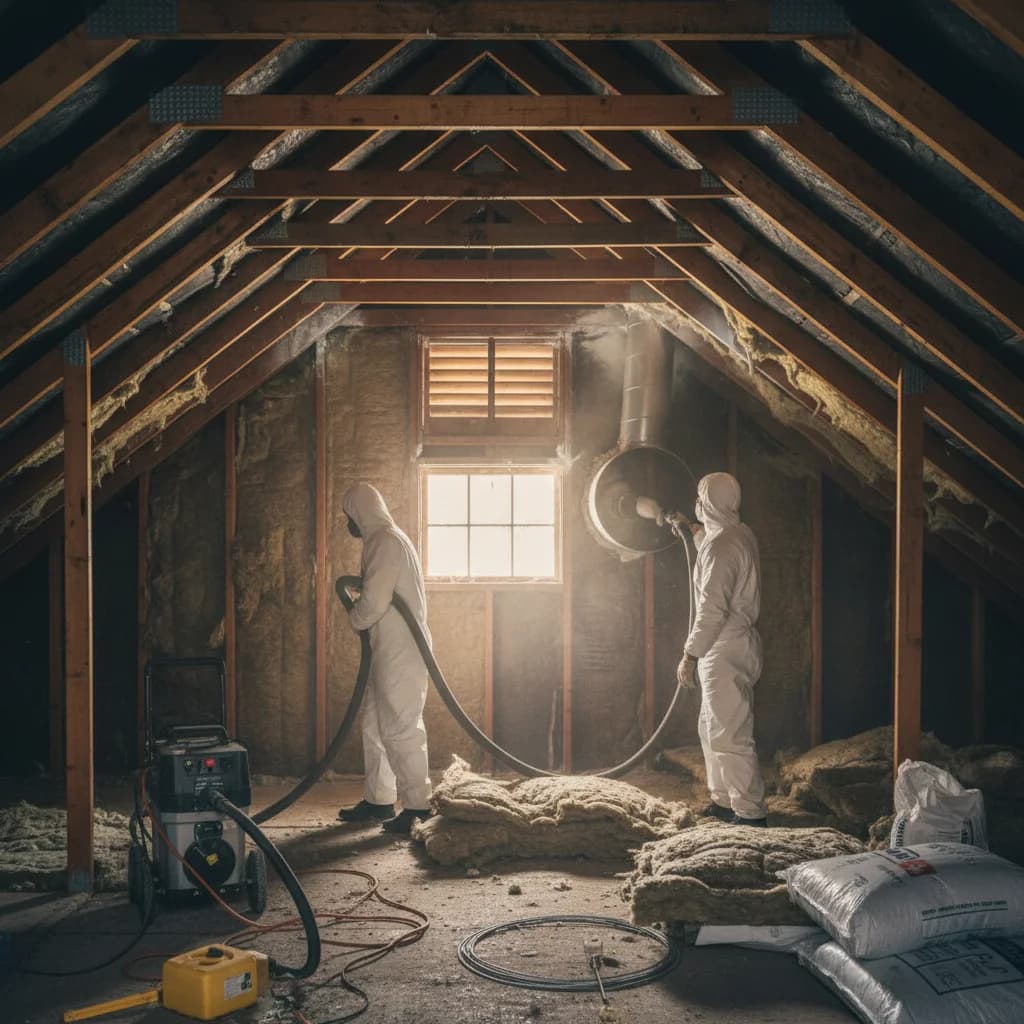
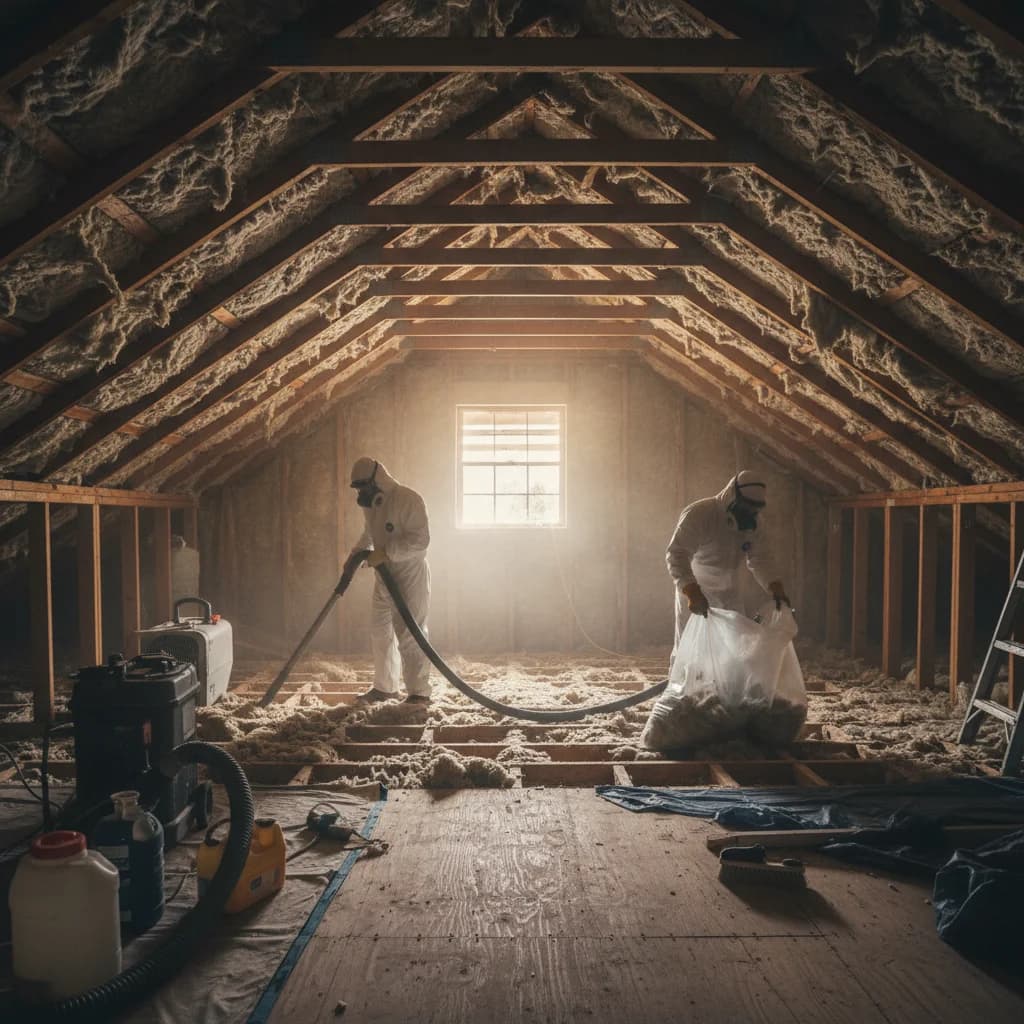
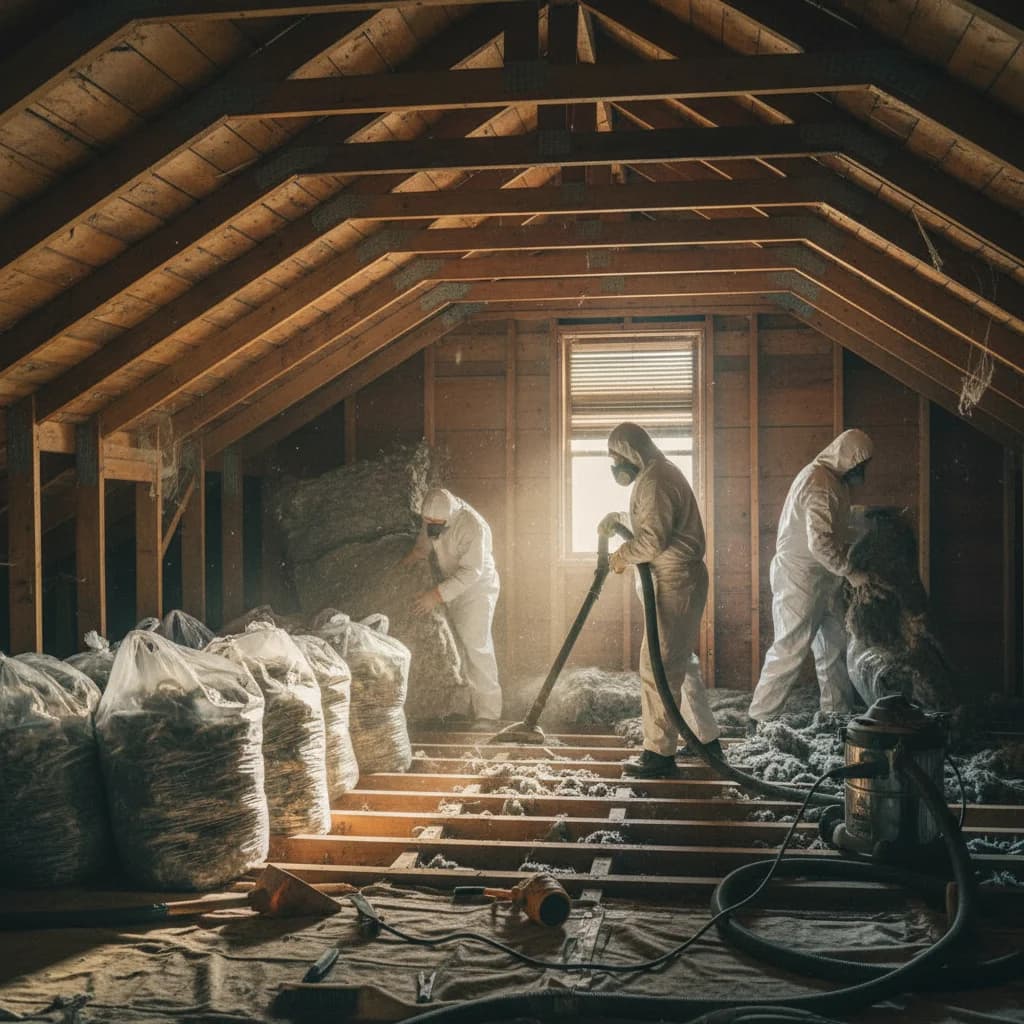
- Guano cleanup — Professional-grade removal of accumulated droppings using HEPA-filtered equipment and respiratory protection
- Sanitization — Antimicrobial treatment of affected surfaces to eliminate pathogens from droppings
- Permanent exclusion — Sealing all entry points with appropriate materials to prevent future nesting
Cleanup After Bird Infestations
Bird droppings require careful cleanup due to the respiratory hazards they present:
- Never sweep or vacuum dry droppings without respiratory protection — Disturbing dried guano releases histoplasmosis spores into the air
- Professional-grade cleanup involves misting droppings with water to reduce dust, then removing material with HEPA-filtered vacuum equipment
- Contaminated insulation must be removed if droppings have saturated the material
- Antimicrobial treatment eliminates bacteria, fungal spores, and parasites on structural surfaces
- Parasite treatment may be necessary if bird mites or other ectoparasites are present — these pests can survive for weeks after the birds leave and may migrate into living spaces
For significant accumulations of guano, the cleanup is comparable in scope and cost to a rodent contamination cleanup.
Preventing Future Bird Nesting
After removal and cleanup, permanent exclusion is essential:
- Screen all vents with 1/2-inch galvanized hardware cloth — this blocks birds while maintaining airflow
- Seal gaps along the roofline where soffits, fascia, and flashing meet the roof structure
- Install bird spikes on ledges and flat surfaces near potential entry points
- Cap the chimney with a wildlife-rated chimney cap
- Repair damaged materials — birds often exploit existing damage from weather, woodpeckers, or previous pest activity
Regular exterior inspections, particularly in early spring before nesting season begins, help catch new vulnerabilities before birds discover them.
When to Call a Professional
While minor bird issues can sometimes be addressed by homeowners, professional help is recommended when:
- The infestation involves multiple birds or an established colony
- Significant guano accumulation is present
- The species is uncertain and may be protected
- Insulation contamination requires removal
- Parasites have spread beyond the attic
- Entry points are difficult to access safely